
Structural Inequality In UK Theatre & TV
by Daniel York Follow @danielfyork
I’ve been reading a book recently by the American sociologist David T. Wellman with the frankly terrifying title Portraits Of White Racism. I say terrifying because it conjures all kinds of images of Aryan skinhead fascists with big boots and arm-bands. I find myself hiding the lurid green cover of the book so people won’t see it when I’m reading it on the tube.
In fact the book isn’t about skinhead fascists at all. Rather its premise is to refute the popular notion that all “racism” is born of ignorant prejudice. Instead Wellman’s subject is
“culturally sanctioned strategies for defending social advantage based on race”.
Of course the very word “racism” is now so incendiary it actually seems to have become worse to call someone a racist than actually be one. But leaving aside Wellman’s terminology there is something clearly and fundamentally unequal in UK society and particularly in the industry I work in, that of screen and stage, something that black British actor and playwright Kwarme Kwei Armah recently referred to as “structural inequality” .
The book (written in the 1970’s) features quotes along the lines of
“I’m not opposed to mixed busing ; I’m opposed to the time it takes” and “I can understand militancy but it’s self-defeating”. My industry is full of these kind of rationalisations:-
“Yes, there should be more opportunities for actors/writers of colour. But it won’t happen overnight” (Why ever not?)
“There should be more roles for actors of colour. But we need the writers from those communities to write roles for minority ethnic actors” (Well, a) You could commission some and b) Do we have to be from a separate and foreign “community”?)
“We definitely need to put more training initiatives in place”
(In other word we’re going to continue side-lining you now whilst we tick our boxes running workshops for people with no experience thereby diminishing your experience and expertise)

Then my particular favourite: “Well, I never even consider someone’s race when I’m casting/commissioning”. But you can only not consider someone’s race from a position of deeply ingrained privilege. A privilege which affords no awareness of the societal and structural limits placed on performers of different backgrounds. Only then can you loftily pronounce that you “simply cast the best actor for the role” based on a “merit” that’s absolutely impossible to quantify.
The vast majority of the actors at a company like the Royal Shakespeare Company (and particularly those cast in the leading roles) come from what I would call the British “classical theatre circuit” (Chichester Festival Theatre, West Yorkshire Playhouse, Manchester Royal Exchange etc), those which make up the Arts Council’s “centres of excellence”, and what I would call mainstream TV – Downton Abbey, Midsomer Murders, Call The Midwife – as well as sundry classic novel adaptations such as the recent Great Expectations and Death Comes To Pemberley.
In other words “period drama”. Name me a leading classical British actor and you can bet your bottom shilling they’ve done “period drama”. A genre that is all but off-limits to actors of colour. Some might well protest that Downton Abbey recently featured a black character. One. And the news of his casting made headlines. So we can easily see what a major decision and talking point it is to introduce any actor of colour to a production of this kind. Producers have to make the kind of conscious decision they simply don’t have to when they’re casting Caucasian actors.
This type of high-quality /high production values TV drama offers the best opportunities for actors in the shape of the most nuanced, carefully written roles, with the best constructed emotional arcs, and with the most technical demands. Compared to this if an actor of colour is only able to garner roles playing Chinese Take Away Man, Prostitute, Hoodie With Gun or Indian Waiter then the actor of colour surely won’t have the same showcase opportunities as their Caucasian counterparts playing Matthew Crawley or Trixie Franklyn. Nor, crucially, will the actor of colour have access to the same networks.
Ethnic roles are often very clichedly “ethnic” and badly written. They are also cast with a completely different criteria by people who are literally picking exotic flowers for their garden. The number of times I’ve been told “they didn’t think you looked Chinese enough” (I’m of mixed descent) is simply too often to be arbitrary. My agent was once told “we specifically do NOT want any Eurasians”. On the other side of the coin, I’ve seen casting breakdowns calling for African-Caribbean actors requesting they not be “too dark”. In addition we’re often expected to be de facto cultural “experts”, to speak a range of languages and have all manner of physical “skills” at our disposal.
In fact it’s probably fair to say that our TV and theatre industry is still all too often locked in some kind of ghastly 1970’s parody of inappropriateness. Surely it’s clear that in the face of this kind of cultural impasse anyone who posits the line that they “never consider race” is being at best naïve or at worse wilfully disingenuous.

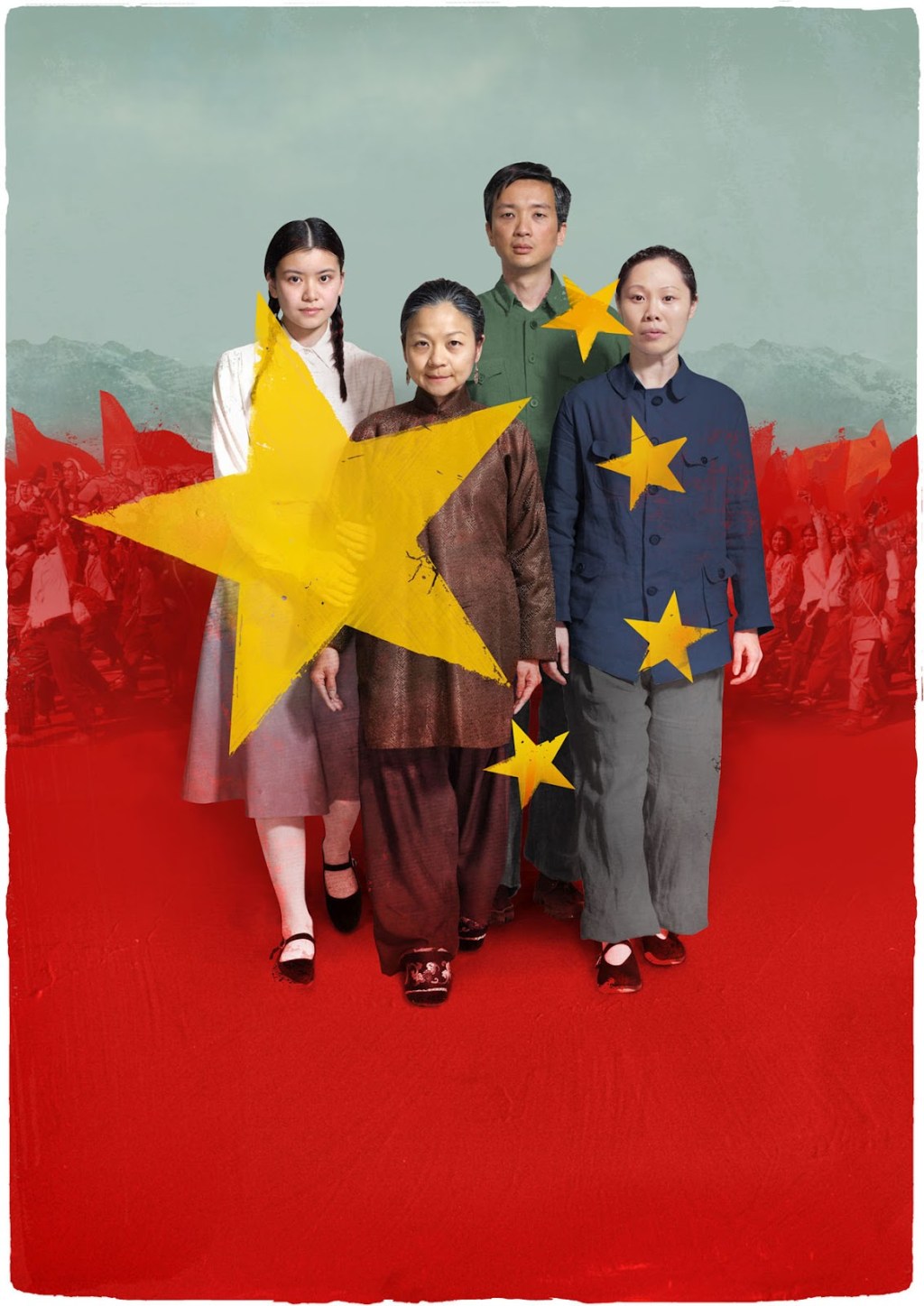
There’s also stark contrasts in the way that actors of colour are treated and the environments they work in. I can vividly recall watching the Young Vic’s adaptation of Jung Chang’s historical-autobiographical Wild Swans and, while heartened that the Young Vic had, in the end, used an entirely East Asian cast (though with Eurasians at a premium as usual) I was also struck by how hard the actors were having to work: moving scenery, clearing earth, shifting paving stones. It was most definitely what is known in the trade as a “physical production”.
The fact is I have never seen white, middle-class actors in this kind of production. They are, by contrast, treated with kid gloves in a terribly gentile and delicate world where their concerns about safety are taken extremely seriously. Everything is geared for them to literally arrive on stage and act. Once there, they recline on chaise-longues and “nuance” the text whilst critics and audiences admire their technical brilliance, other classical theatre makers and casting directors flock to watch them and the whole cycle is perpetuated ad infinitum.
White middle-class actors arrive at auditions where directors are terribly keen to meet them and thank them for coming. They read from the script and discuss “character” with directors who are eager to hear their thoughts. When this doesn’t happen they often complain (rightfully so I hasten to add) that they’re being treated as “commodities”.
I know all this because(being of mixed race) I’ve slipped the net just a few times and observed how the “other half” live.
The awful truth is that all too often even our “own kind” treat us as second-class citizens. I can vividly remember attending an audition for what was, at the time, the only funded East Asian theatre company in Britain. I was at fairly low point in my career. I had amassed a solid theatre CV (including the RSC, Royal Court and National Theatre) but that’s often of no interest to casting directors looking to cast rubbish Chinese TV parts. In fact you’re probably better off without it, classical theatre chops being often regarded with suspicion when what is desired is spurious “authenticity”. There’s a section in Bob Dylan’s autobiography where he talks of his career in the 80’s and that his previous achievement were like a “college diploma that doesn’t get you in anywhere”. Well, that’s exactly how I felt at the time.
At the said audition for the only funded East Asian theatre company I was ushered into a room full of about 35 other East Asians. We were made to perform speeches in front of each other which were then redirected by a voice coach. We were allotted something like three minutes each. The assistant director sat at the side with a clip-board and stop-watch which he never once took his eyes off. When the stop-watch reached three minutes he shouted “next!” and you had to stop there and then and the next person began. It was difficult to escape the notion that we were little more than “yellow cattle”. This was the company the Arts Council chose to sponsor to develop East Asian talent and the rest of the industry were happy to use as their ethnic tick-box.
Believe me, this is not the way the likes of Benedict Cumberbatch or Felicity Jones are treated.
The interesting thing is no one ever complained. Amongst each other perhaps, but not “publically”.
The racial pecking order in British theatre consists of whites on top (“posh” ones above “working class” ones), blacks next, South Asians after with East Asians firmly at the bottom and, within that, “pure-blood” Chinese, then “pure-blood” Japanese streets ahead of mixed race and other South-East Asian diaspora.
Perhaps those of us in the room that day were simply too accustomed to our place in the pecking order.
_____________________________________________
Daniel York is an actor, writer and film maker. He recently appeared in The World Of Extreme Happiness at the National Theatre. His full-length stage-play The Fu Manchu Complex was directed by Justin Audibert at Ovalhouse. His short film Mercutio’s Dreaming: The Killing Of A Chinese Actor was commissioned by BBC Writersroom. He is currently Chair of the Equity Minority Ethnic Members Committee. Find him on twitter @danielfyork
Media Diversified is a 100% reader-funded, non-profit organisaton. Every donation is of great help and goes directly towards sustaining the organisation





 Media Diversified
Leave a reply to Joel Grey Cancel reply