
by Shane Thomas Follow @tokenbg
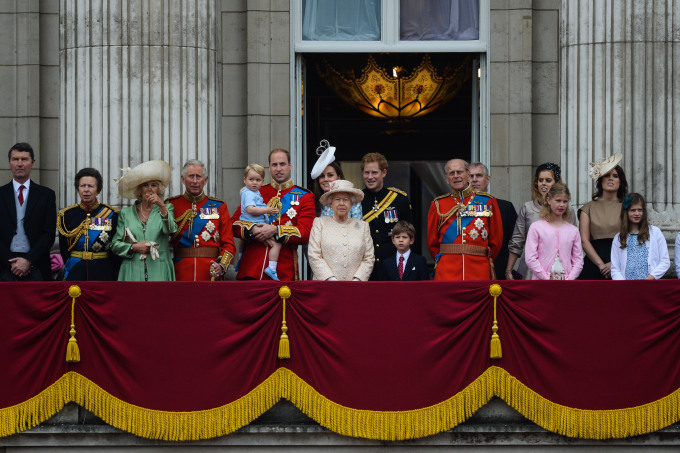
The Sun’s front page of a young Queen Elizabeth II appearing to make a Nazi salute, generated all the attention one would expect from the “look over there” school of journalism. However, there was another recent Royal Family-related story, which was more revealing in how Britain mediates with its monarchy.
With the Premier League returning to thrill some and irritate others in a week’s time, West Brom prepared for the new season by playing the American team, Charleston Battery. Before the match began, the British national anthem was played, and one of the West Brom players, James McClean – who is Irish – made a point of turning away from the Union flag, and solemnly bowed his head.

This slight towards, “God Save The Queen”[1] caused outrage in some quarters, and not just from the bowels of the internet. McClean’s own manager, Tony Pulis reprimanded him, while the Daily Telegraph’s Luke Edwards wrote an asinine diatribe saying McClean should leave England if their flag and anthem vexes him so[2].
What stood out from this affair wasn’t just the intersection of sport and politics, the right to protest, or eschewing fealty to a national anthem[3] (Alexander Netherton has already covered this). It’s the idea of acting with nothing less than reverence towards the Royal Family, and by extension, England. Even raising these points puts me in a minority, as the Windsors exist inside a blister of credulous support.
When I was about 13, the Caribbean steel band I played in had a gig which included a brief appearance by Prince Charles. I recall our manager being adamant that we had to be on our best behaviour. This wasn’t new – she had to deal with a lot of mischief making in the band – but never had it been made so explicit what was expected from us.
I’ve always wondered, why did she care so much? Why does the presence of the Royals beguile people – worldwide – into a state of fawning obeisance?
Is is tradition? The money they bring in? They might be factors, but there’s plenty of traditions we don’t adhere to anymore. I don’t even think the likely financial boon is what inspires such genuflection. If that was such a watertight argument, wouldn’t royal advocates ensure there was no ambiguity about the figures?
I think the key facets are the nebulous – but powerful – agents of history and heritage. Many countries have origin stories that are intended to underpin their supposed greatness. This is especially evident where imperialist nations are concerned.
Britain’s origin story is that of the small island who ruled the waves. Through wit, decorum, and derring-do, they shaped and civilised the world with their military skill and overriding sense of fair play. It matters little that Dr. Shashi Tharoor recently put that story under a piercing spotlight. Most would rather believe the lie.
The axle of this story is our monarchy, and to abolish – or privatise – them could undercut this grandiose narrative, which is an impossibility until we interrogate why they are allowed such latitude in a country that makes exhaustive spending cuts, because it’s apparently in suffocating debt.
For generations, a tacit agreement has been reached, that the Royal Family are the best of Britain. If they have an exalted position it’s because they deserve it (the same way those who live in penury ostensibly deserve it). They are the foundation wall, holding Britain’s entire class system upright.
Of course, necessary questions won’t be asked. It requires critical thinking, and a willingness to confront one’s own personal outlook, rather than wallowing in passive acquiescence. And that’s seldom seen around this topic. If you’re someone who is proud of the monarchy, exactly what is it about them you take pride in?
While the Queen’s position as head of state is more than symbolic, it’s their symbolism that’s especially potent. One wonders how deeply we’re anesthetised by individual comfort and privilege, so that we don’t dare exhibit dissent. Is it that easy to accept the atrocities committed in the name of the English/British flag for Queen/King and country were fine because they didn’t happen to you?
People are disgusted by James McClean because he went against the aforementioned agreement. He dared to imply that England’s heritage might not be unequivocally positive. To a lesser extent, these issues were raised when golfer, Rory McIlroy chose to represent Ireland – instead of Britain – at the 2016 Olympics, and when Andy Murray tweeted his support for Scottish independence last year.
This backlash is borne from an inability to comprehend why someone wouldn’t love everything about England: Look at the history; the tolerance; the values; the inherent politeness. Where could be better than here?
While McClean has previous for taking placid stands against the legacy of Britain’s past, I wouldn’t compare him to Muhummad Ali or John Carlos[4]. However, it will be interesting to see if his actions have any impact on the wider conversation around the Windsors.
Will we start to look at why consensus places the Royal Family on an untouchable pedestal? If so, would that affect our stratified class system[5]? Can the nature of people’s birth be less of a determining factor on their chances in life? And will future generations look at the Royal Family, and wonder what all the fuss was about?
[1] – Which isn’t even the best version of that song (title). As Bill Bailey once said; “Why would we invoke a non-specific deity to bail out these unelected spongers?”
[2] – Clearly, writing such tripe isn’t a hindrance to earning a decent living. Maybe it’s a prerequisite.
[3] – Mahmoud Abdul-Rauf is a name that should be better known when stories of resistance are told.
[4] – Although both Ali and Carlos received intense opprobrium for political resistance on the sporting field. Revisionism now paints their conduct as always having been in sync with public opinion.
[5] – However, you can take your “it’s really all about class” arguments elsewhere.
ll work published on Media Diversified is the intellectual property of its writers. Please do not reproduce, republish or repost any content from this site without express written permission from Media Diversified. For further information, please see our reposting guidelines.
 “Two Weeks Notice” is Shane Thomas’s bi-monthly column encompassing. “Pop culture to sport, and back again“
A mixed-race film graduate, Shane comes from Jamaican and Mauritian parentage. He has been blogging about sport since 2010 at the website for The Greatest Events in Sporting History. He is also a contributor to ‘Simply Read’, the blogging offshoot of the podcasting network, Simply Syndicated. A lover of sport, genre-fiction, and privilege checking, Shane can be found on Twitter, both at @TGEISH and @tokenbg (and yes, the handle does mean what you think it means).
If you enjoyed reading this article, help us continue to provide more! Media Diversified is 100% reader-funded – you can subscribe for as little as £5 per month here
MORE BY SHANE THOMAS
- The Problem with White Liberals (mediadiversified.org)
- Whitewashing a Reputation (mediadiversified.org)
- “Thugs, skets, and thots” There is no ONE black story (mediadiversified.org)
- The Takedown of a Pick-up Artist (mediadiversified.org)


 Media Diversified
Leave a comment