
by Jendella Benson Follow @JENDELLA
“I don’t like working with black girls, because they’re not professional.”
“You mean black girls…like me? Like you?” I wanted to say, but the way she said it with so much confidence astonished me, and I struggled to formulate a response in the moment. Sure enough, when the model arrived, she was white, with a black blunt cut bob and skin so fair that in the wrong lighting it would look translucent. She was pleasant enough but of course no more professional than the black models I had worked with previously. The young black woman who hired me was simply parroting the same racist conclusion that was communicated to me when a white photographer looked through my photography portfolio filled with black faces:
“Don’t you want to be taken seriously? So many black models doesn’t look…professional.”
This wasn’t the first time I’d heard a disparaging remark about black girls from other girls who look very much like them. Comments like this are often made to distinguish the speaker as a “different” kind of black girl, nothing like “those other” black girls and whatever ideas may be attached to them. We’re not born seeing things this way, but life beats it into us. Whether we admit it or not, we know what the world thinks of girls who look like us, and too often the resentment and anger that is stirred up is misdirected.

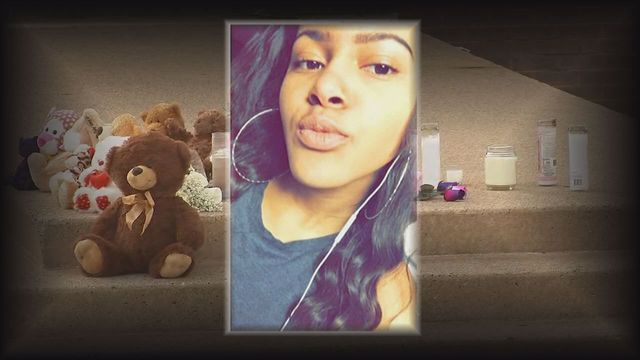
In the last three weeks, three news stories have broken about young black girls, the oldest being no more than sixteen, being brutally attacked by their peers. Two of the young women who were attacked later died, with Amy Joyner-Francis’ death becoming the most high-profile after #RIPAmy trended on Twitter for days after the attack. Joyner-Francis, who was visibly pregnant in the footage that was filmed of her beating, died in hospital after being taken there to treat injuries to her head and back. (Charges have now been brought against her attackers.)
Why are black girls killing each other – or at least trying to? At what point does the dehumanisation of people who look, talk and walk like you become so internalised that you don’t think twice about trying to beat them into a bloody pulp, pregnant or not? “Self-worth” and “value” is often spoken about as the cure-all for the myriad of issues that teenage girls face. Bullying, sexual exploitation, peer pressure, and the like – all it takes is a bit of “self-esteem” and these problems will be gone, so we’re told. But where do we learn our value, or ascertain how much our self is worth?

Open up Twitter on any given day and you’re only a few clicks away from stinking cesspits of misogynoir masquerading as “freedom of expression”. “It’s only Twitter” or “I was just trolling y’all chill out” are the throwaway remarks that are meant to wash away the hate that seeps from the minds of the ignorant onto public timelines. In relative safety from real world repercussions, people let their real thoughts be known. Under hashtags such as #WhiteGirlsDoItBetter, black men, white women and white men unite to let the world know that the only things of value about black women – our sexualised bodies, our ability to twerk, or our ability to cook “soul food” – are now being executed better by white women. “Retweet to ruin a black girl’s day” was a caption posted with a picture of two curvy white women. “It’s over for black women!” was another comment posted with a video of a white woman twerking. Our value has been set quite low, and any Tom, Dick, or Becky can step over us.
While there are black women with visibility in pop culture and entertainment who are praised and adored by many, they are not immune to misogynoir. When Beyonce released her latest album, “Lemonade”, and alluded an to affair that her husband may have had with a white woman, black men on Twitter took this as opportunity to laugh at the inherent worthlessness of black femininity. “It’s not cheating if you left your black chick for a white chick. It’s called self improvement!” one tweeter proclaimed. Another captioned an image of two men sniggering heartily with the words “When the leader of the Sistah’z [sic] loses her man to a white woman.” Not even Beyonce’s fair skin and blonde weaves could save her; while colourism might raise her status amongst black women, she is still a black woman.
We learn about the world through how we interact with it, and how it interacts with us. Parenting books encourage new parents to smile and laugh with, kiss, cuddle and praise their newborn so that the child will learn from the moment that they are born that they are loved and valued. Even if your family adores you, what the rest of the world feels towards you can always leave scars. Though in some ways a classic introvert by nature, when I met my GCSE English teacher for the first time, she told me that she had heard all about me. “Yes, I’ve been told about you, you have an attitude problem.” Even as a fourteen-year-old schoolgirl I knew that this was probably to do with me being the only black girl in my class, and the following year I got the message and applied to complete my A Levels at a college, rather than staying on for 6th form at the prestigious school that my mother had prepped and prayed me into.
Internalised misogynoir is what happens when your defences are down and you are battered with racist and sexist messages that dehumanise and devalue people who look like you. Sometimes, though not necessarily always, the primal instinct of self-preservation may be the final line of defence that stops the individual from harming themselves, but what is there to stop them acting out the violence that they experience mentally, emotionally, psychically everyday on someone else? Someone who looks like them.
As black girls we are often hyper-aware of each other. It’s a force of habit to notice everything about one another, from hairstyle to the shade of nail polish, and even the brand of shoes worn on our feet. Amongst my teenage girlfriends we would complain about other black girls “sharkin’” [watching] us, lacking the self-awareness that would reveal that those same black girls are probably commenting on our own hostile body language and unspoken critique. Sometimes it’s simply down to the fact that we may find ourselves in environments where we are the only black girl around, so when another black girl’s presence is felt, we really feel it, for better or worse. But more insidiously we have heard the messages loud and clear and we believe about other black girls all the subconscious and at times very conscious things that we have been told about ourselves. We are the victims and sometimes perpetrators of the dehumanisation and violent misogynoir that is levelled at us for the most part unchallenged. As teenagers our pride is all we really have, so when a fragile perception of self is challenged, even in the slightest way, but someone who feel to be just as powerless as we are, somehow it makes sense to lash out. Power and violence have always been the most direct communicators; those who make use of them are seemingly never misunderstood.
All work published on Media Diversified is the intellectual property of its writers. Please do not reproduce, republish or repost any content from this site without express written permission from Media Diversified. For further information, please see our reposting guidelines.
Jendella Benson is a photographer, writer and filmmaker based in London. She writes about issues of faith, race, identity, feminism and the arts for various publications online and offline, and is also an occasional public speaker and workshop facilitator. She tweets regularly from @JENDELLA and more of her work can be found at www.jendella.co.uk.
If you enjoyed reading this article, help us continue to provide more! Media Diversified is 100% reader-funded – you can subscribe for as little as £5 per month here




 Media Diversified
Leave a reply to Ellesar Cancel reply