

by Maya Goodfellow Follow @mayagoodfellow
The forces of right-wing xenophobic populism are stronger in America and Europe than they have been in decades. Donald Trump is president-elect in the United States; after a virulently anti-migrant referendum campaign, the UK voted to leave the EU and far-right parties are gaining ground across much of Europe. The left – in the UK and beyond – is understandably scrambling to analyse what’s happened. While some have mistakenly pinned this all on economics, entirely ignoring the racist aspects of this politics, others claim to have landed on the answer: identity politics is to blame. From Labour MPs Stephen Kinnock, Simon Jenkins and John Spellar on this side of the Atlantic, to Mark Lilla and Sohrab Ahmari on the other – there is a band of people denouncing identity politics and the left’s apparent obsession with diversity. This, they say, has led to the rise of the far-right.
The idea underlying this link of thinking is that the left have for too long focused on minorities at the expense of the “majority” (read: straight, white people), pushing the latter into the arms of the far-right. This comes from the age-old assumption– that has by no means been expunged from the left – that white, straight men have no identity other than one based in class (if they’re working class).
But all politics is identity politics. Nigel Farage pledged during the referendum campaign to “take back control” – not just from EU bureaucrats but migrants who were repeatedly racialised as a threat to this country. His platform was rooted in the politics of whiteness (and importantly this is a form of politics that doesn’t always exclusively speak to white people). It can be hard for some to see how this is true because whiteness masks itself as natural. As academic Gloria Wekker has said, whiteness is “not seen as an ethnic positioning at all”. It is the default – the identity contains worth and humanity. That’s why the working class is so often treated as a homogenous group that’s exclusively white.
It’s the privileging of whiteness that leads politicians to denounce “diversity” while at the same time proclaiming that we must listen to peoples’ “legitimate concerns” about immigration. These concerns are deemed “legitimate” before they have even been uttered – thereby making them innocent no matter what they are; even if they are racist.
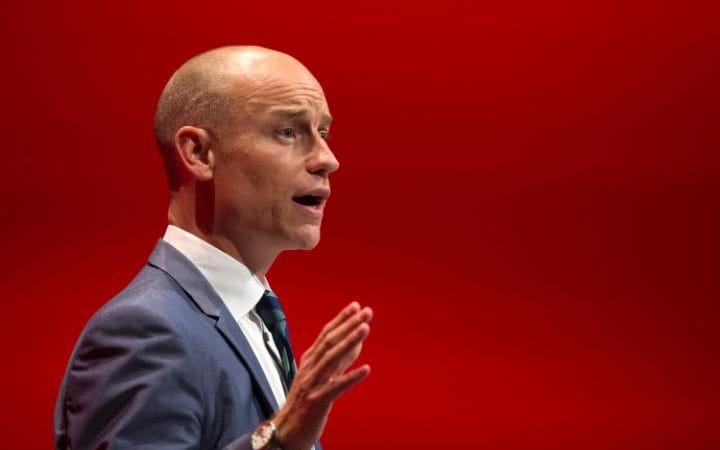
The attack on identity politics equates to an attack on the very right of minority communities to assert their humanity in a society that often doesn’t see them as human. Essentially, the anti-diversity brigade is arguing against recognising the specific ways people experience discrimination. “It doesn’t matter what the colour of your skin is or what your background is”, Kinnock recently said, “What matters is that you’re poor and you’re disadvantaged and we’ve got to be there to help and engage with every single one of you – not just those who seem to have been taken priority over others.” The problem is race and gender do matter when we’re talking about poverty.
Recent research shows working-class women of colour are hardest hit by austerity; they face triple discrimination along the lines of class, race and gender. Yet they are less likely to be heard in the austerity debate. Admitting that austerity is racialised and it is gendered doesn’t mean saying poor white men don’t matter but it does mean saying that economic policies must include explicit ways to deal with racism and sexism; these very forms of discrimination underpin the capitalist project.
One of the reasons politicians and commentators think they can get away with erasing race or gender from the economic debate is they believe people of colour, as well as other minority groups, have nowhere else to go. But minorities are not homogenous; the people these terms encapsulate are dynamic, active and diverse. Their votes are not bankable and their poverty does matter.
A number of factors have caused the rise in right-wing populism. Economic degradation surely plays a significant role, but so too does racist politics that seeks to reaffirm racial hierarchies and do away with diversity. The rush to abandon “identity politics” and “diversity” ignores this and ultimately cedes ground to the right.
All work published on Media Diversified is the intellectual property of its writers. Please do not reproduce, republish or repost any content from this site without express written permission from Media Diversified. For further information, please see our reposting guidelines.
Maya Goodfellow is a journalist and political commentator. She primarily writes about British politics and has worked as a researcher for a think tank. She also writes about international affairs, with a particular focus on conflict studies. Find her on Twitter: @Mayagoodfellow




 Media Diversified
Leave a comment