
by Sunny Singh Follow @sunnysingh_nw3
Equalities and Human Rights Commission demands justification from Jhalak Prize, following complaint from Philip Davies MP
March 17, 2017: The date that the very first Jhalak Prize for Book of the Year by a Writer of Colour was awarded. It was an evening that all of us involved with the prize had been preparing for with much anticipation and joy. One of the judges had flown out from Berlin. Writers – and not just those shortlisted – had told us how excited they were. Publishers, agents, readers had reached out privately and on social media to share their enthusiasm.
On a personal note, it felt as if I had been waiting for the evening for nearly five years. Yes, that is how long the Jhalak Prize had been gestating since I had realised the structural barriers that writers of colour faced in the UK. After 2015’s Writing the Future report, funded by the Arts Council, laid out the statistics in stark detail, the idea for the prize took wings. It had to be set up. And it had to be set up now.
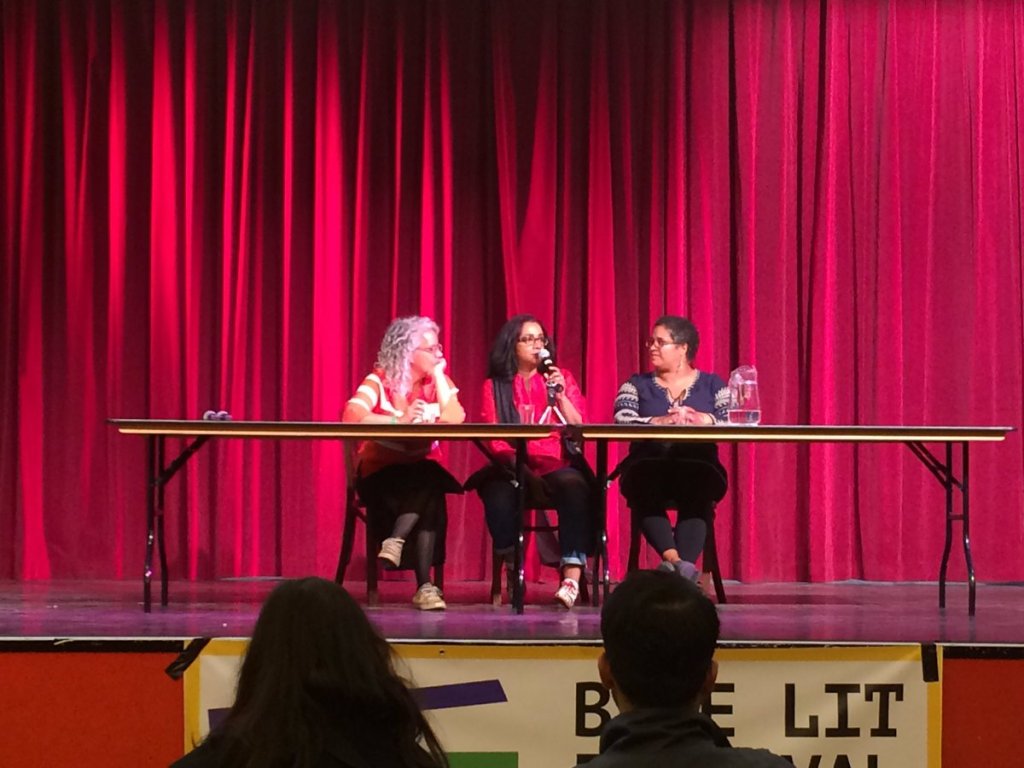
 We launched the prize at the Bare Lit Festival in February 2016 and the relief, passion, even possibly belief that we could change things was palpable from the first moment. The Bookseller’s diversity in publishing report in November 2016 further confirmed the sorry state of equality in the publishing industry. The judges, our anonymous benefactor, the prize director, Nikesh Shukla, and I – and beyond us, the wider reading community – believed that we were doing the right thing. That we were going to improve the world – our world – just that little bit. And so no amount of hard work disheartened us. We stole time from work, family, writing commitments and poured ourselves into the inaugural round of the prize.
March 17, 2017: writers, publishers, agents and the wider reading and writing community had gathered in anticipation of the prize announcement. The room was packed and buzzing when I noticed that Nikesh looked stricken.
He had received a two page, very legalistic – and yes, slightly intimidating – letter from the Equalities and Human Rights Commission (EHRC) about a ‘Potentially discriminatory promotion.’ The letter explained that an MP ‘was concerned’ that the prize ‘unlawfully discriminates against white writers.’
The letter demanded that we provide ‘evidence highlighting the disadvantage’ we were ‘seeking to address; whether we had ‘considered alternative ways of addressing the under-representation; and whether we ‘had considered alternative measures which were less likely to disadvantage other protected groups.’
Dated that very day – 17 March 2017 – the letter gave us barely eight working days to respond to their request for information. They would use our response to ‘evaluate whether the promotion’ of the prize was permitted under the Equality Act 2010.
Yes, you can draw my gobsmacked face right here. And do imagine that long string of unprintable expletives that followed!
Shall I narrate to you now, my friends, the tale of what followed? Shall I describe to you a veritable army of brave legal knights who answered our call for aid over the weekend? Shall I tell you now of the extraordinary legal eagle who put aside her commitments and stepped up on stage to save us?
The details are unimportant. What is important and comforting to remember is that the Jhalak Prize has always been about the community. And in that moment of trial, the community gathered to support the prize and all of us involved. Not because we knew any of the people who helped us but because the prize matters to them. Because equality and fairness and justice – those things that politicians often consider ‘British values’ – matter to them.
Instead let us pause the story there and turn to some questions.
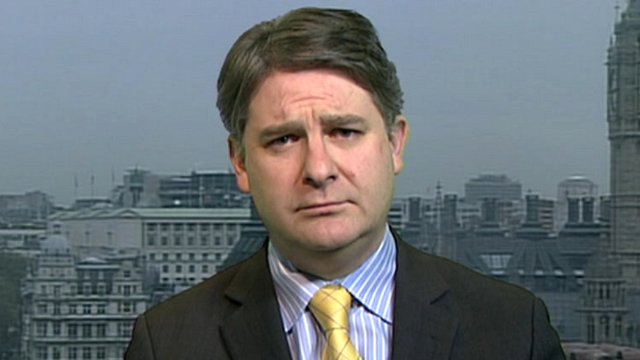
The most terrifying part of the past month has been to realise that elements of the state – the Equality Act 2010 and the Equalities and Human Rights Commission – have been deployed against two citizens and taxpayers as active means of intimidation. An MP – a Freedom of Information request identified him as Philip Davies – chooses to spend taxpayer funds (yes, my taxes pay his salary!) to shut down initiatives intended to address inequality and injustice. Moreover, he uses an arm of the state – the Equalities and Human Rights Commission – in a manner that I found to be intimidating.
A quick search shows that Mr. Davies has form in wasting time, energy and resources of the Commission. Moreover, his shenanigans in parliament indicate his disregard for fairness, justice and equality. Short of voting him out there is little that can be done. All we can do is to resist his dangerous attempts at pushing back on equality wherever and whenever possible.
However, the Commission’s role must be examined in this – and other cases. The commission describes its role as helping to “make Britain fairer….by safeguarding and enforcing laws that protect people’s rights to fairness, dignity and respect.”
The Commission chose to send a letter to the Jhalak Prize – a private citizen initiative – and gave us less than eight working days to respond. The Commission acknowledged our letter detailing the evidence but gave itself much longer to consider the case and reply fully. Needless to say, we spent that month on tenterhooks. The correspondence between the Commission and the MP shows similar lags in time (16th January from Mr. Davies, 17th February response from EHRC, and 6th of March follow up from Mr. Davies). Why was a longer time span not offered to the Jhalak Prize, especially since we were required to provide evidence and information?
In his initial letter, Mr. Davies recorded his complaint regarding the Decibel Penguin prize that had attempted to address the same inequality. In his second letter, he noted the Fourth Estate/Guardian prize and demanded similar scrutiny. Was a similar letter sent out by the Commission to Harper Collins and the Guardian for their prize? Or was it easier to chase the smallest prize – run by volunteers – instead of going after a large corporation?
I guess we will have to submit another freedom of information request to get the answer to that question.
But the Commission’s conduct in this matter has, perhaps inadvertently, resulted in the exact opposite of its stated goals. By placing the burden of providing evidence on a small organisation, it inevitably sided with the mighty. The first results on Google when searching for diversity in publishing link to the 2015 report and the 2016 Bookseller article and both could have easily demonstrated the need for the prize, even under the parameters of the Equality Act 2010. Instead the Commission chose to further burden already marginalised citizens in order to appease a member of parliament.
Lest this be seen as a ‘snowflake whine,’ let us be very clear: the Jhalak Prize was started with the aim of being shut down. And the first day it is no longer needed, everyone involved will be more than delighted to close it and move on. The judges, the organisers, the administrators all contribute their time and expertise on a pro-bono basis. To be honest, we could not do otherwise. We simply have no resources!

However, we were always determined that the prize would continue as long as it is needed. And we were convinced that if we were forced to stop – by malicious elements of the government as well as ethically perverse use of legal protections and state bodies – we will find other ways to continue fighting for equality and fairness. Fortunately, the Commission replied to us on April 18 – that it was ‘satisfied that the prize constitutes lawful positive action’ and that it is the type of action which the Commission supports and recommends.’ The letter from the Commission also makes it clear that Mr. Davies has been also informed that the Jhalak Prize – and the Fourth Estate/Guardian prize – is in fact allowed under positive action measures.
However, ramifications of this episode go well beyond the Jhalak Prize. Statistics on British inequality – and not only in publishing – need not be repeated again. Neither do we need another re-tread over the rise of the far right in Britain. What does need emphasising is the role of a statutory public body committed to people’s right to ‘fairness, dignity and respect’ acting in ways that actively subvert its stated intention as well as the purpose of the laws it purports to protect and safeguard.
The implications for wider society – groups, organisations, individuals attempting to work towards fairness and equality – are also chilling. If widely publicised, well-evidenced public research is cannot protect communities and individuals from additional burdens of having to prove and demonstrate their marginalisation and oppression, few will be able and willing to take on the challenges of creating change. How would other initiatives from marginalised groups – attempting to redress evidenced inequality – resist the intimidating tones of the Commission’s correspondence? How can those of us already removed from legal protections respond to this display of power by an elected MP weaponising a statutory public body against marginalised citizens?
Mr. Davies’s intent may be questionable but his actions have added to the burdens taken on by those structurally, socially, economically and politically less powerful than him. The Commission’s actions may have been routine but have inadvertently added to the burdens already experienced by the marginalised, have added to the unfairness and inequality already embedded in the industry and society.
For the MP and the Commission, the actions may have been routine, even explicable for bureaucratic, political and legalistic reasons. But in both cases, they remain needlessly albeit perhaps inadvertently unnecessary and unethical.
All work published on Media Diversified is the intellectual property of its writers. Please do not reproduce, republish or repost any content from this site without express written permission from Media Diversified. For further information, please see our reposting guidelines.
Sunny Singh was born in Varanasi, India and studied at Brandeis University (USA), Jawaharlal Nehru University (India) and University of Barcelona (Spain). She has published two critically acclaimed novels and a non-fiction work on single women in India. Now based in London, she teaches creative writing at the London Metropolitan University. An expert on Bollywood, she is currently finalising a book on Amitabh Bachchan for BFI/Palgrave’s series on Film Stars. Her new novel, Hotel Arcadia, will be published by Quartet Books in spring 2015. More information on her writing can be found at: sunnysingh.net Tweet her @sunnysingh_nw3




 Media Diversified
Leave a comment