
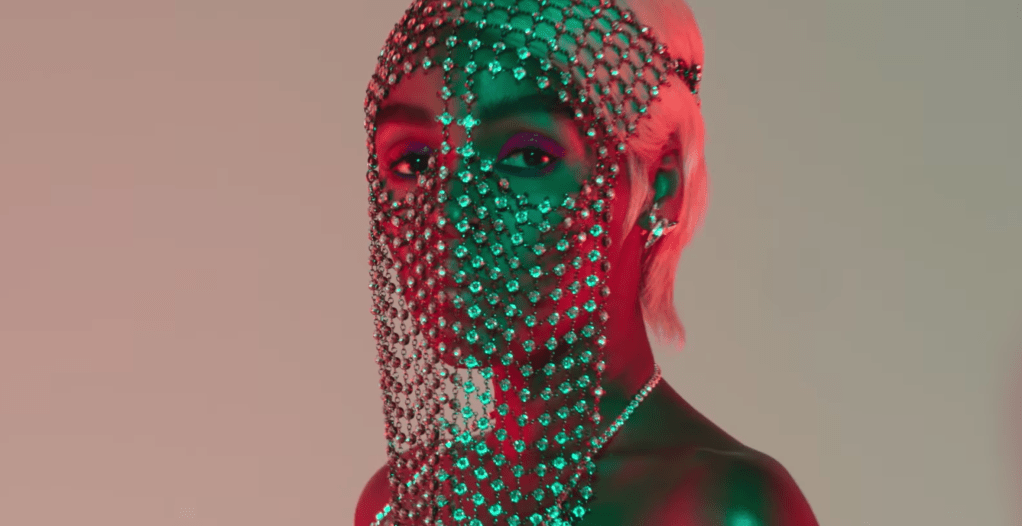
Janelle Monaé’s critically acclaimed Dirty Computer lost out on Album of Year award at this year’s Grammy awards. Ayika Tshimanga revisits the album and its significance to marginalised people
At the Grammy Awards ceremony on February 10th, Janelle Monaé lost the coveted Album of the Year award to Kacey Musgraves. And so, the Recording Academy did what it has always done since its inception – it deliberately avoided culturally defining moments by undermining artists who are often the creators of the very best and most definitive work of the year. Not coincidentally, these artists often hold marginalised identities that directly informs the significance and quality of their work.
The Recording Academy chose the safest bet, Musgraves’ Golden Hour, a record that is soft, nostalgic, and innocuous especially when compared to Monaé’s fantastical, political, and entirely unique, Dirty Computer. The Grammy’s decision to choose tradition over evolution was so predictable that it was nearly satirical.
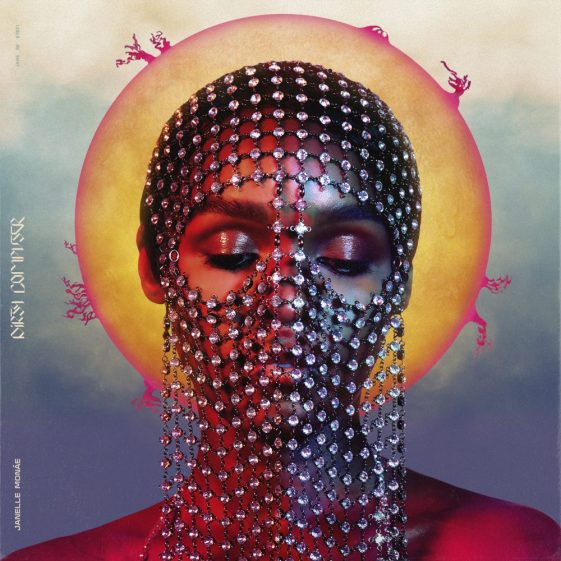
Dirty Computer was not just a solid body of work, but unlike the other albums nominated in the category this year, Dirty Computer will be enshrined in the histories of women and Black and LGBTQ+ cultures. This album and its identically-named “emotion picture” will serve as a point of reference for the following generations to define the current state of the world. Monaé didn’t just deliver an album but rather a cultural record of bravery and defiance in the face of a Trump presidency and the rise of global conservatism.
Because our pop cultural icons and celebrity deities have substantial impacts on the ways groups with their shared identities are seen, had the Grammys – an institution positioned to impart value – awarded Monaé with its highest honour, it would have set a precedent in improving the way we look at people who exist on the outskirts of the status quo. Consequently, because they chose to neglect the best work which happened to be born of a Black LGBTQ+ identified-woman, it reinforces the belief that even though this type of person has pushed boundaries and contributed to cultures in ways that will ultimately become standard, they are still not good enough.
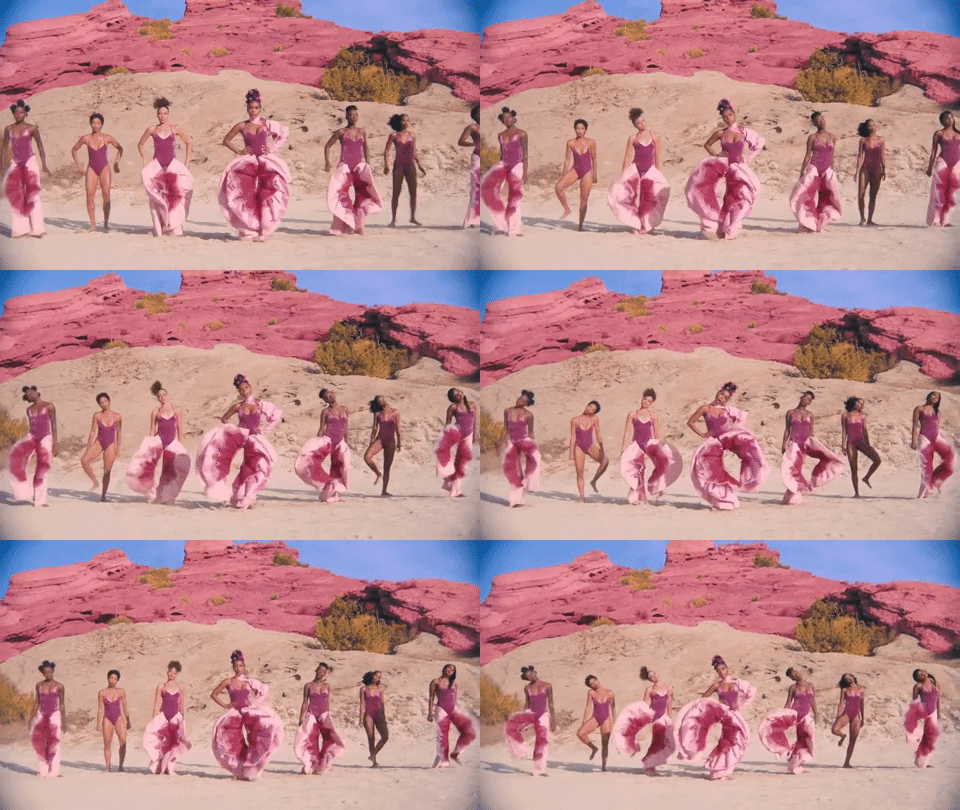
In constructing a world to affirm women, LGBTQ+, and Black people through a story of beauty, perseverance, and resilience within groups mainstream society discards, the album’s loss was already foreseen in itself. From vagina pants and not so subtle commentaries on patriarchy, seen in her repurposing of binary gendered coloor association in order to empower women and feminine people on Pynk to her all-rap record, Django Jane, which sanctifies the Black working class, recognises intersectionality and vindicates deviant gender expression, every aspect of Monaé’s art honours people on the margins.
Monaé’s message is further captured in the visuals she uses to symbolise and represent the multifaceted features of humanity that aren’t serviceable to the Western normativity. In a slight move away from her past narrative work, Monaé isn’t the freedom-fighting android, Cindi Mayweather, who resists oppressors but instead she is a newly awakened human, Jane #57821, who becomes aware of her dystopian world in which radicals (dirty computers) are apprehended and forcibly cleansed of their memories.
The callousness of agents in Dirty Computer’s New Dawn state is reminiscent of the stories described by survivors of fascist regimes and not too far removed from the practices we see in our current political climate. Had the song Americans, which speaks most directly to the racist, nationalist, and nativist traditions of the U.S., been given a visual accompaniment it would have conceivably been too on-the-nose, provided the recent establishment and well-maintained presence of the militaristic Immigration and Customs Enforcement agency (ICE) in the U.S.
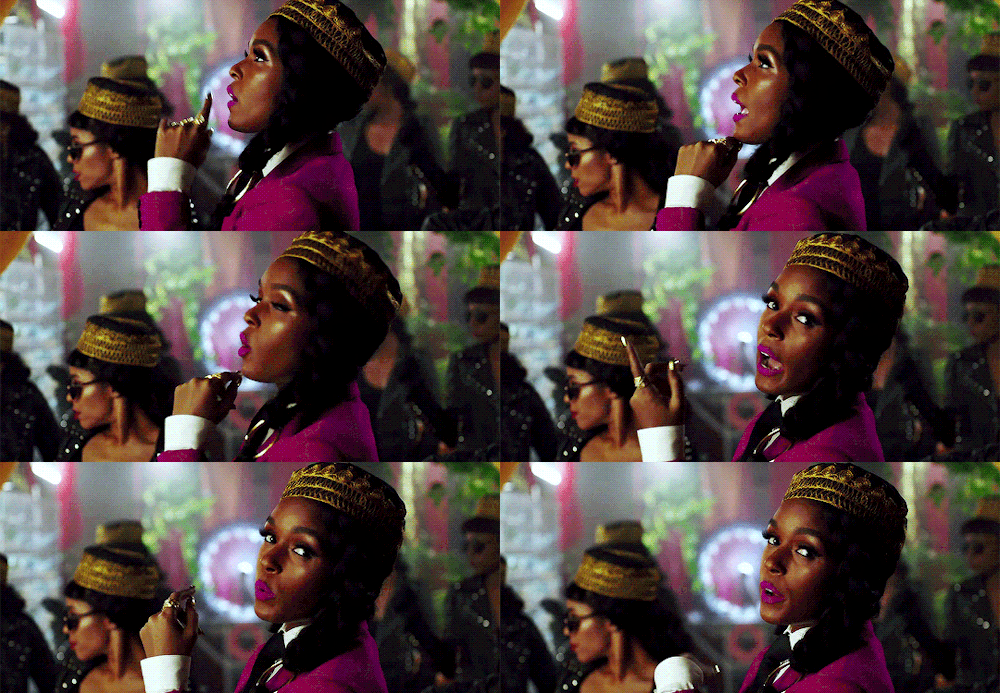
Monaé is masterfully able to bridge that gap between unfiltered creativity and mainstream standards to appeal to pop lovers with conditioned ears and eyes. Monaé’s delivery of psychedelic synthesisers, rhythm guitars, and funky basslines makes for an invitingly warm production. Dirty Computer’s sounds draw from the new wave sound of the 80s and 90s pop-rock as well as timeless R&B. Her late mentor, Prince, is also eternally present in spirit in her music, as you feel his essence in songs like, Screwed and Make Me Feel.
Monaé’s creativity and brilliance shine in the ways she reimagines Aerosmith’s Pink, for her deification of the vagina and femininity: two entities both objectified, trivialised and subjugated for their association to women in a violently patriarchal order. In the woman warrior-inspired Django Jane, Monáe introduces new listeners to her hip-hop roots and earnestly delivers better and more thoughtful bars than most mainstream male MCs can even dream to produce. The heavy-hitting record matches Monaé’s feminist declarations with hard bass kicks which drive the instrumentals. Monaé has indeed got us all inspired.
Nevertheless, in all of Monaé’s artistic feminist glory, the Grammys chose to uphold a value system that is reflected in our larger societies which has allowed cisgender and heterosexual white men to possess importance no matter the quality of their work, actions, and thoughts which has directly affected social, political, and economic conundrums globally since the 14th century.
Because our society is hierarchical, the next in line after white men, are bestowed value. These works and artists often do not disrupt the status quo but rather serve as reminders of how things “ought to be,” such as in the case of a soft, nostalgic, and innocuous Golden Hour. This isn’t a slight to Musgraves, her album was good. However, there was an album that was multidimensional in its existence and did more than good.






 Media Diversified
Leave a comment