

by Lee Pinkerton Follow @_Runawayslave

Farrakhan’s a prophet that I think you ought to listen to.”
Now fast forward to 2012. Rap music has come of age and rap groups now perform in arenas. The hottest rap concert of the year was Jay Z and Kanye West’s Watch The Throne tour. They sold out five nights at London’s O2 Arena, and as a finale they shut the place down with four encores of the track Niggas In Paris.
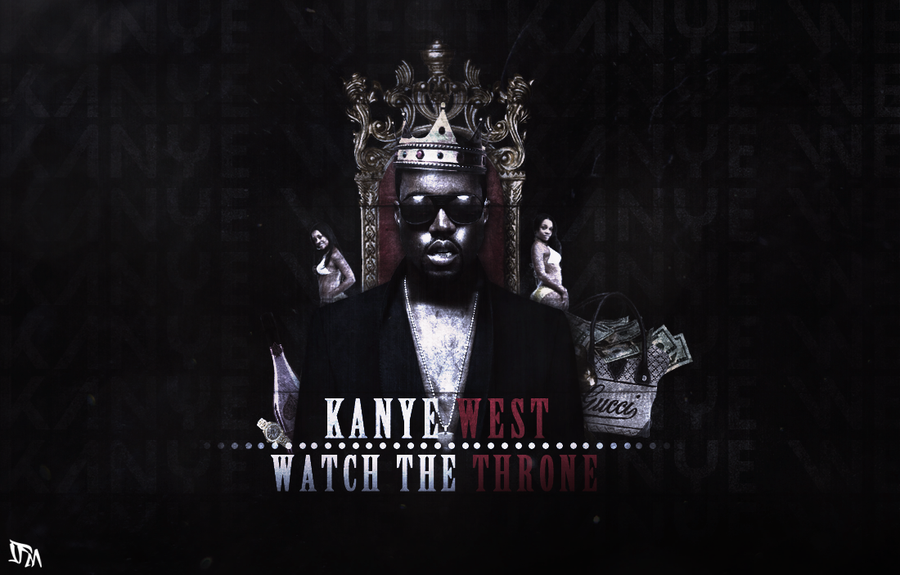
Much as I love Jay Z and Kanye, as much as I love their album, and as much as I love that track, I’m not comfortable with them going all over the world, performing that song, and using that word in a context where white people who like hip-hop think its now okay for them to use that word too.
The use of the term by Black people amongst themselves is still controversial, but its hard to argue against when comedians like Richard Pryor and Chris Rock have used it so artfully in their stage shows through the years. But for white people who might be reading this and are feeling conflicted as to when it might be appropriate for them to use the term, let me give you some guidance. NEVER.
Stepping back from the ‘n-word debate’ for a moment, whatever happened to conscious rap? Chuck D was not pleased when Jay and Ye released Otis, the first single from their collaborative album. He argued that it was insensitive for them to be rapping about their thousand dollar watches and million dollar lifestyles at a time when the world is in recession, and thousands of ordinary folk are struggling just to pay the bills.
“New watch alert, Hublots/ Or the big face Roley I got two of those/ Can’t you see the private jets flying over you?/ Maybach bumper sticker saying ‘What would Hova do’?
Sadly, no one seemed to be listening, because nowadays Chuck D is no longer the frontman for rap music’s most high profile group, but, like a hip-hop Bill Cosby, has been relegated to the status of a kill-joy uncle grumbling from the side-lines at the family BBQ. “Ahh shut up complaining Uncle Chuck. Have another piece of chicken, go sit down with the old folks and let us young kids have some fun”.
But many of my generation agree with Chuck’s viewpoint. When we cut our musical teeth in the late 80’s and early 90s, rap was music of the revolution, a force for positive change. Rappers wore Africa pendants and Malcolm X caps, Public Enemy’s Fight The Power provided the soundtrack for Spike Lee’s greatest film Do The Right Thing, and the lyrics of KRS 1, Rakim, and Brand Nubian provided the running commentary to our daily struggles.
In the 21st century, rap music has become the theme music for conspicuous consumption. No longer quoting from the Qu’ran but instead reading from the pages of GQ and Forbes magazine. The Golden Era led by Public Enemy gave way to the Bling Era led by Jay Z, and the Dirty South sound that now dominates led by Rick Ross. As Talib Kweli put it on the Reflection Eternal album….
“These cats drink Champagne, to toast death and pain,/Like slaves on the ship talkin’ bout who got the flyest chain.”
Sadly, looking back on those glory days of the Golden Era, I realise that conscious rap was just an aberration, merely a temporary blip. Rap was always about ‘flossing’ and bling, or rather bragging and boasting as it was called back in the day. The very first rap record, Rappers Delight, released in 1979 by the Sugar Hill Gang, was little more than 15 minutes of braggadocio.
For those too young to remember, here’s a quote.
“You see I’m six foot one and I’m tons of fun and I dress to a tee/ You see I got more clothes than Muhammed Ali and I dress so viciously/ I got body guards I got two big cars, I definitely ain’t the wack/ I got a Lincoln Continental and, a sun-roof Cadillac.”
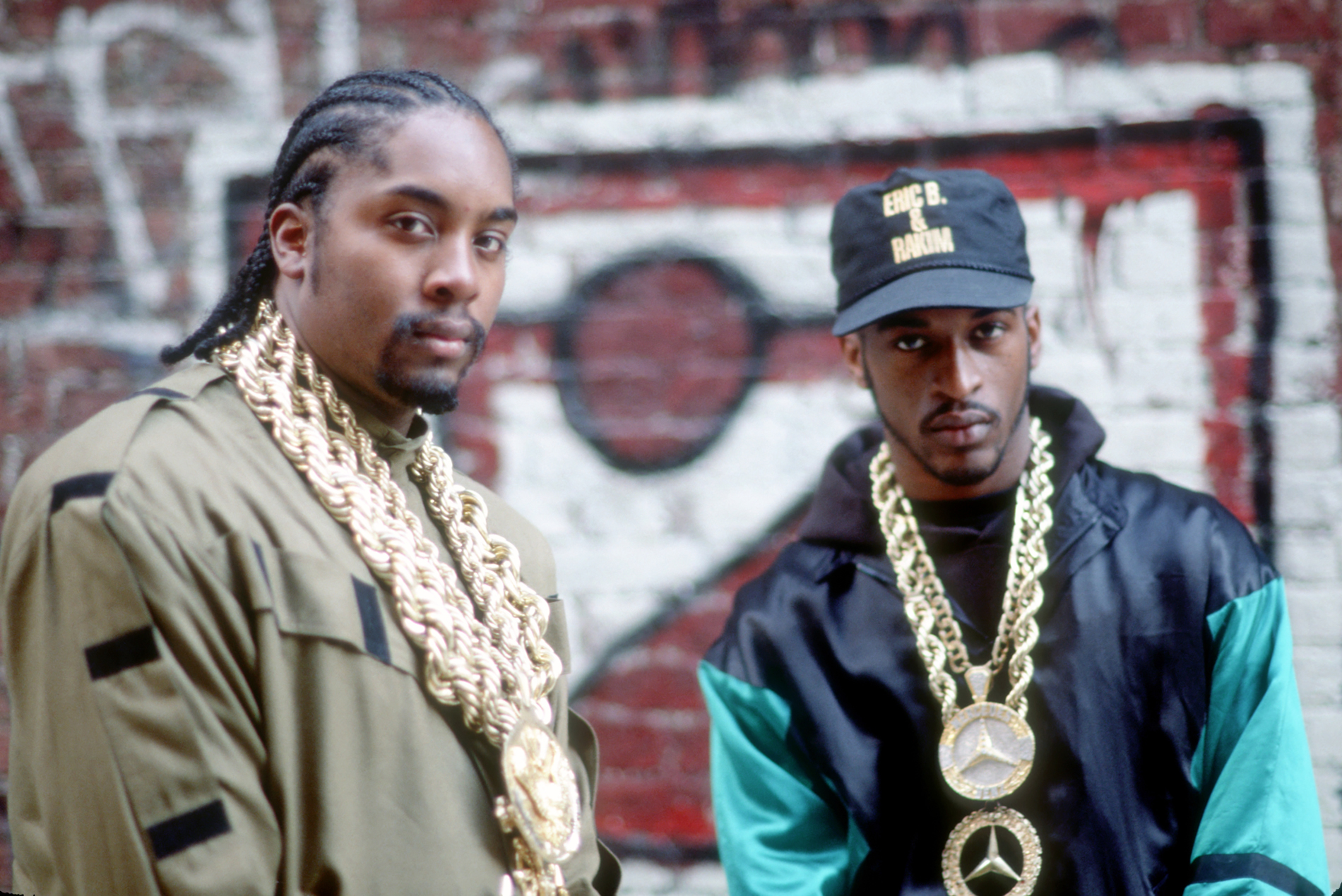 Remember that EPMD stood for Eric and Parrish Making Dollars, and Eric B and Rakim’s first album was called Paid In Full. Jay and Ye are just carrying on the tradition, only now they are talking about private jets rather than sun-roofed Cadillacs. When people who are used to having nothing, get a little something, they just can’t help showing it off.
But another important development is that not only are those angry conscious rappers of the 90’s now middle-aged men, but those independent record labels that developed the genre, either no longer exist, or have been absorbed into the majors. Whilst those iconic labels like Sleeping Bag, Profile and Def Jam were headed by people from the culture who wanted to accurately reflect it on wax, these major labels just want to market and promote more of what sold big last year.
A similar thing happened in soul music. That socially conscious music of the 70’s that we love to hark back to, was just a blip disruptingthe steady stream of ‘baby I love you’ lyrics that predominated from the 1950s right up to the present day. Stevie Wonder might have been talking about Living For the City and Jesus Children of America in 1974, but by the 1980s he was back to singing I Just Called to Say I Love You. Marvin Gaye might have been asking What’s Goin’ On? and Save the Children in 1971, but by 1982 he was back to singing Sexual Healing and Rocking After Midnight. There must have been something in the air in the 70s and the 90s that woke Black people up and prompted them to look around and consider their circumstances. But that mood was soon lost and we returned to our slumber.
The truth is that Black music is more often something we use to forget our problems rather than address them. A soothing lullaby rather than a rousing alarm call. As the saying goes,
‘some people would rather die than think, and sometimes they do’.
Lee Pinkerton was born in London, the child of Jamaican and Guyanese immigrants. After studying Sociology and Psychology at University he spent the 90s as a music journalist, first as a freelancer for magazines such as Mix Mag, Echoes, and Hip-Hop Connection and then as the Arts Editor for ‘Britain’s Best Black newspaper’- The Voice.
In addition to this he also wrote a book the Many Faces of Michael Jackson published in 1997.
His latest book The Problem With Black Men examines the causes of the social problems facing Black men in Britain and America today.
He can currently be heard as a regular on-air contributor to the ‘ACE show’ on BBC Radio Derby and his political polemics and cultural criticism can be read on the blog-site The Black Watch and his daily musings on Twitter @_Runawayslave.
Related articles
- The Lost Prophets: who does Hip Hop think it is? (mediadiversified.org)
- The New Prophet (mediadiversified.org)
- The N Word: Who Can Say It, Who Shouldn’t, and Why by Jabari Asim
- Public Enemy’s Chuck D slams Jay-Z and Kanye West for using the word ‘n***a’ | NME.COM
- My name is Fela Anikulapo-Kuti. Black president or Chief Priest of Shrine (mediadiversified.org)
- Nina Simone – The High Priestess of Soul (mediadiversified.org)
- Why NWA should be inducted in the Rock N’ Roll Hall of Fame (thegrio.com)
- Eric B & Rakim – Lyrics of Fury (addictedtothe90s.com)





 Media Diversified
Leave a reply to Akwesi Shaddai Cancel reply