
by Kayla Ancrum Follow @Kwritesfiction
A colleague of mine was talking to me recently about her misgivings about her capabilities regarding writing Women of Color. She wanted very badly to include several WOC characters in her sci-fantasy series, but she had some concerns about correct portrayal and writing them in a way that wouldn’t instantly piss people off. I told her I would write something about it that might help. So, here we have it: How to write POC without pissing everyone off and doing a horrible job.
When writing people of color, producing quality work comes down to three things. Research, Persistence and Consideration. To streamline the effectiveness of this essay, I am going to use the individual struggles of Black women, Native Women and Mixed Race women as examples within each section, as they each represent different (yet very important) racial environments that need consideration.
1. Research is by far the most important thing. EVER. For this example, I am going to use the circumstances under which one would attempt to write black women.
It is important to start by trying your hardest to forget anything you think you know about black women and black female identity. As a white person, anything you would know about them you probably learned from media that is not controlled by or monitored by black women themselves. Meaning that it is likely not a good representation of black women at all.
Or maybe you just have a black friend.
This, you should consider in the same way you would a control group for a science experiment. One or two subjects would not provide conclusive evidence in regards to any hypothesis. Having one or two or even five black friends can’t help you with understanding the complex history of black discourse….
In order to start from scratch, I would first spend some time reading literature written by black women for black women. Learning the way black women have discourse among each other is the first step to understanding their perspective AND emulating their voice. Literature is the genre of media where POC (People of Colour) have the most liberty (unlike film) to discuss certain topics or parts of their identity.
Then, I would delve into “complaints”. There are thousands upon thousands of articles where black women complain about their portrayal in media. These complaints are both valid and often eloquently expressed. It is important for you to know, what things black women (WOC) are already so tired of seeing in regards to incorrect or offensive portrayals of themselves. Not only will it help you avoid making the same mistakes as white writers before you (an example of this: Arthur Golden and the hot mess that is Memoirs of a Geisha), But it will also get you upset about certain ways black women (POC women in general) are portrayed, and make you want to write them better. This can improve your writing in that not only will you avoid being offensive, but you now have the chance to be progressive and kick stereotypes out the window!
Finally, I would take some time to follow some tumblr blogs that are run by the group you’re trying to write. This part of the research can really help because you’ll get a first hand, contemporary dialogue about issues within the specific POC community. Which leads me to my second topic…
2. Persistence. While doing your research you may come across perspectives and narratives that hurt your feelings, overwhelm you with “white guilt”, or which offend you to the point of anger and frustration.
This is normal.
For several reasons, actually.
The first is that, you are coming from a place where, as a white person, your opinions and feelings are usually considered more important or more valid than the opinions of POC. Being in a place where literally no one is there to defend you or care about your white perspective is jarring. And secondly, there are just so many things for POC to complain about (and the aggressive way that some people discuss this) that it may have you feeling like a victim of bullying and prejudice after a while. It is important to remember that even if everyone on that specific blog/site is ranting and raving and it’s making you feel like shit, you can still close your computer and go out into the world and not have to endure the real life problems and prejudices that these people have to face.
So, I’m going to say that even in the face of this, you should PERSIST and continue to read what they are saying. A lot of the harshness is born from anger. And as I have said several times on my blog, anger is a secondary emotion. So this blinding rage some POC have for white people is not born of bigoted prejudice, but rather from old hurt. Or fear. Or pain.
While reading these accounts and complaints and cries for justice, you must must must disassociate your personal feelings about the issues and just sit quietly and listen. The more emotional you get about it, the more likely you are to pull back and devolve into cries of,
“BUT I’m not personally responsible!” and
“You’re just being racist against white people” or
“why can’t everyone just be nice to each other.’
You have to remember that the point of this exercise is not to point fingers, try to defend your innocence, to feel so bad about yourself and your whiteness that you want to die, or so angry you try to put those POC back in their place (as I have seen some people do on tumblr). It is to educate yourself about the issues that this group (you are trying to portray) have strong feelings about and discuss in their everyday life.
This is not about you, this is about them. And if you are going to be entering their “safe spaces” and taking a peek into their private discourses, there needs to be the understanding that you are not priority. Be a fly on the wall, not the Kool-aid man.
In this example, I’m going to use the racial environment of Native women. If you are going to write a story about a Native woman (Or indigenous women and a white explorer/character), it would be so sO SO awful to write any narrative even similar to Pocahontas. A great example of this going absolutely terribly is James Cameron’s Avatar. So Many People were angry about that in the Native community. So many people were angry about Pocahontas too. Probably because of the horrifying contemporary rape statistics for Native women where the vast majority of their attackers are white men.Plus, all the genocide and stuff.
If James Cameron had spent some time reading things written by Native people about Pocahontas and what that storyline means to their people and how offensive and damaging the sexualization of native women is, he might have reconsidered that romantic subplot. If he had started to read and then balked at all the vicious hatred and anger, it is as if he never even tried.
No one is going to care if you “tried” to read things from the perspective of WOC and were put off by their anger/the way they expressed their discontent, and then decided to just write your story with your native characters however you damn well pleased. All they are going to see is one more character written with absolutely no regard for realism and they are going to rake you over the coals for it.
However, I am going to say this. There ARE some amazing examples of white people writing POC/WOC and taking all this shit into consideration. And it really shows.
 A great example of this is the character Loor from the Pendragon (fantasy) series. She is a black (main) character who winds up having a romantic entanglement with the white main character. Everything about her storyline and her culture (which was crafted by the author) is handled so fucking carefully and artfully, that even though the book series was wildly successful, you can find next to NO ONE complaining about her portrayal or design. (Personally, I would pick up that series, and take a gander at it)
Another FANTASTIC example of this is the gyptians from the His Dark Materials (The Golden Compass) trilogy. The Gyptians were clearly based off of the Roma people (who are usually and insultingly called gypsies). Again, wildly successful, handled delicately, no one complaining.
Try to be like them. Study their books and the ways they positioned certain things or handled gentle topics.
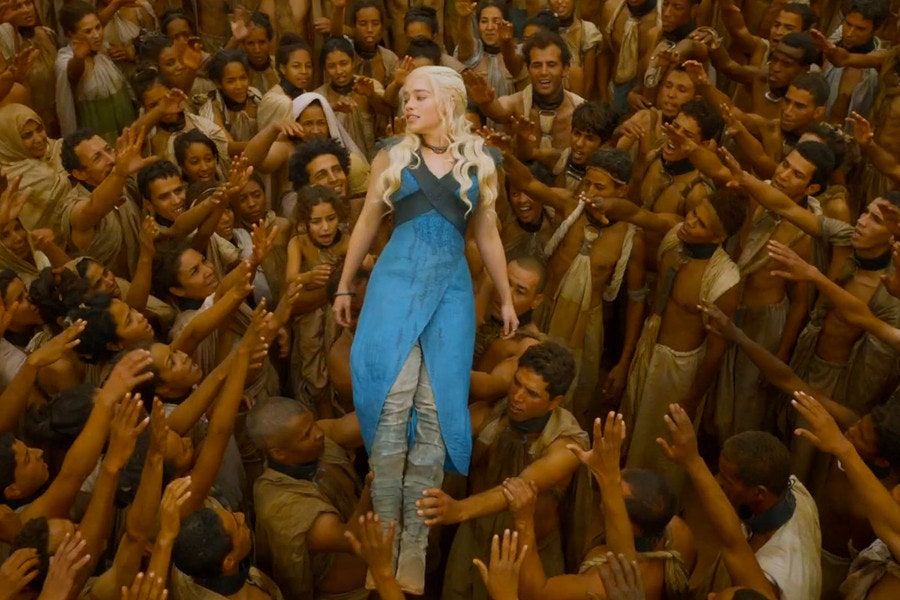
Even if you’re creating a race of brown people who have no realistic comparison between any cultures we have here on earth. YOU STILL NEED TO SPEND SOME TIME RESEARCHING. Other wise you’ll wind up pulling a George RR Martin and have to take responsibility for dealing with the repercussions of that decision .
And you do not want that.
3. Consideration. This has less to do with reading and more to do with thinking and perspective and empathy.
After you have read all the information you can possibly force in your gorgeous noggin, you now have a decision to make: Should you write the character as “white acting” or should you make a whole lot of effort to showcase racial stuff?
This is a really sticky choice and really has to do a lot with your character’s personal identity and their position within your story.
But it is important to know that there is no such thing as “white acting”. Rather, there is more of a ”Western Neutral” Western culture was not completely crafted by white people, so to call a POC “white acting” is just incorrect. I’m offering the term “Western Neutral” to make a difference between what is clearly a rift between WN and Ethnic identity.
Some POC are raised in environments that are heavily Western Neutral, Especially wealthy and upper middle class POC. So technically, you coould write them completely WN and that would be a correct way of writing that POC character.
HOWEVER. Just because a POC is heavily WN, doesn’t mean that the rest of their world (and our world, for that matter) instantaneously stops perceiving them as a POC. An amazing example of this is Cho Chang from Harry Potter.
Also, characters within your text will also be perceiving your POC character as Ethnic, even if they are heavily WN. There is NO SUCH THING as colorblindness. A great example of this is the relationship between Alai and Ender in Ender’s Game. Alai and pretty much all POC characters in that book are WN as hell, but Ender (being white) is constantly commenting on their ethnicness. Not because he’s a racist child. But just because he can SEE it. Do NOT have your white characters pretending that POC aren’t POC. It will fall flat and seem heavily unrealistic. Plus there are the racist implications of “colorblindness” to consider.
A good example to use in this section are the struggles of mixed race characters. Mixed race people are often hyper aware of their racial perception. So if you were to write a character who was mixed race, You would have no choice but to write them with that awareness. Their reaction to it is completely up to you, but they WILL be aware of it.
That is being empathetic to their racial identity and understanding their perspective.
………….
Basically, If you are going to write a character who is not like you, it takes work and time. Lots of work and time. The portrayals of POC in our media tend to fall into two categories: Insulting/problematic or nearly non-existent. Some works of fiction manage to capitalize on both.
So, if you don’t want to join the legion of white writers who have royally messed up and add your name to the list of people POC rage at regularly, try to take these things into consideration.
Try your best, don’t not write POC characters because it’s hard, and keep writing.
Love,
Kayla
___________________________________________________________
Kayla Ancrum is an American YA novelist. She graduated from Dominican Universities with her BA in English. She currently runs the blog KAYLAPOCALYPSE, where she provides information about the writing and publishing process for other young authors, as well as original articles about writing tropes and diversity in media. Find her on twitter @Kwritesfiction
___________________________________________________________
Media Diversified is a 100% reader-funded, non-profit organisaton. If you enjoyed reading this article, please consider donating






 Media Diversified
Leave a reply to Tory Cancel reply