
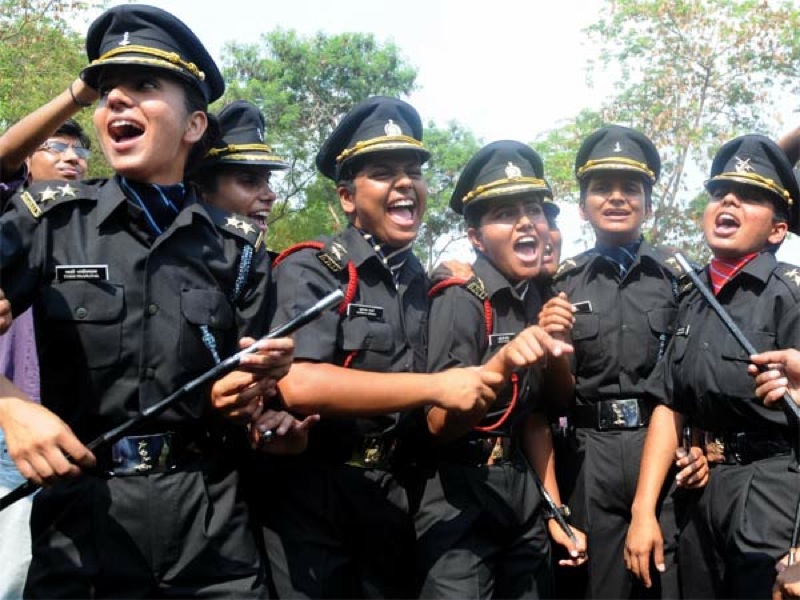
What use is diversity in popular culture when it still conforms to narrow aesthetic norms? Sunny Singh discusses women’s “range of life stories, complete with joys and tragedies,”
 A renewed concern with the race politics of beauty has been fueling recent lively discussions about colourism, hair and the lack of representation of models of colour in popular media and on the runway. For those such as bell hooks, the popularity and promotion of practices such as skin bleaching and hair-straightening are unambiguously part of a ‘colonized black mind set’ that should be resisted. In her introduction to the book ‘Black Looks’, hooks argues that throughout history ‘control over images is central to the maintenance of any system of racial domination.’ Here I want to contribute to these on-going discussions by drawing upon my experiences growing up in India at a time before the liberalisation efforts brought in global media and its standards to us. Might such early experiences provide possibilities to resist what hooks sees as ‘a racist imagination’?
In the time that I was living in India, I was surrounded by women who not only looked more or less like me, but embodied a range of life stories, complete with joys and tragedies, aspirations and dangers, functioning at once as idols, role models and warnings of the choices we made.[i] Popular culture – film, television, magazines, books – included women who were not so far removed from me.
For example, film stars like Zeenat Aman, Hema Malini and Neetu Singh signified both a range of facial features and body types, but also an array of social differences. At school, we would compare notes, and choose our favourites: the traditional ‘good’ girls liked Malini; the tomboyish, rebellious ones chose the glamorously cosmopolitan Aman; and many who were balancing traditional backgrounds with aspirations of modernity, looked up to actors like Singh.


Looking through magazines and newspapers, we knew there were women police officers, doctors, lawyers, politicians, just as there were beauty queens and fashion models. Not all of them were happy, successful, or even particularly beautiful, but collectively they told me that I existed as a complex, full human being. We were offered a range of bodies that not only looked like women I knew and loved, but also those that I could grow in to: large dark eyes, masses of unruly hair, often curves like those of our temple sculptures, and skins that ranged from floury white to honey gold and dark cocoa.
When a few weeks after my sixteenth birthday my family moved to New York, I had already read up on ‘culture shock.’ I was prepared for the alienation, isolation; the ‘strangeness’ of a new place. I wanted to be awed by the slick modernity I had coveted in travel magazines even as I feared that I would miss friends and family left behind in India. What I was not prepared for was a near-complete semiotic erasure.
In the 1980s, there were few Indian women on western screens or pages. When they needed an ‘Indian’ to play an exotic princess, for example, they used a Western actress and dressed her up in vaguely diaphanous, colourful silks and painted her eyes with kohl. We rarely even featured in news items. It wasn’t that we were exoticised, or stereotyped. That came later. It was that we didn’t exist in popular media, in the communally shared imagination. Did not exist. Full stop.
Of course, there were also very few African American and Latina women on screens, pages, and billboards either. In the face of such erasure from popular culture, I found myself grateful for the monthly shipments of videos and magazines from India. We found the ‘Little India’ shop in lower Manhattan, making regular pilgrimages there for the videocassettes with covers that featured women who I could aspire to look like, and men who found such women desirable. I also found women friends who were erased as equally, albeit in different ways, and so knew how to offer support.
On one giggles-filled afternoon with a Latina friend working in a designer warehouse, a bunch of us tried on clothes, calculating our differences with measuring tape, gasping at how none of us ‘fitted’ the apparently ‘right’ proportions. One by one, we tested ourselves against the apparently perfect measurements and dissolved into laughter as we failed to meet the narrow criteria that apply to not only high fashion, but to all clothing. I remember we solemnly promised that we would blame the clothes and not ourselves when they didn’t fit correctly on our myriad shapes.
In the years since, we have repeatedly reached out to each other for support as we ride the constant rollercoaster of hope of inclusion and disappointment with our representation. Even when women of colour make it into the public eye, they are carefully selected to fit a dominant Eurocentric mould: wide eyes, narrow noses, full but not too full lips. Bodies are restricted too, with no sign of our full breasts and wide hips, or the shorter, fuller, powerful physiques that propel us through this harsh world. Our stocky limbs are elongated into gazelle-like frailty, skin lightened to match make-up, and curves shorn into planes. These fabrications stretch into consumer culture that supports and abets popular imagination. After all, ‘nude’ stockings, shoes and underwear still ignore how my skin won’t go pale on command.
But there is also something more pernicious going on in the politics of beauty that we can be complicit with. It is something that also confronted the ‘Black is Beautiful’ campaigns of the Black Power movement in the 1960s. What I am referring to has two sides: how our very resistance to narrow Eurocentric standards of beauty can reinforce ideas about what an ‘authentic’ beauty of colour might be; and second how our differential inclusion in media representations can be at the cost of other exclusions.
For example, our rare appearances in popular culture can create a tyranny of a more subtle kind of erasure: we are included but only if we conform to certain standards. These token gestures are chimeras. They can re-inscribe a racialised aesthetics and narratives onto our skins and bones such as in the recent criticism of the Vogue Black pages on the website of Italian Vogue. Seeing a body of colour in mainstream media is so rare that we can receive any scrap gratefully. Yet the tokenism inherent in such representation, as well as an insistence on body conformity is far from liberating. What difference does it make, for example, if we see more of the darkest skinned models but these models still conform to the skinny, tall body type?


In retrospect, my friends and I were fortunate. We had all gained our senses of self elsewhere: Zimbabwe, Columbia, Malaysia, India. We had already tasted the heady elixir of seeing something of ourselves reaffirmed by popular culture and that relative, circumscribed power provided an opening for resistance and resilience.
Neo-liberal globalisation has resulted in the opening-up of borders to images from other lands, but all too often the dominant media is exported from the West. When powerful transnational media conglomerates export products, they are also helping to manufacture and export narrow, aesthetic standards through television programmes, high fashion advertising and films. This pervasive, steady drip replaces global diversity with a single impossible aesthetic that is historically aligned with political power, racial, heteronormative and economic might.
India’s film industries, for instance, have grown more shadeist in the aftermath of the 1992 liberalisation policies than ever before, and there is a far narrower aesthetic spectrum on offer not only in terms of skin colour but also body types. Yet cis-gender girls in India are still relatively fortunate: the vast range of popular media means that a diversity of body types, skin colours and storylines are still possible. And that range of images mean that more young people can imagine, desire, work for and achieve a host of possibilities.
Sadly those same possibilities are still missing for many who live in places like New York, Paris or London.
Despite years of living in London, I find myself pausing when I see a woman with dark eyes and hair like mine on television. On pages of magazines and newspapers, things are worse. Not only are women who look like me few and far between but also when they do appear, it is mostly as victims (generally of other men of colour, never of institutionalised racism or sexism). And even more rarely do we appear as beautiful or desirable in our own right, and not as the exotic other, with the requisite nod to what is supposed to be Bollywood.
In mainstream media, our migration stories, even when told by us, are squeezed into tragic ‘West as safe haven, Western saviour’ tropes, now given an added homonationalist weight since gay sex has been re-criminalised in India. Heterosexual loves when intra-ethnic are considered symptoms of backwardness and oppression; when inter-ethnic as evidence of self-hatred or gold-digging. Our families do not exist in the mainstream media except as the butt of jokes or hideous perpetrators of abuse. And so too with our men: alternatively desexualised or over-sexualised. Queer bodies of colour, across the spectrum are even further marginalised, exoticised, fetishized or deemed undesirable. Worst of all, this goes unchecked and unrecognised because of the dominance of ‘white saviour’ discourses or the fallacy that one oppressed group (white LGBTQ in this case) cannot oppress or be complicit in oppression of others.
Even news stories of our professional achievements are framed consistently in familiar tropes of ‘overcoming great odds,’ which are always identified as individual, familial and cultural
[i] It wasn’t until my return to India in my twenties, when I had grown aware of media’s power that I began noticing how being part of a majority privileged me. Indian mainstream media erased and still erases many of the friends I grew up with who are from the mountain and the North East of the country. The mechanism is similar as are the pernicious consequences.
All work published on Media Diversified is the intellectual property of its writers. Please do not reproduce, republish or repost any content from this site without express written permission from Media Diversified. For further information, please see our reposting guidelines.
_________________________________________________
Sunny Singh was born in Varanasi, India and studied at Brandeis University (USA), Jawaharlal Nehru University (India) and University of Barcelona (Spain). She has published two critically acclaimed novels and a non-fiction work on single women in India. Now based in London, she is teaches creative writing at the London Metropolitan University. An expert on Bollywood, she is currently finalising a book on Amitabh Bachchan for BFI/Palgrave’s series on Film Stars. Her new novel, Hotel Arcadia, will be published by Arcadia Books in spring 2015. More information on her writing can be found at: sunnysingh.net Tweet her @sunnysingh_nw3
Feminism, womanism and Intersectionality series “Complicit No More” curated by Yasmin Gunaratnam tackles the cross-cutting facets of complicity as they play out within our relationships to our bodies, each other, our communities, to media representations and to mobilisation.
You have selected an article from our “Complicit No More” feminism and intersectionality series. The essay is available to read in it’s entirety in new e-book “Complicit No More” On sale at Amazon.co.uk here or in the U.S here



 Media Diversified
Leave a reply to Tiara Cancel reply