

by Aude Konan Follow @AudeKonan
“I am fed up of fraternity without equality. What’s the point of fraternity if it doesn’t work with equality. What’s the point of fraternity if it’s just a joke in poor taste. Fraternity doesn’t work if we’re not equal.”
– Leonora Miano[1]
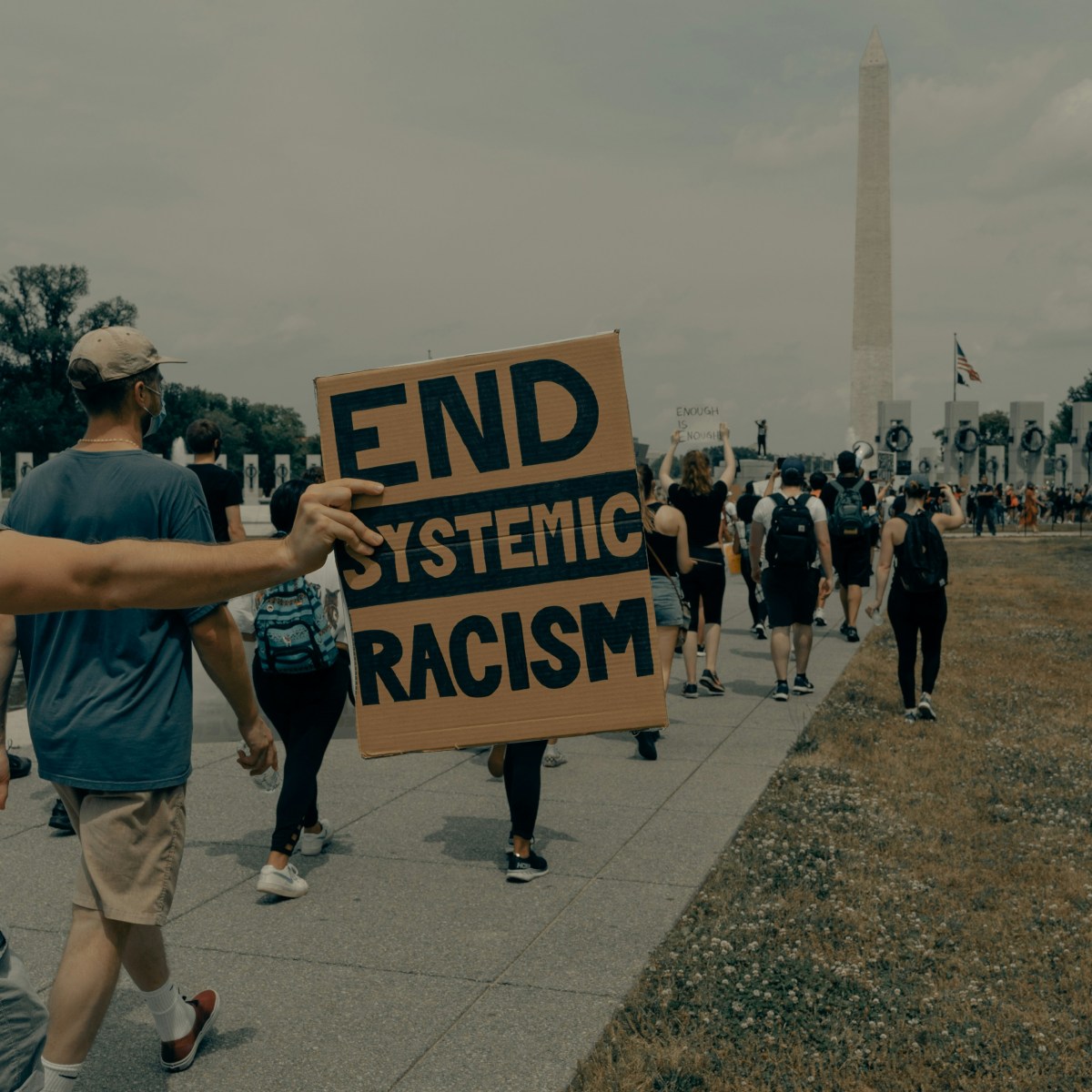
A new French study has revealed that racism is on the rise in France, with half of the French population admitting that they have a racial prejudice. Contrary to the popular belief that racists are old people who are right-wing, the study reveals that 65% of people under the age of 30 believe that there are too many immigrants in France. Numbers show that 8.8% of people living in France are migrants, and 57% of them are Europeans.
The study came as a big surprise in France.
France is not all white, but apparently French people haven’t realized it. People of Arabic, Romani, Asian descent and so on live here. But the only way to see them is to go out on the streets – because there are none present in the media.
If we are aware of the people of African and French West Indian descent living in France, why do the French media insist on acting like they don’t exist?
There are no accurate ethnic statistics in France, let alone statistics on how many black people are living here. The CRAN (Representative Council of Black Associations in France) revealed that in 2008 3.8% of French residents were of African and French West Indian descent. Researcher Michelle Tribalat believes that there were 6% in 2005. These numbers don’t make sense and don’t have much scientific grounding. French researchers are powerless because ethnic statistics are forbidden in France by the Constitution, since acknowledging differences based on race, religion or sex is discriminatory.
France has a deeply engrained racist culture. It is very common to pretend that racism doesn’t exist and, even if it does, that it’s not that bad. Yet, in the name of the freedom of speech, racial and religious prejudices invade the public space. And when anti-racism activists denounce it, they are accused of paranoia and censoring.
“The media perpetuation of White status, power and culture has […] solidified the public’s widespread acceptance of the uncontrovertible normalcy and legitimacy of its own power […] There is already a presupposition that minority-ethnic groups are an anomaly.”
– John Downing and Charles Husband[2]
In other words, the lack of proper representation is an effect of the institutional power of white privilege.
Universalism and invisibility
When it comes to immigrants, French has a long history of forcing immigrants to assimilate. They are bleached, stripped of their identity and culture, in order to become “true French”.
Even so, they are not seen as “pure French”, aka White. The irony is that most White French are of European descent.
 Black people are highly visible and yet invisible in the media. Over-exposed during political elections about immigration and weekly debates where pseudo-intellectuals and politicians complain about how there are “too many of them” or that “they commit more crimes”. They are pretty much invisible elsewhere, except when it comes to stereotypes.
Omar Sy is one of our most successful actors. After a career of more than 15 years, he won a César for his role in Untouchables, a film which has been criticized for its racial stereotypes. Despite the fact that he is an established actor working internationally, the French magazine Voici still finds a way to mock him for being a Black man with an afro. Aissa Maiga and Firmine Richard are pretty much the only two Black actresses working in France, but the roles are spare and often stereotyped.
To say that there is a lack of self-awareness among French media would be an understatement. The French magazine Elle, which claims to represent everyday French people while conveniently forgetting anyone who is not “true French”, only shows Black faces from time to time and yet is acclaimed for bringing more diversity to the media. In 2009, Elle published a feature about the Black women who are invisible in the media. In 2012, the same magazine celebrated the rise of Black fashion icons such as Solange and Janelle Monae, congratulating Black women for giving up streetwear, which is unfashionable, and adopting white fashion.
Of course, the magazine did what French media do best: bury the problem and hope that it won’t come up again.
But it will.
The rare Black figures in the white media seem to be mostly arguing for more inclusion, rather than creating Black-only spaces. However, asking for more inclusion from media that doesn’t see us as humans seems hopeless at best.
There are no discussions about race here, because people pretend racism doesn’t exist. There is a lack of words to communicate about this issue.
The French translation for the world “black” is “noir”. But calling someone “noir” is supposedly racist, so French people use the Anglicism “Black” to talk about Black people, even though black means the same thing as “noir”.
The lack of proper representation in TV shows contributes to the erasure of non-whites in the media. And when they do exist, it’s only to serve white characters or as stereotypes. It is deeply damaging for the Black French community, who, apart from the African-American media, has no image they can relate to[3].
Every ten years or so, a French film is released, with the goal of portraying the real lives of Black French people[4]. The characters always go through awful struggles and live in what filmmakers believe is Black people’s natural environment: “les cites”.[5] These films are full of good intentions but completely lack any kind of relatability, because they are made by people who are not Black, and not even working class. In 2000, it was La Squale. In 2001, Fatou la Malienne. In 2014, Bande de Filles (Girlhood).
Almost none of the actors in these films have gone on to have an acting career.
There is a saying that things move in France 15 years later than they do in English-speaking countries. Well, things are changing now. Step by step.
Pap Ndiaye is one of the very rare French historians writing about Black French. His ground-breaking book La Condition Noire urges Black French to organise themselves, something that African Americans and Black Britons have done for a while now.
A very little known fact is that in the 70’s, Black French activists started a movement, called “La Coordination des femmes noires” or MODEFEM. However, the movement didn’t last long. Now there’s a new wave of activists using different platforms to raise awareness on these issues, such as Rokhaya Diallo. The writer, journalist and filmmaker is a member of the European Network Against Racism and has founded the Les Indivisibles, which aims to promote more diversity on TV. However, she is often relentlessly criticized for being too “extreme and separatist” when she advocates for safe spaces for Black French people and more intersectionality in French feminism groups.
Economiss, Kiyemiss and Mrs Roots are Black womanists and activists who openly talk about the racial and sexual discriminations they’ve been through, and how being Black and a feminist in France can be suffocating[6]. They aim to create a movement to give Black French women a voice they’ve never heard. Amandine Gay has realized a documentary on this subject, called Ouvrir la Voix (aka Speak Up), which will be released later this year.
Is the long awaited and needed discussion about race finally happening in France? As a Black French woman who has been vocal about these issues for years, I’m glad that other women dare to speak. No, I’m not crazy or paranoid. And yes, a change is coming. Hopefully, it will last.
We exist. And France can’t continue denying our existence and humanity.
[1] Je ne veux plus qu’on m’aime Qu’on me sourie
[2]Downing, John and Husband, Charles. Representing “Race”: Racisms, Ethnicities and Media (2005). Sage Publications.
[3] Etre invisible comme une femme noire en France
[4] un vrai déficit » d’acteurs noirs dans le cinéma français
[5] The French equivalent of council estates in the UK, or the projects in the States.
[6] Les afroféministes sortent du rang et envahissent
All work published on Media Diversified is the intellectual property of its writers. Please do not reproduce, republish or repost any content from this site without express written permission from Media Diversified. For further information, please see our reposting guidelines.
Aude Konan is a London-based French-Ivorian who writes on gender, race, sociology and culture. Her work has been published in Live Mag UK, Afriscope and Amina, among others. She has been writing short stories, poems and novels for more than a decade, and has signed a book deal with French publisher Dagan to publish her second novel later this year. Find more about her here: www.audekonan.com
Did you enjoy reading this article? Help us continue to provide more! Media Diversified is 100% reader-funded –you can subscribe for as little as £5 per month here



 Media Diversified
Leave a reply to AfriKaNeedsToOwnItsResources Cancel reply