
by Maya Goodfellow Follow @Mayagoodfellow
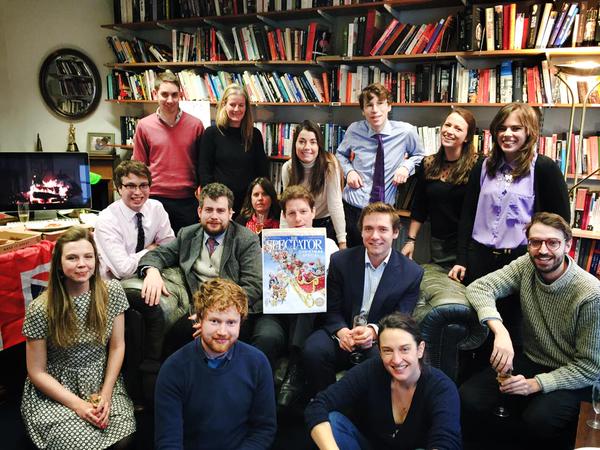
The campaign against Bahar Mustafa started a month ago, in an article in the Spectator. Although they picked up the story up from student newspaper the Tab, the conservative magazine was all too aware that putting this young woman and the complaints against her under the spotlight would garner a good deal of attention. And unfortunately, it has.

Writers at the Spectator turned their fire on the Welfare and Diversity Officer at Goldsmiths because she decided to put on anti-racism event for women of colour and non-binary people. But (and this is what the Spectator has taken umbrage with) she asked that men and white people not attend. This was met with outrage. “She’s a reverse racist”, it’s “racial segregation” her detractors cried.
Mustafa has responded with a truth lost on them, namely that reverse racism and reverse sexism do not exist. They’re mythical labels. That’s because racism and sexism are rooted in a history of oppression, which continues to shape the way women and people of colour live today. But as Yomi Adejoke describes in her article ‘We need to talk about safe spaces’ “it appears that, in a world where the default is white and male, comprehending why something for once may not and should not concern you simply isn’t possible.”
Meanwhile there are structures in place that privilege and value white men purely by the virtue of their gender and race. Of course there are exceptions – white men who are discriminated against – but when we’re talking structures and histories, we live in a world that judges and subjugates women and people of colour. So prejudice exists, but reverse racism doesn’t.
Nevertheless, the illogical accusations thrown at Mustafa have raged unabated. To the point that a petition has begun to circulate, calling for Mustafa to be removed from her post (this campaign also highlights Mustafa’s use of hashtag #killallwhitemen, I’ll leave that for someone else to address). The level of misunderstanding has reached a sad crescendo; there will be a vote of no confidence against her, which could result in her losing her job.
All I can think as I’ve watched this unfold is: if only the people taking part in the campaign against Mustafa exercised the same outrage over structural racism. They could take their pick over which form of racism to get most angry about: racial discrimination in the job market; in universities, both selection processes and once applicants make it in to their hallowed halls; or, what about the microagressions people of colour face on a daily basis. The list is painfully long.


Instead, the attacks launched against Mustafa – that she is a racist – underscore the point she was originally trying to make in creating a safe space for people of colour; that racism is not well enough understood by those who don’t experience it.
This represents the brick wall with which intersectional feminists are faced. A lot of white people – in particular men – don’t get racism and they certainly don’t want to have their privilege questioned. So they retreat into their safe space, which, luckily for them, is everywhere. They retreat into their privilege by lecturing people of colour on discrimination, without realising how ludicrous that is. And amidst all of this, they haven’t for a moment thought why we need to have a safe space to begin with.
So let me explain, and I’ll keep this short. We are forced to exist in a society where we are the minority, the ‘other’. We’re always reminded in subtle but damaging ways that most spaces (think certain careers or residential areas, for instance) are supposed to be for white people. We are seen as a disruption. It gets tiring attempting to navigate our way through this world and often it’s hard to see how we can change it. So at times we want to come together and discuss these issues in a place where we feel wanted and valued. Until white people begin to understand this, we’ll continue to need these spaces. And that’s why #ISupportBaharMustafa.
Photos from 21 Racial Microaggressions You Hear On A Daily Basis
All work published on Media Diversified is the intellectual property of its writers. Please do not reproduce, republish or repost any content from this site without express written permission from Media Diversified. For further information, please see our reposting guidelines.
____________________________________________________
Maya Goodfellow is a journalist and political commentator. She primarily writes about British politics and has worked as a researcher for a think tank. She also writes about international affairs, with a particular focus on conflict studies. Find her on Twitter: @Mayagoodfellow
If you enjoyed reading this article, help us continue to provide more! Media Diversified is 100% reader-funded – you can subscribe for as little as £5 per month here


 Media Diversified
Leave a comment