
by Sunny Singh Follow @sunnysingh_nw3
Finally this morning I got around to watching Rihanna’s Bitch Better Have My Money (full disclosure: I am not a fan, have never been. I think I am too old). But I am an observer and analyst of pop culture, so here go some initial thoughts.
First off the bat, yes, the video is disturbing for the violence against women. As a committed feminist and film scholar, I am particularly sensitive to the ‘Women in Refrigerators’ trope in films, games, comics, and books where violence against women is used as a plot device (Game of Thrones, I am looking at you!) so I must also note that BBHMM is far more complex, and more provocative for being so.
While much is being said about BBHMM’s violence – especially the torture sequence – but it is hardly any more so than most videos, films, and even mainstream news reports. It is also shot in a way that is less fetishist than most current filmed violence. Indeed, it isn’t the violence itself that is disturbing but who perpetrates it, and the larger context of what kind of violence (and perpetrator) is deemed acceptable. BBHMM is different from most videos in that the violence is perpetrated BY women and with Rihanna in the lead, specifically by women of colour. In doing so, BBHMM becomes probably one of the most sophisticated pop culture takes on the complexity of how white and non-white women interact, in equal parts warning, nightmare, catharsis, and horror.
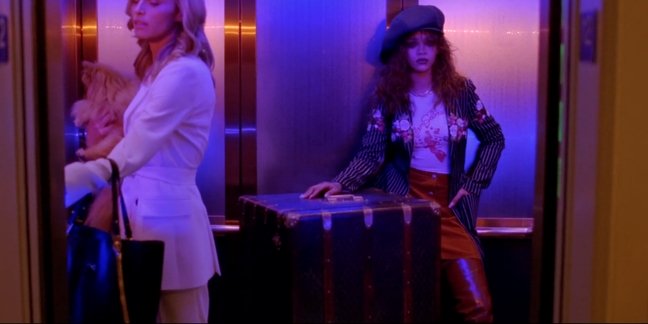
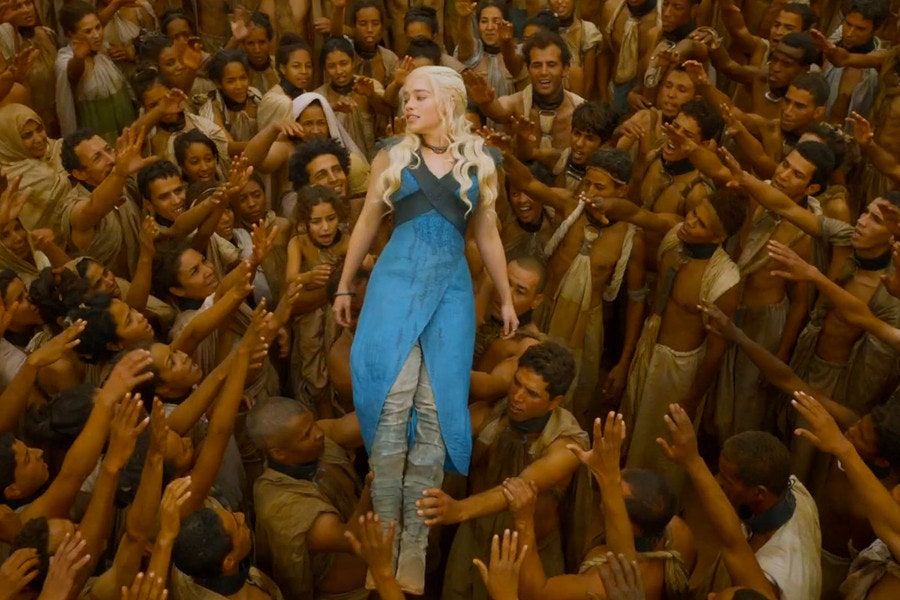
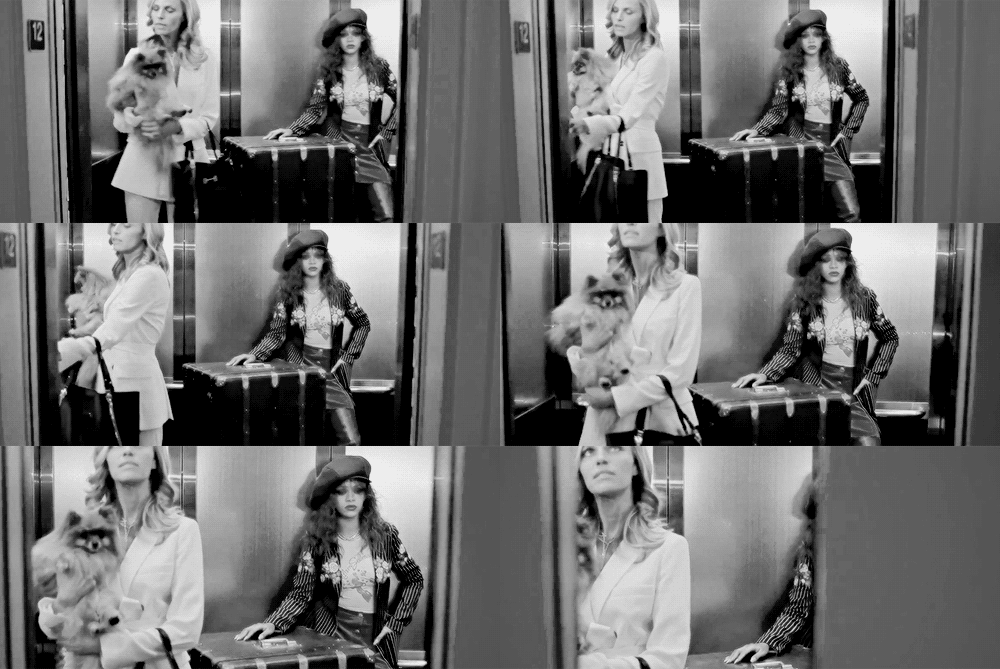 The first interaction between Rihanna and the girlfriend is fleeting but employs a key trope. On entering the lift, the girlfriend does not even register the woman of colour at the back. This is a moment of on-screen acknowledgement of the historical erasure of women of colour by white women who – as a group – have benefitted from both white supremacy and colonialism. It also highlights a long history of women of colour serving and enabling the exaltation of white femininity, with their service – coerced and enforced – as slaves, maids, ayahs, nurses, and cleaners rarely recognised. The sequence is also a nod to the many, many screen representations of an affluent white woman – often clad in white and with blonde hair to further emphasise whiteness – whose attractions are highlighted by contrasting her to ‘lesser’ non-white female bodies that surround her but remain in the background. Think of Miley Cyrus, Daenerys Targaryen, and pretty much most film, music video, television programming.
At this point, the girlfriend is kidnapped, stuffed in a trunk and taken away for torture and eventual drowning by Rihanna and her hench-women. Right to its end, BBHMM replicates but subverts historical tropes of interaction between white and non-white women while also individualising structural violence. The individualisation of that structural violence suffered – historically and in contemporary reality – through wars, economics, legal structures, and even narrative representations by women of colour, and complicity of white women in this violence – in part what gives the video its power. It is necessary to remember, once again, that the terror of people of colour turning deliberately violent against white people has a long historical trajectory in imperial and racist imaginary. Perhaps this individualised subversion (and reversal) of historical structural racialized and gendered violence is why BBHMM has upset so many (primarily white) commentators?
Moreover the video emphasises another familiar trope: the apparently inherent ‘violence’ long ascribed to women of colour. Remember Kipling’s Afghan women who came out to torture the poor white soldier boy? Or innumerable references to Native American women in Western novels whose ability to torture outshone that of the men? Or the long racist history of violent tendencies attributed to African and African American women? There is a long and multifaceted racist and imperialist tradition of writing women of colour as capable of unimaginable violence against white bodies.
However, as colonial history shows, the violence ascribed to non-white women has long been deployed firstly, to construct a particular kind of white femaleness – one marked by innocence, vulnerability, and thus desireability. At the same time, it has also been used consistently and constantly to rationalise – even justify – violence against women of colour themselves, as part of the western imperial enterprise as well as on-going structural racialized and gendered violence. This denial of vulnerability and the ascription of inherent violence to women of colour, accompanied by our erasure as women per se, ensure that our brutalisation barely registers even when it IS shown. Bodies – especially female bodies – of colour are historically so completely dehumanised so as to make any and all degree of violence not only possible but also acceptable.
This is another point of subversion by BBHMM: by unabashedly ‘owning’ this historical trope and representing it from the point of view of a woman of colour, the historical gaze is challenged and inverted. Given that we have long been taught to value a particular kind of female body – white, affluent, blonde, attractive – especially in comparison to women of colour, the violence of video (and the dehumanisation of the aforementioned white female body) becomes especially disturbing. After all, neither its target nor its perpetrators are those we have been taught to expect.
As a final note, none of the above means the video is free of multiple troubling aspects. *One of the henchwomen wears an elaborate South Asian nose ring, a replication of inconsiderate use – even appropriation – of cultural artefacts that could have been avoided. The video – as is the wont in pop culture – does fetishize the female form. However, BBHMM probably objectifies the female body less than most pop videos, perhaps because it is difficult to do so with multiple women actively perpetrating graphic violence. The final shot of Rihanna – seemingly naked, on a pile of money – in the same trunk that was used to kidnap the girlfriend is also an ambiguous note for ending the video.
I imagine there will be MANY pieces on BBHMM but it is one of the most interesting takes on race, gender, class, and gendered violence. It is complex, knowing and engaged – one may not like its politics – or indeed its aesthetics – but its polysemy lifts it higher than most pop videos. And that can only be a good thing!
* Update 06/07/15 Said henchman is a Desi woman named Sanam, headhunted on instagram by Rihanna be in the video.
All work published on Media Diversified is the intellectual property of its writers. Please do not reproduce, republish or repost any content from this site without express written permission from Media Diversified. For further information, please see our reposting guidelines.
___________________________________________________
Sunny Singh was born in Varanasi, India and studied at Brandeis University (USA), Jawaharlal Nehru University (India) and University of Barcelona (Spain). She has published two critically acclaimed novels and a non-fiction work on single women in India. Now based in London, she teaches creative writing at the London Metropolitan University. An expert on Bollywood, she is currently finalising a book on Amitabh Bachchan for BFI/Palgrave’s series on Film Stars. Her new novel, Hotel Arcadia, will be published by Quartet Books in spring 2015. More information on her writing can be found at: sunnysingh.net Tweet her @sunnysingh_nw3



 Media Diversified
Leave a reply to Alan Cancel reply