
by Hilary Aked Follow @spanstylefontweight400Hilary_Akedspan
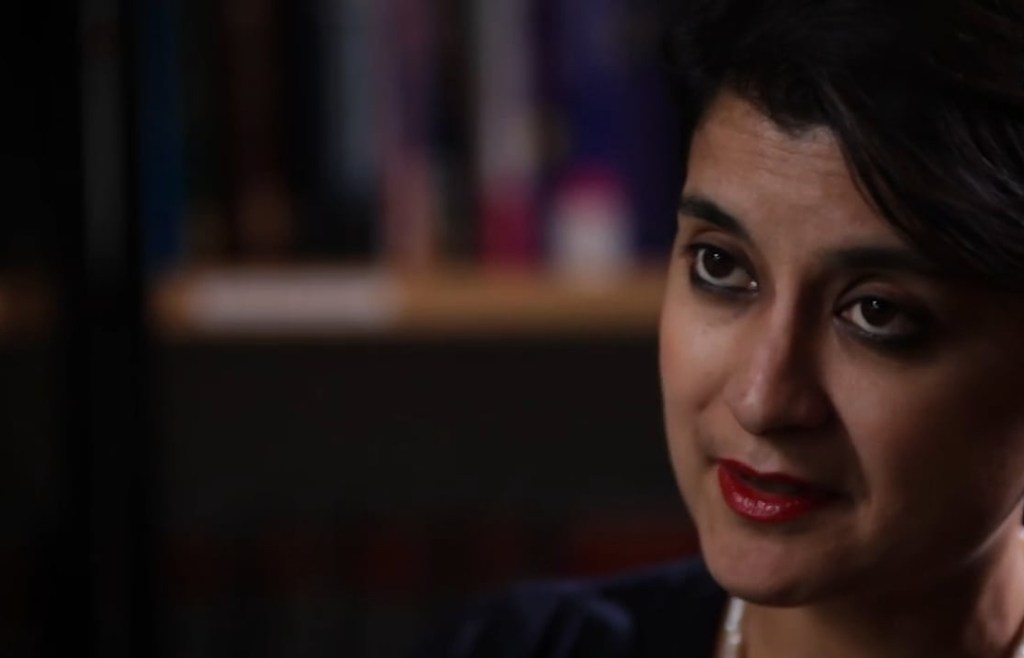
The left should “stop talking about Zionism”, Labour’s Jon Lansman argued recently in the wake of a row that engulfed the party over anti-Semitism and anti-Zionism and led to the Shami Chakrabarti Inquiry. The inquiry, which was released yesterday, suggests a better way forward.
Chakrabarti, who disclosed that she had joined the Labour party on the same day she was asked to head up the investigation, found no evidence of institutional anti-Semitism within Labour. As regards Zionism, she advised “critics of the Israeli State and/or Government” to use the term ‘Zionist’ “carefully and never euphemistically or as part of personal abuse”. This is very good advice. Conversations about Zionism – carried out both by supporters and critics – are often crass, sometimes abusive, and occasionally accompanied by anti-Semitic or Islamophobic comments, particularly some of those carried out on Twitter IN CAPITAL LETTERS.
However, it’s important we don’t allow discussions around Zionism, an ideology and political movement which remains at the heart of the Israel/Palestine conflict, to be shut down. Indeed, this is precisely the point Chakrabarti made. Being respectful – and, as she put it, “leaving Hitler, the Nazis and the Holocaust out of it” – should help to “facilitate” rather than inhibit debate about what she called “one of the most intractable and far-reaching geopolitical problems of the post-war world”. In fact, she encouraged Labour members “to criticise injustice and abuse wherever they find it, including in the Middle East.”
Chief Rabbi Ephraim Mirvis was right to point out that support for Zionism “requires no endorsement or otherwise of the particular policies of any Israeli Government at any time”. There are and always have been different currents of political Zionism, from Labour to Revisionist, and conflicts between them. But all Israeli governments, whether so-called left-leaning or right-wing, have operated within the ethnically exclusivist Zionist paradigm. And the consequences for Palestinians have been dire from the start.
This is why Kent University Professor Didi Herman’s plea to replace criticism of Zionism with criticism of, for example, “the Netanyahu regime”, misses the point. Practices violating Palestinians are not exclusive to the Netanyahu regime. Ehud Barak, who was considered a leftist within the wider Israeli mainstream, approved the expansion of illegal settlements in the Occupied Palestinian Territories and signed an agreement to (unilaterally) legalise dozens of outposts. Tzipi Livni, also bizarrely considered a leftist, as Foreign Minister, played a key role in the attack on Gaza known as Operation Cast Lead in 2008-9, which killed more than 1,400 Palestinians.
So while Zionism is a somewhat broad church and has given rise to a range of types of government, in the end, as liberal Zionist Peter Beinart put it “Zionism is what Israel does”. This includes both the policies of the supposedly socialist Zionist governments of old and those of the most right-wing government in the history of Israel, which has just been formed following a deal struck between Likud PM Netanyahu and ultranationalist Avigdor Lieberman of Yisrael Beitenu.
Leaving Zionism out of the discussion might not be a problem if it had nothing to do with Israel’s oppression of Palestinians. But it has everything to do with it: from the longstanding Israeli discourse presenting Palestinians as a ‘demographic threat’, to what the late Tanya Reinhardt called the ‘Judaisation’ of Jerusalem (and beyond); from Israeli laws governing immigration and “family reunification” preventing Palestinians from moving to Israel while facilitating Jewish immigration, to Israel’s ongoing practices of ethnic cleansing. All these practices may be seen as necessary to maintain a Jewish majority, according to the logic of Zionism.
Roughly since the turn of the millennium, Israel’s destructive practices have increasingly received criticism, more so following the collapse of the Oslo agreement and the outbreak of the Second Intifada between 2000 and 2005. Zionism has been questioned more frequently, at least by civil society actors, if not the political elite. Responding to this trend, supporters of Israel are attempting to shore up the country’s hegemony. It’s no coincidence that critics are being told to stop talking about Zionism at the very same time that Zionists have launched an ideological offensive promoting it.
One example is the anthology of “Essays on Zionism” compiled recently by We Believe in Israel, the activist wing of pro-Israel lobby group BICOM. This was released in May as part of what it called “Zionism month”, which is described as a campaign to “re-establish…the core case for the Zionist project”. Meanwhile, the new organisation Over The Rainbow, with branches in South Africa, Canada, Italy, the UK and US, was similarly founded to “restore Zionism its vitality, the Herzlian luster and magic”.
The flip side of this is the renewed McCarthyist drive to smear and blacklist critics of Israel or Zionism, and particularly supporters of the Palestinians Boycott Divestment and Sanctions (BDS) movement. In the USA this is being spearheaded by groups like Canary Mission. In the UK, the Fair Play Campaign Group is working to “oppose anti-Zionist activity and boycotts”.
The urge to quell rising tides of criticism of Israel also lies behind efforts made by some proponents of Israel to represent anti-Zionism as anti-Semitism. To some extent these attempts backfired, giving rise to unprecedented levels of scrutiny of Zionism in mainstream media (albeit much of it quite crude), from the Metro to Radio 4’s Today programme. Like Phil Weiss I think this was long overdue.
In 2016, it’s about time we started talking about Zionism. The conversation must be calm, respectful, historically-informed and strictly anti-racist, and not carried out through soundbites, tweets and cartoons that are prone to misinterpretation. But we cannot and should not avoid the topic any longer in the name of ‘keeping the left united’. It is already dividing th left: Board of Deputies president Jonathan Arkush has acknowledged that some people have been suspended from Labour for anti-Zionism, not anti-Semitism (something he seemed to celebrate).
It’s high time for the centre-left as well as the radical left to seriously engage with the ideology that underpins the longstanding and multifaceted injustices meted out to Palestinians. The BDS movement has reminded us that Israel/Palestine is an international issue. Next year marks 50 years since the beginning of the Israeli occupation and the centenary of the Balfour Declaration, which led to the creation of Israel and the Palestinian Nakba. This should give us even greater pause for thought. Not least because of imperial Britain’s role in producing the suffering that persists today, the British population has a responsibility to take a fresh look at the rights and wrongs of the Zionist project (which are in some ways complex but in other ways very simple).
For its advocates, Zionism is a question of Jewish ‘self-determination’. But large numbers of Jews do not identify as Zionists (one 2015 study found that fewer than 60% of British Jews did). Given this, it is more accurate to speak of Zionism, as Ernest Gellner did, as a form of Jewish nationalism. Should it take precedence over Palestinian self-determination, nationalism, or statehood, which Zionism has made impossible? More importantly, is there no way that the connection of Jewish people to the land could be recognised and respected without denying the same rights to Palestinians? Or, putting it simply, must Israel/Palestine be Zionist?
Ahmed Moor and Anthony Lowenstein suggest, in a collection of essays called After Zionism, a radically simple way forward: Israeli Jews and Palestinians should live alongside one another as equals. While some Zionists would likely characterise these writers as calling for the “destruction of Israel”, such emotive language is designed to shut down legitimate conversations about possible ways to transform the Middle East in order to move closer to justice and, ultimately, peace. Moor and Lowenstein argue that a process of decolonization is needed to dismantle the system of ethnic privilege created under Zionism. Because talking is not enough, those who believe this are taking action, by supporting the Palestinian call for BDS. Not everyone will agree. But to give in to those who say we should not speak about Zionism only serves to normalise it. And that is precisely the point.
All work published on Media Diversified is the intellectual property of its writers. Please do not reproduce, republish or repost any content from this site without express written permission from Media Diversified. For further information, please see our reposting guidelines.
Hilary Aked is a writer, researcher and activist currently completing a PhD on Israel’s response to the Boycott Divestment Sanctions movement. They tweet at @Hilary_Aked
This article was edited by Media Diversified’s Middle East & North Africa editor, Mend Mariwany. To pitch an article, or feature please contact mend@mediadiversified.org
More by Hilary Aked
If you enjoyed reading this article, help us continue to provide more! Media Diversified is 100% reader-funded – you can subscribe for as little as £5 per month here.







 Media Diversified
Leave a reply to KHayman Cancel reply