
by Sonya Lalli Follow @saskinthecity
When I went to see Doctor Strange, the question about whether Marvel Studios’ latest blockbuster would be a success seemed to have already been answered. I couldn’t resist the dazzling trailers and adverts, the glowing four- to five-star reviews, and of course the all-star cast. Sweets and popcorn in hand, I settled into my comfortable cinema seat and prepared to be bowled over.
The film opened with eye-popping CGI that bent and folded time around a brilliant action sequence, one that is perhaps unlike anything we’ve seen since Inception. Indeed, the first few scenes lived up to my every expectation as a viewer, and I sat on the edge of my seat while the movie ripped and roared in that sensational – often silly – way superhero movies tend to.
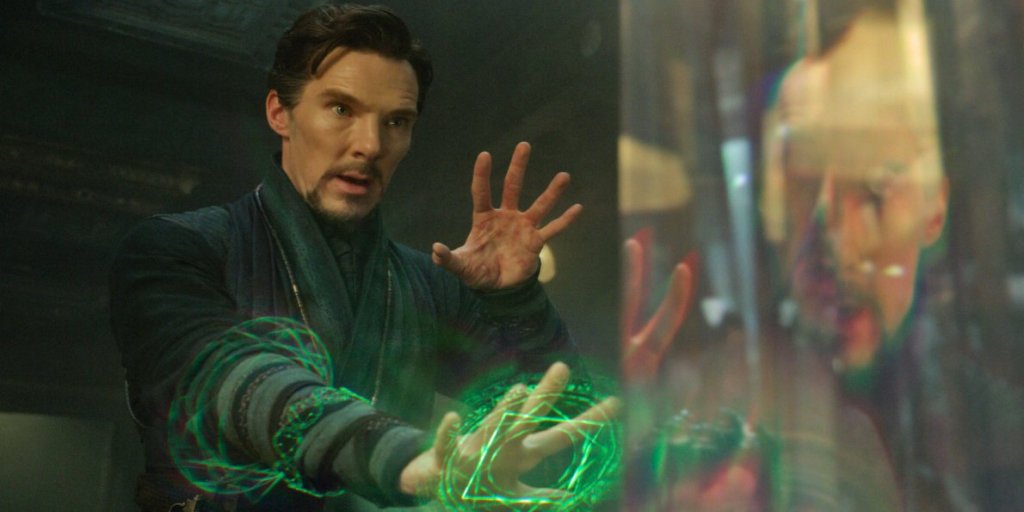
We then quickly find ourselves face to face with arrogant neurosurgeon Stephen Strange (Benedict Cumberbatch), who is unable to work after a brutal car crash results in nerve damage to his hands. An ego-wounded Strange goes to great lengths and expense to find a medical fix, and after nothing works, he pushes away his nurturing ex-girlfriend Christine Palmer (Rachel McAdams). Penniless, and with nothing left to lose, he heads east for a solution – embarking on his hero’s journey.
It was here that I became deeply uncomfortable.
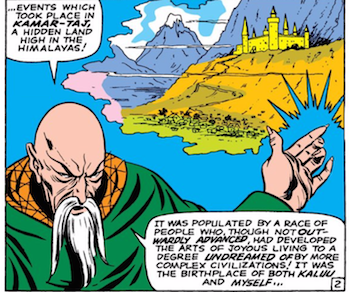
Strange finds the Ancient One (Tilda Swinton) at a temple called Kamar-Taj in Kathmandu. There, he realizes that he may be able to gain the power to heal his hands – not to mention time-loop, teleport, cast spells and adopt a magic cloak – by letting go of his ego and elevating his mind.
Captain America has superhuman strength. Thor’s powers are otherworldly in origin, and Iron Man’s come from a tech-forward fusion arc reactor. Doctor Strange and his new cohorts, however, are sorcerers – and their fantastical powers are rooted in the western world’s cherry-picked perception of eastern spirituality.
The Ancient One starts her sorcery lesson plan by drop-kicking Strange’s soul from his body, and in another scene she shows him bodily diagrams of acupuncture points and chakras that in no way pertain to the plot or add to the mystique. As part of his lesson plan, Strange practices martial arts, studies books written in Sanskrit, and learns how to cast spells by harnessing the same awareness necessary for mindfulness and meditation.
 Strange completes his journey spectacularly, as superheroes do, by saving the world and becoming the well-rounded, empathetic character we were cheering for. The movie is good, yes, and its offences may seem mild – but that doesn’t change the fact that its central premise is flawed. The comic on which it was based is an insensitive, hodgepodge portrayal of spirituality stemming from eastern religions such as Hinduism and Buddhism.
I should make the disclaimer that I’ve never read any of the Marvel comics, and know little more about the characters’ universe than what I’ve seen in movies and recently read online. But I reject the argument that Marvel Studios in these respects had to stay true to the comic, which I’ve learned was first published in the early 1960’s.
While the Ancient One is Tibetan in the original Doctor Strange comic, the studio chose Swinton to play the character, changing gender and heritage. One of the screenwriters implied that the studio changed the character’s heritage to Celtic, and relocated Kamar-Taj from Tibet to Nepal, to avoid getting political with China, a major movie market.
Let’s set aside the obvious criticisms that yet another leading Hollywood role was whitewashed, and that despite Kamar-Taj’s geographic location, not a single Nepali or South Asian actor appears in the movie. (However, Strange’s sidekicks Wong and Mordo are not white, and are played respectively by Benedict Wong and Chiwetel Ejiofor).
McAdams’ version of Christine Palmer portrays three different characters from the original comic’s universe. It adapted the ethnicities of the Ancient One and Mordo, the latter in a bid for diversity, and changed the location of the temple to a more neutral location. Surely the studio has also made other changes to adapt the comic for the screen that only the most devoted comic fans would notice.
So the question is: Did Strange really have to go all the way to Nepal to realize that that he was an egoist? No.
Could Kamar-Taj not have been a nondescript temple somewhere in the United States, and the sorcery books written in English, or perhaps a fictional ancient language? Yes.
Could their magical powers not have come from non-denominational spirituality or mindfulness? Yes.
The truth is Marvel Studios could have adapted out the cultural appropriation, the same way it made other changes in the name of plot line, profitability and politics.
I am a first generation Canadian immigrant and London transplant, and no stranger to the anecdotes and flavour my Indian heritage has provided mainstream western culture. From the annoyingly redundant terminologies naan bread and chai tea, to the Bhagavad Gita sitting like a prop in the changing room of my overwhelmingly white yoga studio, the plurality of non-white identities, backgrounds and belief systems crop up only when palatable and to be an accessory to the dominant culture.
Evidently, the same is true in the Marvel Universe.
Marvel Studios president Kevin Feige recently acknowledged criticisms of his and director Scott Derrickson’s decision to give the Ancient One role to a white woman. He pledged the studio’s commitment to diversity, and vowed to make films that “reflect the world”.
But what is our world?
It’s currently a place seemingly more fantastical than Marvel’s own universe, where in the space of six months, voters in two of the world’s most progressive countries defied all odds, polls and good sense in the name of racism and disrespect.
It’s a world where many of those marginalised cannot rely on their leaders to protect and fight for them. It’s one where children and adults alike should be able to find safe harbour in fantasy. Superheroes don’t see colour, age or religion, socioeconomic status or politics. They save us all. And perhaps it’s time we demand more from the world’s most influential superhero movie studio than peppering a few non-white faces into its roster.
Minorities’ experiences, beliefs and faiths (or lack thereof) are our own and vastly different from individual to individual. Passing instances of cultural appropriation may seem like a trivial breach of respect – ones that make us feel uncomfortable, rather than incensed or disrespected. Yet Doctor Strange is just another example of how effortlessly society continues to trample on and take from minority culture, and the film’s superficial allusion to eastern religions and spirituality is not okay.
We’ve come a long way since the sixties when Marvel first gave birth to Doctor Strange. But if there’s anything the film adaptation can teach us – besides how to kick ass as a sorcerer – it’s that there is still a long way to go.
All work published on Media Diversified is the intellectual property of its writers. Please do not reproduce, republish or repost any content from this site without express written permission from Media Diversified. For further information, please see our reposting guidelines.
Sonya Lalli is a Canadian writer, journalist and lawyer of Indian heritage. Her debut novel The Arrangement will be published by Orion Fiction in summer 2017. She has a black belt in Tae Kwon Do and loves travel, yoga, piano, reading and cocktail bartending. Tweet her @saskinthecity or find out more here.
We are 100% reader funded. If you enjoyed reading this article and you got some benefit or insight from reading it buy a gift card or donate to keep Media Diversified’s website online
Or visit our bookstore on Shopify – you can donate there too!



 Media Diversified
Leave a reply to xenogogue Cancel reply