
by Divya Ghelani Follow @DivyaGhelani
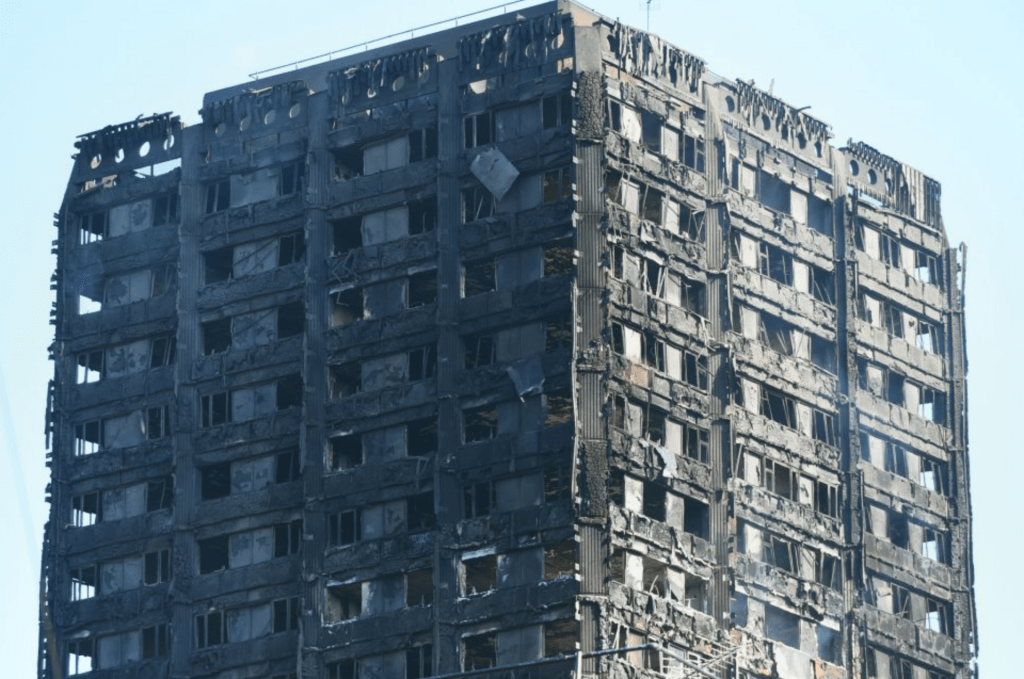
The Grenfell Tower deaths were a failure of listening. They demonstrate a refusal on behalf of government to hear poor communities, particularly communities of colour, and to take their concerns seriously.
I didn’t grow up in a London tower block but on a council estate in Loughborough. We were housed there in 1985, seven months after my family arrived in Britain. From the age of three I experienced broken windows, torn down fences, ‘P*kis Go Home’ written on our walls, and air rifle shots through the back door. I developed a fear of walking the streets with my mother and grandmother in case we were spat at or called names. One night, racists set fire to the tree in our garden. I grew up feeling like we lived in a paper house, as if the walls could crumple at any time. It was a place to sleep and live, but it was never home.
We followed procedure and called the police and local authorities. Policemen arrived and sipped Mum’s chai and ate her snacks. No-one one was ever arrested, and we were never rehoused. The authorities listened, but if listening never lead to action, what sort of listening was it? It was only when I was at university that my family was finally rehoused, but this was due to my father’s efforts as well as a solicitor he had enlisted and a kind woman at the Commission for Racial Equality. In the end, we received £4,000 compensation and a safe place to live, in return for fifteen years of racial abuse.
As I grew older I marched against tuition fees as a student and became one of the millions who protested against the war in Iraq. Not being heard then made me wonder if my opinion mattered at all. It is a feeling only ameliorated today by the power of social media which can circumvent government not-listening through horizontal communication on a mass level, something which proves Arundhati Roy’s point that: “There’s really no such thing as ‘voiceless’. There are only the deliberately silent, or the preferably unheard.”
For so many years my family fell into the second category, as did the residents of Grenfell Tower. The Grenfell Action Group’s website refers to fire dangers established as early as 2013. Their repeated warnings about inadequate fire safety standards – warnings backed by fire safety reports and recommendations – were ignored and ‘sat upon’ by successive governments (including by Theresa May’s current chief of staff Gavin Barwell). Two of the women who campaigned for increased safety measures were threatened with legal action as a result, and they are now feared dead in the tower. Why, then, would the Kensington and Chelsea Tenant Management Organisation (KCTMO) ignore legitimate safety concerns?
The answer is that listening is profoundly political. Listening is mediated through social codes and relations of power. Grenfell Tower was a high-rise multicultural space whose residents tended to be poor and frequently non-white. The denigration of immigrants, and Muslims in particular, makes it easier to view such occupants as ‘making noise’ rather than exercising a political voice, a problem deepened by spending cuts in the wake of austerity politics.
Leah Bassel’s book The Politics of Listening explores listening as a sociological and political practice. Being ignored is endemic to marginalised communities and Bassel examines how better listening might create new ways of being and acting together as political equals. Political equality seems wildly utopian within the context of Brexit Britain, but the inaudibility of the poor, evidenced in the horrific story of Grenfell Tower, must be challenged if democracy in Britain is to function at all.
Better listening means journalists, politicians, landlords, GPs, hospitals, teachers and more making genuine efforts to recognise poor people as political beings with a voice, as opposed to merely tolerating them. It would require better education on citizenship and rights in schools, employing community go-betweens for people with inadequate English or those lacking the confidence to speak out. And it would mean greater parliamentary representation for marginalised communities as opposed to the current paternalistic model in which a governing elite manages whole swathes of society they have little knowledge of or connection to.
Institutional listening needs to be about political change, not platitudes, so that listening can transform itself into sprinklers and fire extinguishers, into rehousing vulnerable families, treating low-income groups and people of colour like human beings instead of as shirkers, chavs, and terrorists. As Martin Luther King put it: “Riot is the language of the unheard.” When the government refuses to listen to the justified anger of marginalised people, this becomes, particularly in times of crisis, a provocation to social unrest for, as Grenfell Tower has shown in the most grotesque way imaginable, willful ignorance is a matter of life or death.
The fee for this article was donated to the Grenfell Tower JustGiving fundraiser.
All work published on Media Diversified is the intellectual property of its writers. Please do not reproduce, republish or repost any content from this site without express written permission from Media Diversified. For further information, please see our reposting guidelines.
If you enjoyed reading this article, help us continue to provide more! Media Diversified is 100% reader-funded – you can subscribe for as little as £5 per month here or support us via Patreon here
 Divya Ghelani holds an MA in Creative Writing from UEA and an MPhil in Literary Studies from the University of Hong Kong. She writes short stories, scripts, and is working on her debut novel which has been longlisted and shortlisted for four literary awards. Follow her @DivyaGhelani and at divyaghelani.com




 Media Diversified
Leave a reply to Floy Joy Cancel reply