
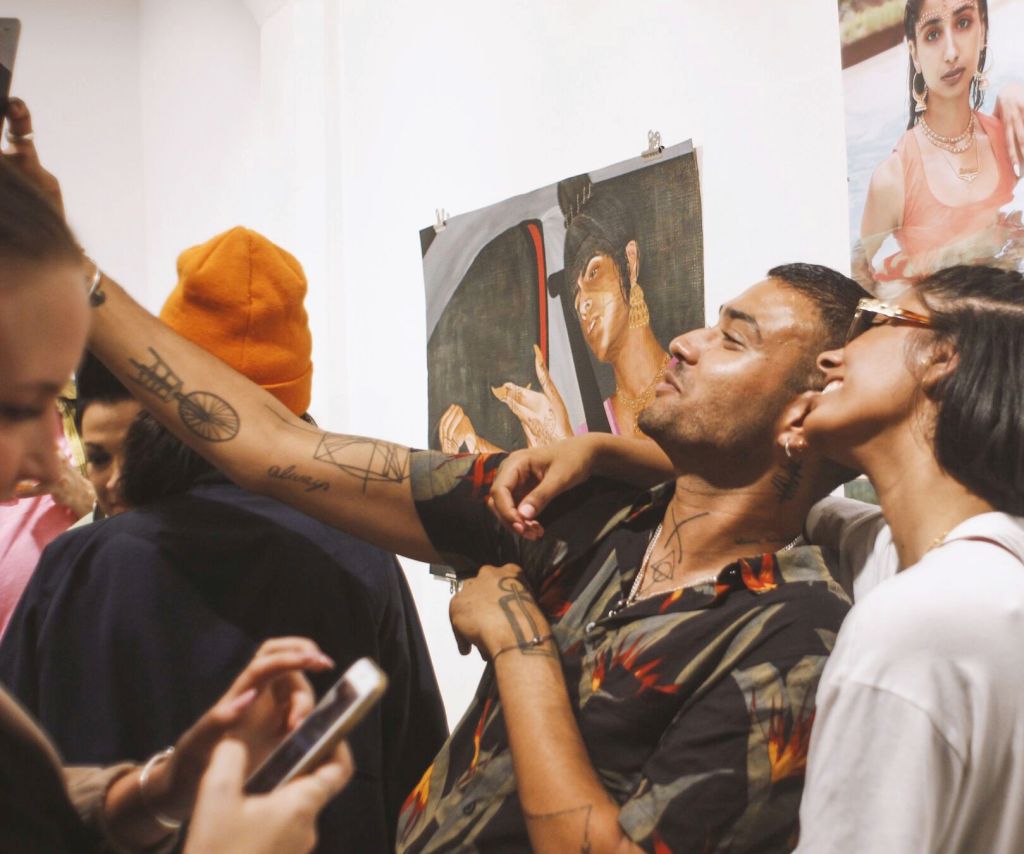
Henna Zamurd-Butt talks to Sharan Dhaliwal about how young British Asians are expressing their identity through art
Four years ago I went to a panel discussion at the Festival of Asian Literature in London called ‘British Asian Culture, Doomed to be Uncool?’ It was pretty depressing, this is some of what I wrote about it for The Samosa.
The panellists felt that the perception of British Asians in the British consciousness hindered them more that it helped. Ravinder Bhogal said she felt “lassoed” by it and Bobby Friction felt that it was problematic because the mainstream looks at Asians through stereotypes. Rather than being held captive though, Nihal Arthanayake suggests that the entire panel is successful today because of their British Asian heritage, ‘we’ve all played the Asian card.’
A lot of us in that room had grown up in the nineties and seen our cultural heritages flourish into fashion. One of the panellists, BBC Asian Network DJ Bobby Friction described a time when ‘the New Asian Cool’ was the trend of the moment. This 20-year-old extract from an Independent article illustrates his point (do read it all, it’s fascinating).
Every Monday night, the painfully hip Blue Note club in Hoxton, east London, plays host to Anokha. Sweety, promoter of the Asian influence night, presides over a queue of more than 500 people – and that’s just the guest list. She is the style guru of second-generation Asians: wearing a traditional sari as a wrap skirt with funky trainers and a black decolletage T-shirt. In the crowd are black, white, Asian, Oriental and Icelandic devotees of Anokha and its star DJ, Talvin Singh. The Icelandic contingent was made up of Bjork (in a sari) and her entourage. Simon Le Bon, in Gucci, queued up to pay homage to Sweety.
The problem with being in fashion is that eventually, you go out of fashion. We’d seen that too. Back in 2013, at the time of the ‘Doomed to be Uncool’ event, even the idea of ‘British Asian culture’ felt ossified, paused in a time warp of bhangra remixes and cornershop jokes.
Then 2016 rolled around and all of a sudden I started to notice what must have been brewing for a long time*. Cultural output of every kind, with a sense of ownership that I hadn’t noticed before, literature like Too Asian, Not Asian Enough, music like Swetshop Boys.
In August 2017 East London’s Old Truman Brewery hosts The Beauty of Being British Asian, an exhibition of art from across mediums including textiles, illustration and photography. Curated by editor of Burnt Roti Sharan Dhaliwal, the project and others like it such as Mahtab Hussain’s You Get Me? also from this year, are reflective of the wider movement towards decolonisation amongst communities of colour.
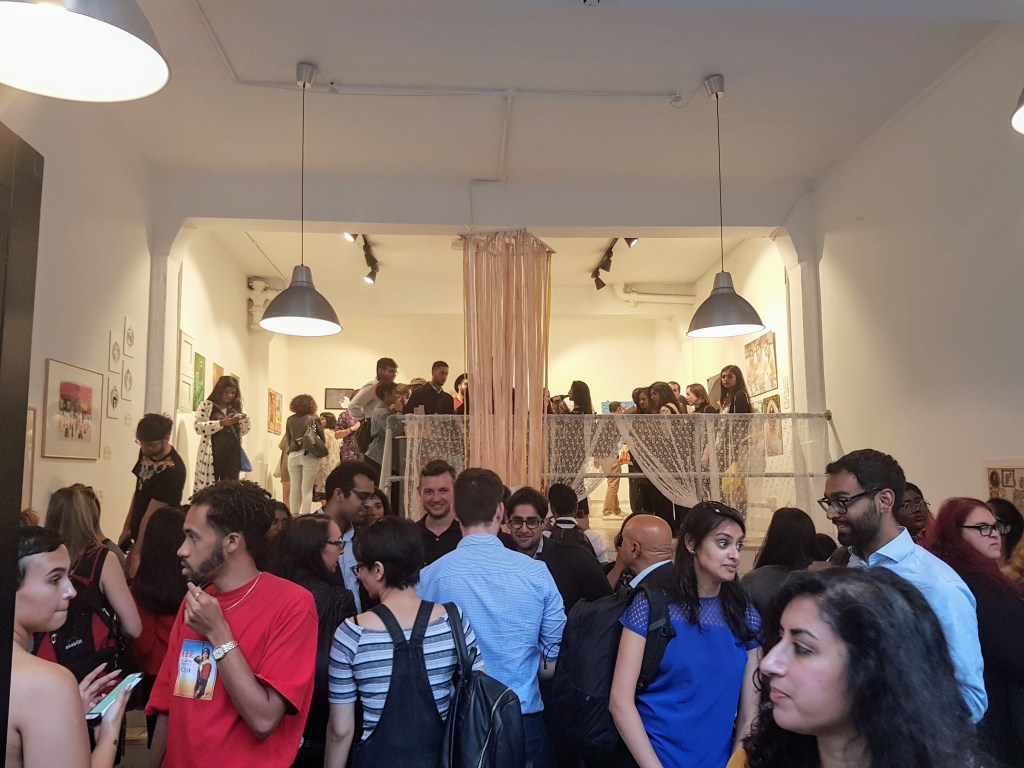
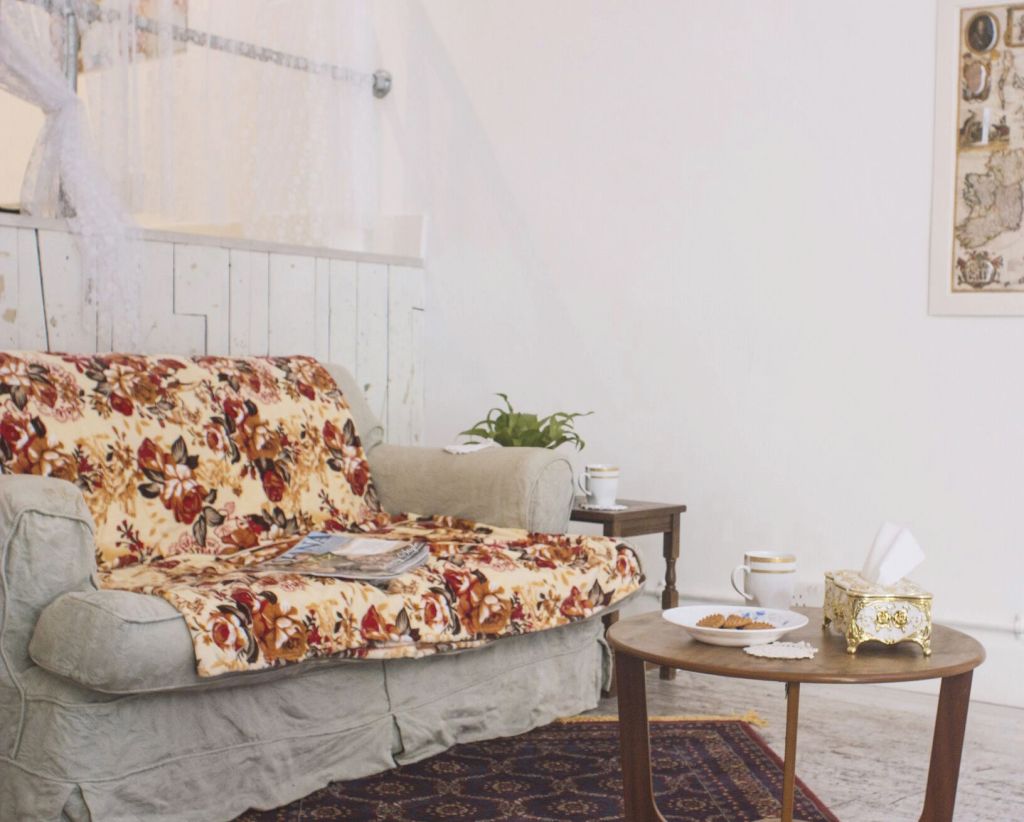
British Asians are hungry for these opportunities and Dhaliwal raised over £3000 for the exhibition through a successful crowdfunding campaign. The opening night sees a young crowd queuing down the street to get a look inside the space, curated by Ryan Lanji, which includes areas such as ‘Nani’s kitchen’ and ‘Auntie Pinku’s living room’.
It’s important to acknowledge that British Asians have been making culture for a long time, and not to understate that. I ask Dhaliwal what makes this moment distinct.
I remember using the terms ‘freshie’ and ‘pindhoo’ as a slur against Indians who weren’t British born, as if it was shameful. As some of us get older and understand how incredibly awful we were, we start to examine why, we research our history, we look at the older generation in a different light and we try not to deny the ‘Asian’ of British Asian. Now talking about your ethnicity isn’t just from being bullied for getting turmeric on your hands, it’s celebrating the tastes the turmeric creates. I’ve felt so much inspiration from seeing South Asians in the public eye recently, that I never had growing up.
British Asian identity may be seeing a resurgence, but there are still power dynamics at play, such as the stark economic differences between the groups that fall under this umbrella. Differences that perhaps led to the fracturing we saw after the nineties when British Asians started to identify more with their faith or national heritage. Around 60% of British Pakistanis live in relative poverty, dropping to 25% for British Indians. Dhaliwal notes that her work tends to include more people of north Indian heritage, although she hopes to be more inclusive in the future. There’s hope in the self-awareness shown by those seeking to cultivate these spaces.
The young women included in the exhibition, including illustrator Soofiyah Andry, photographer Kiran Gidda and textile designer Usarae Gul, were selected after the curator put out a call on social media, which she says was met with an ‘electric’ response.
I had so many people who not only wanted to exhibit, but wanted to help somehow. It was a bit of an emotional moment for me, because when I come up with an idea I spend the whole time wondering if I’m just being ridiculous. But when people come back to me and express interest and excitement, it helps me realise that it’s not just me. This is important to so many people.
The exhibition is structured around an essay of the same name by one of Burnt Roti’s contributors, Nikita Marwaha, with each piece reflecting a line of the work. Marwaha writes that “life as a British Asian is a beautiful blend of the best (and sometimes worst) of both worlds”.
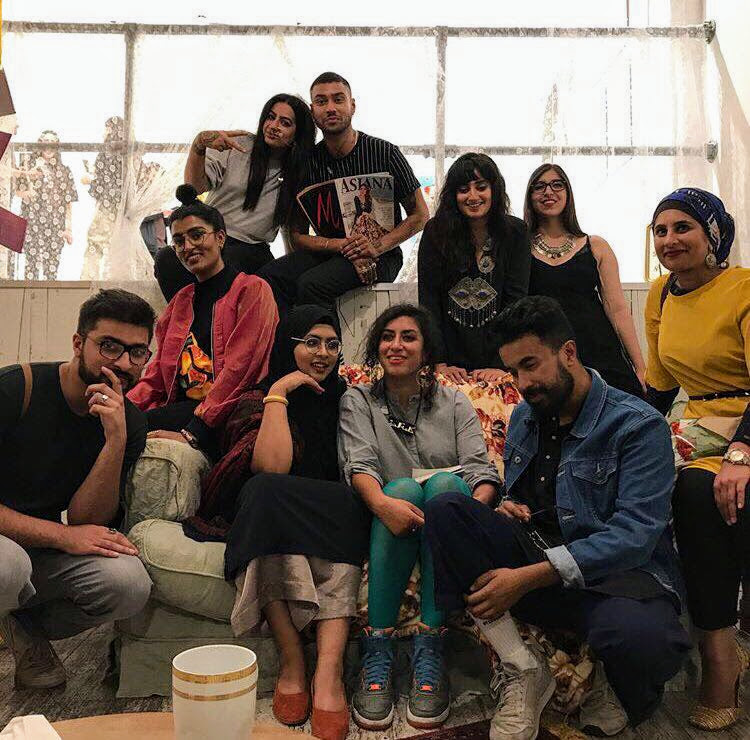
It’s keeping traditions alive and challenging those that are archaic and patriarchal. It’s shouting down the phone to relatives in India and being overly polite to strangers. It’s opening a tub of ice cream in the fridge and being faced with frozen daal. It’s blindly respecting your elders as a child and growing up to realise that respect is a two-way street.
The work presented in the Beauty of Being British Asian doesn’t make a big deal out of fusion or culture clashing – but accepts it as quotidian. It’s fun to see young people playing without guilt about betraying one heritage or another, shaking off the shame of curry smells, and not making reaching attempts for some dream of authenticity. It’s all adrift, the Punjabi in with the Gujarati, the Muslim in with the Hindu, culture wasn’t clear-cut even for our parents so how could it be a continent and a few generations away from home? These are the fashions and recipes and music tips that we share amongst ourselves.
British Asians are accepting that our migrant parents and grandparents might have a home elsewhere, but our home is in our community.
*But let’s remember that M.I.A. has been doing this all well before anyone else.
 If you enjoyed this, and want more like it, then please consider making a donation, it can be anything from £2 and takes no time at all. Or give what you can afford from £2 per month and become an MD member.
 As well as managing Media Diversified, Henna runs pop-up bakery Sunbakes, writes about her culinary adventures, and is a co-founder of the Bare Lit festival of writing. In a previous life she started and ran Middle Eastern and North American-inspired restaurants in Berkshire and Surrey for five years. Henna has a degree in History & Politics (SOAS), a masters in Global Politics (RHUL) and a masters with distinction in Politics & Communication (LSE). She is a fellow of the social entrepreneurship programme, On Purpose.
All work published on MD is the intellectual property of its creators, and requires permission to be republished. Contact us if you have any questions.

 Media Diversified
Leave a comment