
by Haseeb Azad
Recently, Kotaku published an article by Evan Narcisse titled ‘Come On, Video Games, Let’s See Some Black People I’m Not Embarrassed By’ 1. The article itself was very well-written, highlighting the lack of black and coloured protagonists in video games (as well as films), but what struck me were the the user/viewer reactions; from those anonymous, behind-the-screen-bravado, keyboard warriors.
As soon as the article was released there was a backlash not just on the site itself, but also on other sites and forums (especially game forums), denying the need to give any attention to these problems at all – if any rationale was provided at all – but still condemning the author and the website for hosting such an article. To me, as an avid gamer since childhood, it simply seemed that gaming blasphemy had been committed and Evan was the heretic. More disturbing is that this is not an isolated case – similar reactions occurred when another games columnist, N’gai Croal, referred to a certain game trailer’s imagery as offensive to Blacks2. Critics sank their fangs into N’gai as well3, 4.
But why? As Evan caustically acknowledged in the article, ‘blackness’ is a moot point in the games industry because the ‘panicked logic’ of publishers is that ‘“they won’t sell!”’. The target audience in gaming is for the most part Western and as such assumed to be White. But despite our alleged traditions of dissent and history of alleged social progress – we did, after all have a Civil Rights Movement! – the rabid reaction to asking these questions of the games industry gives the lie to whatever myth of a ‘post-racial’ society has been created by events like the election of Obama.
Hatred doesn’t disappear over the course of an election, however. The stereotyped Black characters in games – clumsy, idiotic sidekicks full of machismo next to smart, agile, and above all White protagonists – are simply built on the history of racial oppression. This history is still being written today in the ‘modern’ West – whose ‘modern’ status is defined in opposition to the ‘spear-carrying primitives’ of the East or South.
 So what can be done? Firstly, the maniacal, faceless attacks on the Internet by mostly White, barely-closeted racists of whom I’ve personally met plenty in real life over the past few weeks since the Woolwich attack, need to stop . Of course it’s not going to stop by simply me wanting it so; neither is it naturally and passively going to improve in the future – not with the demonization and dehumanisation of both Black and Brown nations following military and political sanctions by the West reflected in our mediums of entertainment, in which even ‘foreign’ beliefs such as Islam or ‘Moslems’ are assigned a colour, thereby building a racialised discrimination against them. Feel free to read the latest ‘This Week in Islamophobia’ on this, or ‘Black Star, Crescent Moon’ by Sohail Daulatzai, who explores Muslim and racial identity together. These will not go away simply with time; they need to be challenged by people every single day. Hatred and bigotry are not evils that simply dissipate like fragrances.
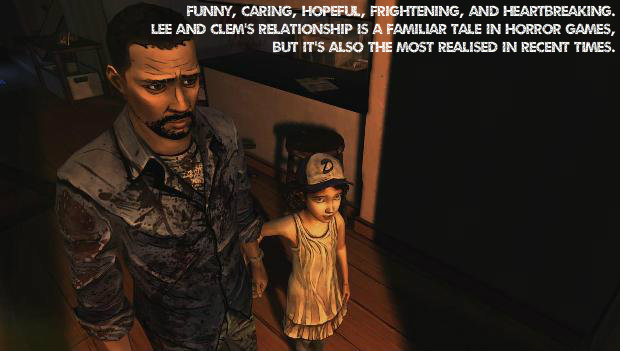
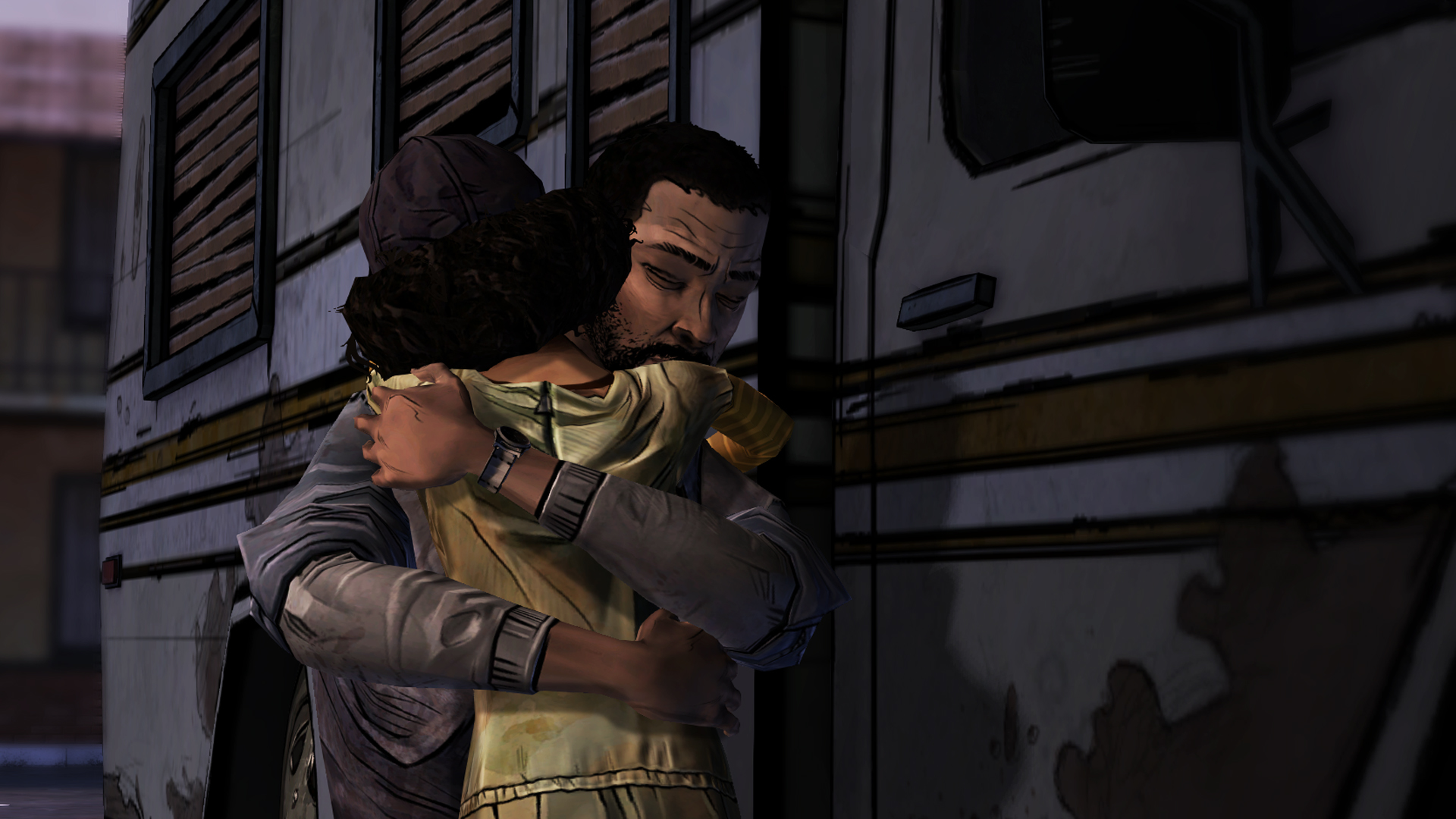
In order to move forward, this must be learnt. We need to take action against discrimination even if it’s not as overt as slavery or ‘traditional’ caricatures like blackface5. For me, a recent example of an outstanding Black video game protagonist is Lee Everett of the Walking Dead series, published by Telltale Games. He is an empathetic father figure to Clementine – another Black character – a nine-year-old that he finds and protects in the midst of a zombie apocalypse. But even this apparently positive portrayal is betrayed by Lee’s background – he is a criminal who is convicted of killing a man that had an affair with his wife, and in the first scene appears in the back of a police car, presumably going to prison.
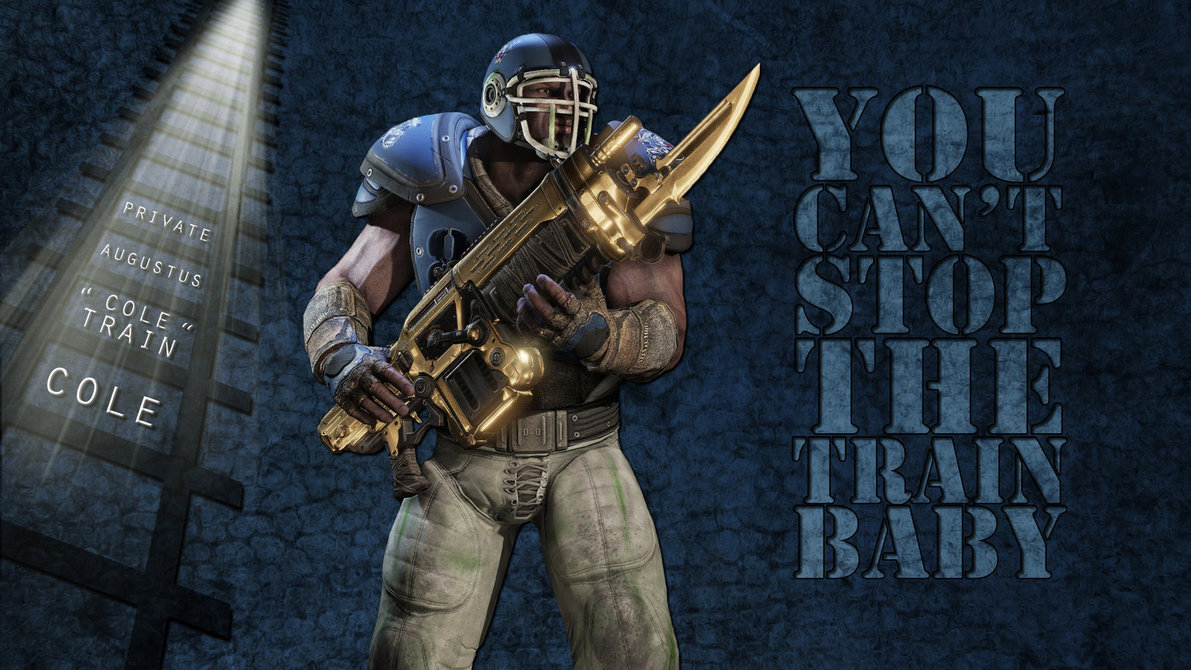
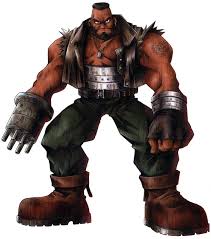
Regardless of my criticisms, The Walking Dead serves as a landmark production – selling well and receiving critical acclaim as well as many Game Of The Year awards. It demonstrates for games what many works in other media have demonstrated, that black characters can be connected with emotionally – a good parallel is Morpheus in The Matrix. But as long as society expects white protagonists in every medium, whether video games or Disney animations, as long as racial stereotyping is unchallenged within the entertainment business (and I discount efforts such as Quentin Tarantino’s claim to have christened Blackdom finally with a hero6 – see also Larry Elder on the topic) then nothing will change and games will remain cursed with insulting characters like Barrett or Sazh or Cole Train.
1. Come On, Video Games, Let’s See Some Black People I’m Not Embarrassed By
2. Newsweek’s N’Gai Croal On The ‘Resident Evil 5’ Trailer: ‘This Imagery Has A History’
3. N’Gai Croal comments on RE5 trailer, but all we see is another Capcom hit
4. Resident Evil 5 is SO RACIST: The idiocy begins
5. Blackface
6. Quentin Tarantino: ‘I’m shutting your butt down!’
Haseeb Azad is a 22-year old writer of South-Asian descent based in London. As both a Person of Colour and Muslim; he aims to tackle problems facing both communities. Mainly writing and campaigning around issues pertaining to racism and bigotry be it street-level and/or institutional. Twitter: @HSnake1










 Media Diversified
Leave a reply to Zanna (@RoseAnnaStar) Cancel reply