
by Iman Amrani Follow @imaniamrani
In the early hours of the morning I was propped up on the sofa, in front of the news (the channel is irrelevant, they were all showing it), phone in hand, Twitter open on #Ferguson. This story has swept the world into a frenzy. Across different time zones people were glued to their screens, waiting for the seemingly inevitable outcome. We have been here before.
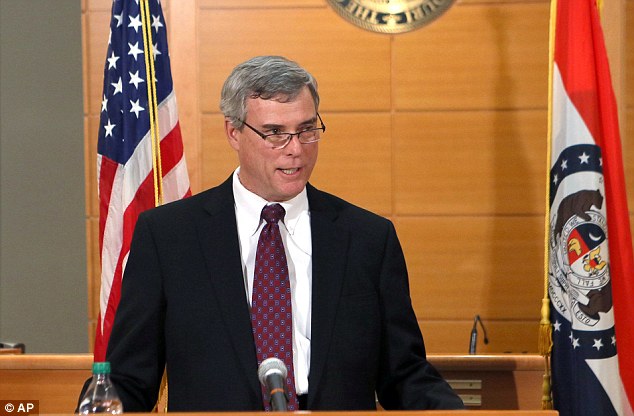
When Bob McCulloch finally came out to speak to the public, his tone immediately signalled the result. He sounded like a man breaking up with his girlfriend, or firing an employee, as though his hands were tied and the result was inevitable. He tried not to sound like a representative of a severely flawed justice system that had just failed to deliver justice itself.
I was struck by what he said about the 24 hour news cycle and social media being the biggest challenges for the process. He spent a good part of his speech laying the blame for the tension at the feet of social media, and tried to paint it as a rumour factory full of inaccurate information and lies. A breeding ground for propaganda and misunderstanding:
“The most significant challenge encountered in this investigation has been the 24-hour news cycle and its insatiable appetite for something, for anything to talk about, following closely behind with the non-stop rumors on social media”.
There was no acknowledgement for the genuine, justified anger which exists/existed off the Twittersphere. There was no recognition of the self-correcting nature of such an open platform. He did not mention that the main facts concerning the case were widely and accurately distributed: namely that an unarmed 18-year old black teenager received seven shots from a white policeman. This the day after the horror of the death of 12-year old Tamir Rice, also killed by a policeman. Twitter and social media provided a place for people to share information as it came out and modify it as they went along. Conflicting accounts were evident and open for people to access and have their own opinions about. The anger didn’t start there. It was there before the shooting and before Twitter even existed.
It was ironic to see how he was saying this as his announcement was trending on Twitter, being quoting word-for-word around the world. It was an easy way of putting some blame somewhere without having to direct it at an individual or the system that has clearly failed not just Michael Brown, his family and the African American community, but any believers in the need for justice, once again.
Social media has done impressive work engaging otherwise disillusioned young people in politics on an international scale. It enables activists to speak about issues from the Arab Spring, to police brutality, to corruption and brings daily awareness to issues that media houses deem unimportant. Whilst there are of course inaccuracies on social media, the awareness that it has raised about social issues, the law and individual rights is phenomenal.
I heard someone say once that Twitter is great for revolution but perhaps not evolution. I think there is an argument for that point if that’s what you’re looking for, but if used in the right way social media is actually a powerful tool for individuals to access and assess information from thousands of sources and it is ridiculous for McCulloch to try and deflect the blame for the violence at what is essentially just a platform for freedom of speech.
Today Twitter has served us perhaps more than the justice system. It would be unfair to blame it for the violence and unrest at least on the part of the protestors, the police are another matter. As I said before, what started that has been around for a lot longer than the internet.
______________________________________________
All work published on Media Diversified is the intellectual property of its writers. Please do not reproduce, republish or repost any content from this site without express written permission from Media Diversified. For further information, please see our reposting guidelines.
_________________________________________________
Iman is an Algerian British freelance journalist based in London. She has lived and worked in a Haitian settlement in the Dominican Republic as well as in Colombia. Her interests include social and racial issues in the African diaspora and the Middle East, and she can be found at @imaniamrani


 Media Diversified
Leave a reply to Shane Thomas Cancel reply