
by Swazi Rodgers Follow @SwaziRodgers
After attending last year’s Mumsnet BlogFest, I wrote a post about how bloggers who go to conferences appear to be uniformly white. It received a lot of responses including a positive promise from two blogging networks to meet up and discuss how to improve diversity and inclusion at their events. Mumsnet – the bigger of the two networks – made good on that promise, and a few weeks ago I went with my lovely friend and fellow blogger Soraya went to Mumsnet Towers and had a great chat with some of the behind-the-scenes folks who make the Mumsnet BlogFest and the Bloggers’ Network happen. The main thing we discussed was how to make non-white bloggers feel included and welcome.
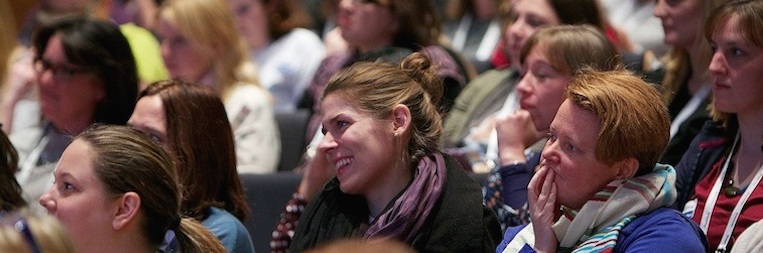
Before I go into detail, let me explain why this issue matters. If you’re thinking – ‘I’ve never wondered what the ethnicity of the writer of a blog is. If I like it, I read it’ – then thank you and I do hope you come back again. But, it’s not about that. It’s about writers who are non-white seeing themselves up there – being ‘in the room’ is so important.
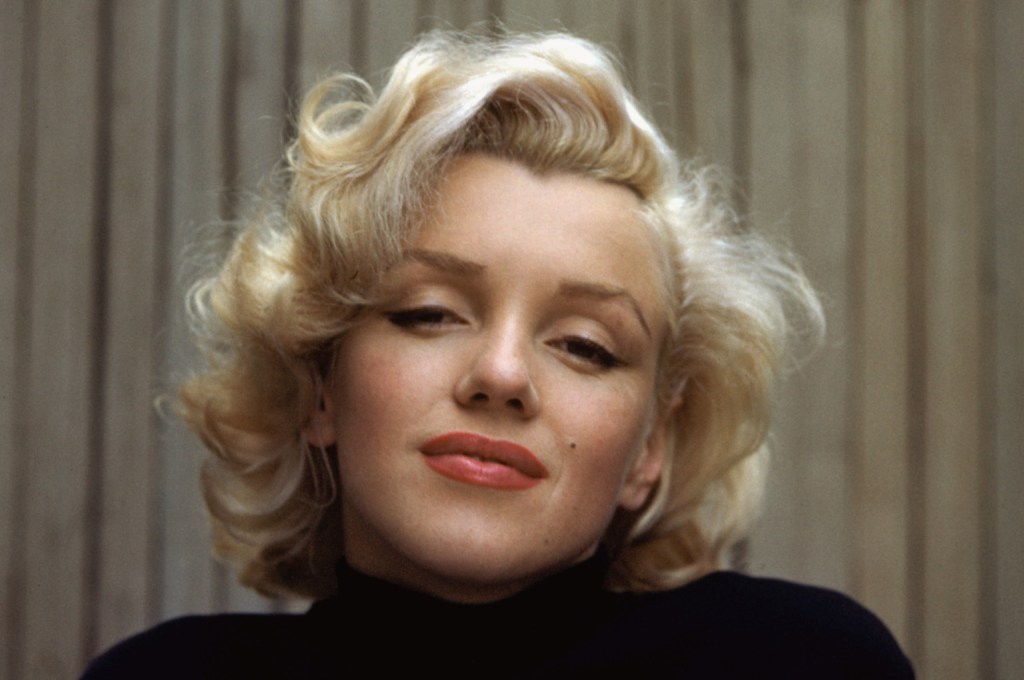
You see, I always wanted to be Marilyn Monroe, Debbie Harry or Madonna. I thought Paula Yates was amazing and loved her style, her chutzpah and how effortlessly cool she was. All of them had their own battles behind the glamour – but the point is, growing up, it meant everything to be white and blonde. Not dark haired and brown skinned. Blue eyes were better than brown.
My role models just weren’t Asian or black women. From my own culture, Bollywood movies showed either unrealistic, pneumatic women or the archetypal Mother as martyr, and rape was just part of the story rather than something to be condemned. When I was growing up, there was no Aishwarya Rai with her twin successful careers in Indian and American movies, showing that Asian beauty is acceptable to everyone. If I was to be successful, I had to be as white as possible.
Until I read I Know Why the Caged Bird Sings and The Colour Purple, I had no idea that writing could be about tough, real lives. I discovered that Maya Angelou was outspoken, beautiful, imperfect and honest, and I still love listening to her mellifluous tones reading poetry and singing.
I grew up in a family that had old fashioned values from ‘back home’, and yet most kids from my sort of background lived a dual life. Some girls would arrive at school in modest clothes, then change into miniskirts and makeup. I wasn’t one of those, but I did have another life outside my family. At university I went out drinking (far too much, really) and discovered a love of music and the arts. I didn’t have boyfriends, but I knew a lot of Asian girls who did. However, at home, I was a sister, a daughter, mostly obedient and didn’t talk about my ambitions or interests. They weren’t relevant.
As an adult, if I go to a conference where there are few – if any – people like me, I feel transported back to that dual life. I’m living outside of what I’m ‘supposed’ to be doing. People like me don’t blog. We don’t talk about our lives. Only we do. When I wrote about the ‘whiteness’ of blogging events a lot of bloggers responded, saying, ‘Yes, I noticed that too’. Some also pointed out that they felt younger than the others, or that they were in a different social class. I guess we all have our Achilles heel, our point of difference.

‘It’s open to everyone, so if people don’t want to come we can’t make them,’ people might say. It’s a fair point, but if I go to an event and I’m one of few non-white bloggers attending, it makes me wonder why the others aren’t there. In our culture, shame over being different comes from being left out – underrepresented and invisible. Underrepresentation at these events may be due to cost, location or any other number of reasons that are not specific to ethnicity. However, the end result is the same: if I’m a blogger who only meets white bloggers, does that make me unique, or just weird?
So we said most of this in our meeting at Mumsnet, and they are keen to engage with all bloggers. To this end, the Bloggers Network is introducing a new category where you can specify that you are a BME (Black and Minority Ethnic) blogger. Of course you don’t have to, and if you prefer to blog anonymously you can just keep doing what you’re doing. But it will be a quick and easy way to find other bloggers who have chosen to be in the category. It is a small step, but it means that we can find each other and maybe share and support one another in whatever ways are necessary. It is just nice to know you’re not the only one.
I wrote this guest post for Mumsnet in May 2014 and the lovely folks at Media Diversified asked me for an update on what has happened since. Well, I’ve stayed in touch with Mumsnet and also engaged with Britmums on the issue of inclusion and diversity. I spoke at the Britmums Live conference in June 2014 where I read out a blog post I’d written about equality and in November 2014 I chaired a roundtable discussion about inclusion in blogging at the Mumsnet blogfest. It’s still a very white arena and the few high profile BME bloggers I know are – of course – keen to be known for their writing rather than their ethnicity. Attending these events, it is still a game of small numbers and the reasons for the ‘invisibility’ of BME bloggers are far from clear.
What has really been interesting is the reaction from non-BME bloggers. It’s not racism so much as a genuine inability to see why it’s even an issue — the wide-eyed ingénue response of ‘Well, it’s open to everyone, so why don’t they just come along?’ I’ll give you two examples of why I think it’s important.
I attended a PR event that bloggers were invited to and when I walked into the swanky hotel with another BME woman, one of the press flunkies hurried over to talk to us in hushed tones and tell us that this was a private, invitation only event and we were probably in the wrong room. We corrected her and made sure we stayed far longer than the ten minutes we’d intended, just to make sure their ethnic mix was a bit less white than they had hoped for.
Often bloggers are invited to participate in online events with a fun hashtag associated with them. I was captivated by one that had a hashtag along the lines of ‘little white bloggers’. When I looked at the photos of the event it became very clear that all the bloggers – and their children – were indeed white. I guess it’s honest if a little crass and not exactly inclusive. A bit shameful really in this day and age, isn’t it?
So, there is still some way to go. Hopefully we’ll see some of this change in 2015.
All work published on Media Diversified is the intellectual property of its writers. Please do not reproduce, republish or repost any content from this site without express written permission from Media Diversified. For further information, please see our reposting guidelines.


 Media Diversified
Leave a reply to Media Diversified Cancel reply