
by Ahmed Olayinka Sule Follow @Alatenumo
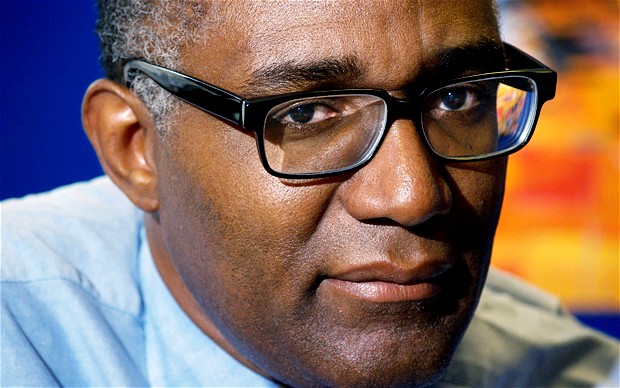
When I first heard that you would be presenting a documentary on Channel Four titled, “Things We Can’t Say About Race That Are True”, I was keen to know what you had to say. Even though I was concerned about what was reported in the media about the documentary before it was aired, I decided to hold my peace. Having watched the documentary on 19 of March 2015, now is the time for me to let you know what is on my mind.
I guess you must be pleased with yourself having ignited a fierce debate on race. You must also feel a sense of triumph that you have “unearthed” some new insights into race relations. There is no doubt that you have played a prominent role in race relations in modern day Britain. From serving as chair of Runnymede Trust to heading the Commission for Racial Equality and later Equalities and Human Rights Commission, you have been at the forefront of race relations. But Sir, I am concerned that what you presented in your sixty minutes documentary has undone everything you have worked for in the last twenty-two years. The documentary is both logically and morally flawed and in the next couple of pages, I will explain why.
The main thesis of the documentary is that harmony among the people of Britain is being compromised because people are unable to reveal their inner feelings on racial matters for fear of being tagged racists. You argue people should be free to speak out and be ready to offend people’s racial sensitivities as this will save lives. There is no doubt that Britain needs an honest conversation on race and this is something I have written about sometime ago. However, the premises you have used in arriving at your conclusions are logically flawed on a number of grounds.
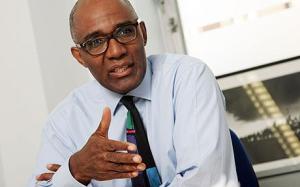
You begin your documentary by “appealing to your authority” as an expert on racial relations to suggest that what you say in the documentary though controversial is correct. You state, “I should know. I helped to create those laws (racial laws) and I used to be their enforcer.” The fact you headed a race relation organisation for a decade is not a sufficient justification to assert that what you say on race matters is correct.
Later on, you discuss the concept of stereotypes and say, “Many stereotypes are true” and reel out a list of stereotypes such as Jews are powerful; Indian women are likely to work as chemists; Romanians are likely to be pickpockets and blacks engage in violent crimes. In asserting, “Many stereotypes are true,” you are inferring that because something is true for a subset of a population, it is true for the whole of the population. If Romanians engage in pick pocketing as you assert, what about the pickpocket activities that occur in many parts of Britain where Romanians are not represented? Does this mean wherever pick pocketing occurs in the world, it is more likely to be carried out by Romanians?
To justify your claim that black folks are more likely to engage in crime, you note blacks are 2 times more likely to be sentenced for violent crimes and six times more likely to be convicted for robbery. You then rule out racial bias in the criminal justice system as a possible factor by arguing that three quarter of black murder victims are killed by blacks. Martin Luther King once penned a letter to six clergymen in which he wrote, “I am sure that none of you would want to rest content with the superficial kind of social analysis that deals merely with effects and does not grapple with underlying causes.” Like the six clergymen King wrote to, you have also engaged in a superficial kind of social analysis that ignores the structural causes. To get to the root cause of why blacks are sentenced by the British criminal justice system, you need to ask the question: Why are so many black folks overrepresented in the criminal justice system? A research conducted by the organisation you once headed for ten years revealed that a black person relative to a white person was eleven times more likely to be stopped by the London Metropolitan Police; so why wouldn’t a black folk be more likely to be convicted? Why are blacks six times more likely to be stopped and searched for drugs relative to whites even though they use less drugs than white folks? You focus on the so-called black on black crime while ignoring the “never mentioned” white on white crime. Isn’t it ironic that while statisticians are keen to compile data on blacks killing blacks, they refrain from publishing data on white on white killings, despite the prevalence of media reports about white people murdered by white folks? Have you taken time to analyse why “Black crime” is a pleonasm, whereas “White crime” is an oxymoron in modern day Britain?
In shedding the spotlight on racism in football, you interview Les Ferdinand, a retired footballer and ask him about his views on the incident in which his cousin, Anton Ferdinand was alleged to have been called a black cunt by former England captain John Terry. After spending a few minutes discussing the incident, you shift the discussion from the racist remarks made against black players to the lack of black coaches in football. You then argue that Britain has got its priority wrong by focusing on racism at the individual level rather than addressing racism at the macro level stating, “The real taboo isn’t black cunt, it’s black boss.” Once again, you commit a fallacy of composition by using a single incident as evidence that agitators have got their racial priorities wrong. You also use a red herring to shift the discussion away from an issue, which is endemic in Britain, to a topic that is less disturbing. What is the point of having black managers if they are still going to be subjected to the same racial abuse faced by black players and black fans? Racism has to be tackled from both the micro and macro level. So to rephrase what you said earlier, the real taboo is not “either/or” (black cunt or black boss); the real taboo is “both/and” (black cunt and black boss).
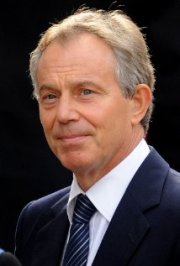
Another flaw in the documentary is that it suffers from selection bias. First, since you are discussing race, one would have expected sufficient representation from people of the different races. In your documentary, non-whites were not adequately represented as you interviewed only three ethnic minorities namely Simon Woolley, Tarique Ghaffur and Les Ferdinand. Second, most of the people interviewed were those who agreed with your line of reasoning. It was only Simon Woolley of Operation Black Vote and former British Prime Minister, Tony Blair who disagreed with your point of view. The prevalence of white interviewees and people in support of your line of reasoning biases the conclusions of your documentary in favour of the viewpoint of the dominant culture in Great Britain. Viewers would have got more out of your documentary if you had also included victims of racism rather than focusing mainly on those who “think” they would be branded racists if they speak their minds.
A key theme of the documentary is the reluctance of white people to speak out for fear of being called racists. To support this claim, you cite two cases namely the Rotherham grooming scandal and the Victoria Climbie incident, where the investigation into the cases revealed that people were unwilling to intervene for fear of being tagged racists. Mr. Philips, this is a clear case of cherry picking as you conveniently select cases, which support your viewpoint while ignoring other cases. You fail to discuss issues, which might have been useful for the viewers to get a complete picture of racism in modern day Britain. For instance, while you link the Rotherham grooming scandal to the perpetrators race (Asian men), you say nothing about:
- a) Operation Yewtree, which is an investigation into the abuse of young children by predominately “white” celebrities such as Jimmy Savile, Max Clifford, Rolf Harris, Freddie Starr etc
- b) The Westminster paedophile ring which involves senior “white” government officials and
- c) The 121 Britons arrested as part of Operation Rescue, a global sting to crack down on online paedophilia.
If you can devote time to investigate why white people are nervous about expressing their views for fear of being called bigots, wouldn’t it also be beneficial to investigate whether British ethnic minorities are also afraid to speak out about the abuse of vulnerable children by “white” establishment figures for fear of being called bigots?
In summary, your “ground breaking“ documentary is full of logical fallacies based on cherry picking, red herrings, sweeping generalisations, misapplication, syllogism, false dilemma and false cause. Having addressed the logical inaccuracies of the documentary, I will devote the next couple of paragraphs to address its moral failings. While I don’t doubt your sincerity, the documentary has done more harm than good in respect to race relations in United Kingdom. You have provided those who have been in denial about racism in this country with the ammunition to fire at those that agitate for racial justice. You have also provided bigots and racists with prejudiced-coated bullets to fire at British ethnic minorities. Moreover, thanks to your documentary, bigots and racist can now add to their lexicon, “I am not a racist, after all Trevor Philips said many stereotypes are true,” and “ Trevor Philips says there is no difference between anti racists and racists like us.”
You also downplay the legacy and significance of Martin Luther King, a man who laid down his life for the emancipation of black folks. After footage of King’s speech at the March in Washington was shown in the documentary, you say that King’s vision changed the way people thought about race and gave birth to a new idea. You proceed to state that a noble set of aims is “not enough” and that the risk of great reform movements is that good intentions can morph into informal law and then become dogma. Shortly after, the film footage changes from the scene at the March in Washington to a March in Russia in the presence of Stalin and you say “What started as a March of Liberation can turn into thought control and even worse.” You subsequently suggest that the movement has given birth to a new doctrine that 1) All whites are alike 2) Whites are tainted and guilty and 3) Whites should not criticise a non-white. It is shocking that you could implicitly link the Civil Right Movement with Stalin’s repressive actions and then suggest that it has given birth to a racist doctrine. While I appreciate that you want to provoke debate, you dishonour Martin Luther King and the millions of Civil Rights participants by your faulty analogy. One wonders why you implicitly link the civil rights movement with repression, while you remain silent on a political party whose rhetoric’s dehumanises ethnic minorities.
After watching the documentary, I was very disappointed, but after giving it some thought I finally understood “the game.” You would not be the first person to throw your people under a bus; neither will you be the last. The history books are filled with stories of those who have worked directly and indirectly against their own people. While this documentary may come across to many as a production of a black folk speaking truth to his people; for others on the other side of the colour line, it comes across as a documentary whose voice is like that of Jacob and whose hands is like that of Esau. The documentary also reinforces the issues raised in Frantz Fanon’s book, Black Skin, White Masks, a book that examines how colonialism is internalised by the colonised and how some black folks end up emulating their colonial oppressors.
In conclusion, the documentary was a “worthy” attempt at promoting racial harmony (sic) and you deserve a Noble Prize recognition for your performance. I am sure that if the Nobel Committee were to dish out awards today, the 2015 Nobel Prize for Racial Boldness will go to Nigel Farage. It was amazing to see him look straight at the camera and boldly say, “We are colour-blind. We as a party are colour-blind.” However, the much coveted Nobel Prize for Promoting Racial Tension, which has a monetary value of “30 pieces of silver”, will go to no other person than our one and only Mr. Trevor Philips.
Selah.
All work published on Media Diversified is the intellectual property of its writers. Please do not reproduce, republish or repost any content from this site without express written permission from Media Diversified. For further information, please see our reposting guidelines.
_________________________________________________
Ahmed Sule is a CFA Charterholder, Chartered Accountant, photojournalist and social critic. He also obtained a Certificate in Photojournalism at the University of Arts London. He has also worked on various photojournalism projects including Obama: The Impact, Jesus Christ: The Impact, The Williams Sisters etc. He cites Jesus Christ, Martin Luther King, Malcolm X, Fela Anikulapo Kuti, Kwame Nkrumah and W.E. Du Bois as his major influences. Find him on twitter @Alatenumo
Related articles
- Media agenda; race and child abuse (mediadiversified.org)
- Drugs and the Aggravating Circumstance of Being Black (mediadiversified.org)
- Group of White Men Jailed for Raping Child.


 Media Diversified
Leave a reply to Winslie Gomez Cancel reply