
By @graciemaybe
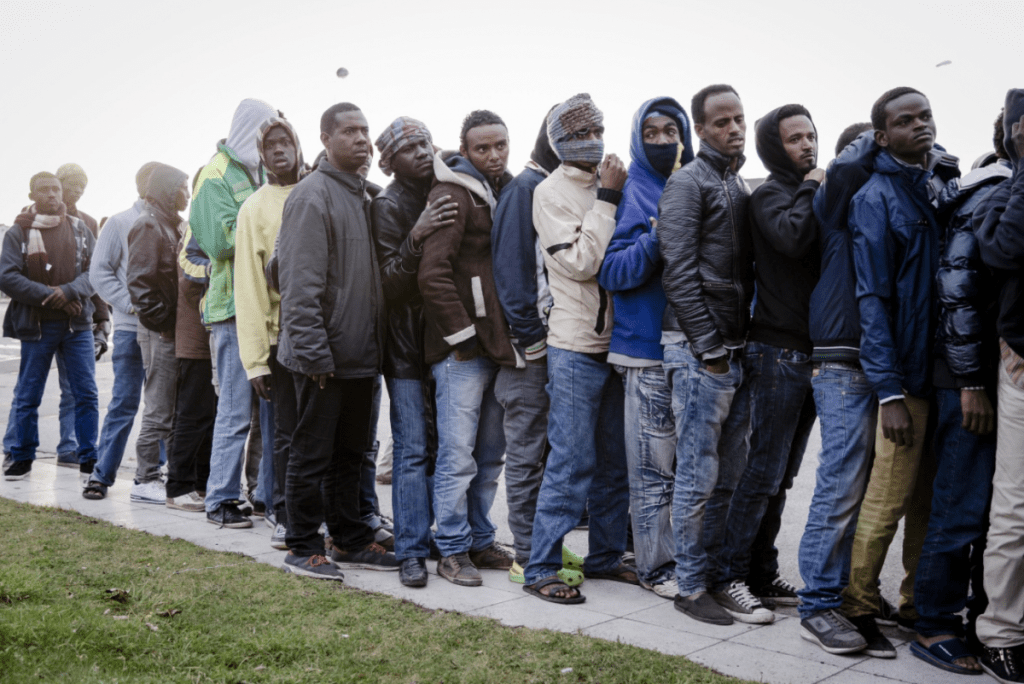
Britain is under siege, the headlines tell us: foreigners are sneaking into Britain from “the Jungle” in Calais, taking British jobs; stretching Britain’s public services to breaking point; endangering Britain’s children with their excessive criminality. Time and again Parliament has tried its hand at placating the press and the public, and the policies of the last two governments have followed suit, explicitly designed as they are to “create a really hostile environment” for people “with no right to be here”.
The “hostile environment” is brought into being by the wider national conversation on immigration, and by the state’s machinery of immigration control. The possibilities of settling here as a skilled worker, to access healthcare, a bank account, a driver’s licence, safe housing, and even education; in the government’s own words, everything a person needs, have become contingent on whether or not a person can satisfy that they have a “right to be here”; that they are rich enough, employed enough, legitimately-married enough, law-abiding enough, of good enough character.
And of course, because the state is determined to reduce immigration, and yet has very limited powers to restrict European citizens’ access to the country, and because a migrant’s “right to be here” is determined – in true neoliberal style – primarily in terms of how much they earn, it is working class communities of colour that bear the brunt of heavy-handed immigration controls. It is their businesses that are disrupted; their local transport hubs that are targeted; their families that are torn apart.
My family heritage, as well as stretching back generations in Gambia and Antigua, also stretches back generations here in Britain and in America. With my Oxbridge education, British passport and young professional status, I am not immediately threatened by the government’s ‘tough’ stance on immigration. I have known it mainly through my work in solidarity with people who have fled gross human rights violations: skeletal men on hunger strike in immigration detention; LGBT refugees re-traumatised by asylum officials questioning their sexuality, making endless, inappropriate demands for evidence. But the government – my government – allowed Jimmy Mubenga to die in state custody while its racist contractors played ‘carpet karaoke’ during his forced deportation; his screams of “I can’t breathe” went unheeded. It runs detention centres in which people can be sexually assaulted by those supposedly there to keep watch over them; in which they can somehow, lawfully, be made to work for £1 per hour. The government fortifies borders and creates visa requirements that force people to arrive in refrigerated lorries, in shipping containers, or simply fall out of the sky because they can see no other way to get here, and those people are Black like me.
When it comes to immigration control, Black lives do not matter, and as the conditions for determining “the right to be here” become ever more restrictive, that is a threat not only to people without papers, and communities of colour, but to anyone who wants to live in a society in which a person’s ability to lead a flourishing life is not determined by something as arbitrary as where they were or were not born.
This criminalisation of migration is not unique to Britain. Border walls in Kenya, Hungary and Israel go up; xenophobic violence mushrooms in South Africa and the Dominican Republic; migrants’ bodies are found silently buried in deserts in Mexico and Egypt; and off the shores of Europe, Indonesia and Australia, thousands float adrift in international waters.
The problem may be global, but resistance starts at home. It starts with visiting people in immigration detention, amplifying their voices, protesting in solidarity at the Home Office and the detention centre gates. Resistance means making sure that you and others in your local community know your rights, calling the airlines that do the government’s dirty work, and as people in Peckham and Walworth most recently have reminded us is possible, making it as hard as you can for them to bring the borders to you. Contact the grassroots organisations that have been quietly doing this work for years: Anti-Raids, Movement for Justice, Unity Centre Glasgow, Corporate Watch, SOAS Detainee Support Group (of which I am a Board member), to name a handful.
Crucially, the suffering and loss of life that immigration controls create relies on a master stroke in anti-migrant propaganda: that the movement of peoples across borders must be restricted by governments. So the idea itself must be resisted. Ask whether it is only the female asylum seeker who has been subject to some kind of “exotic” harm; female genital mutilation or sexual assault in conflict, that deserves to be free from detention. Ask about the centuries of colonial migration and expropriation that created the Britain we live in today. Ask why it is Black or Brown and working class people that have to be prove their “right to be here”. Ask who profits from the business of immigration control. Dare to imagine what a world without borders would look like.
—
This is part of the new Black Friday series on ALL BLACK EVERYTHING section of Media Diversified. We are publishing articles from a range of activists, poets, artists and writers which will culminate in a real-life discussion and meet-up in London in August. If you want to get involved email mediadiversityuk@gmail.com with the subject: ALL BLACK EVERYTHING



 Media Diversified
Leave a reply to Shane Thomas Cancel reply