
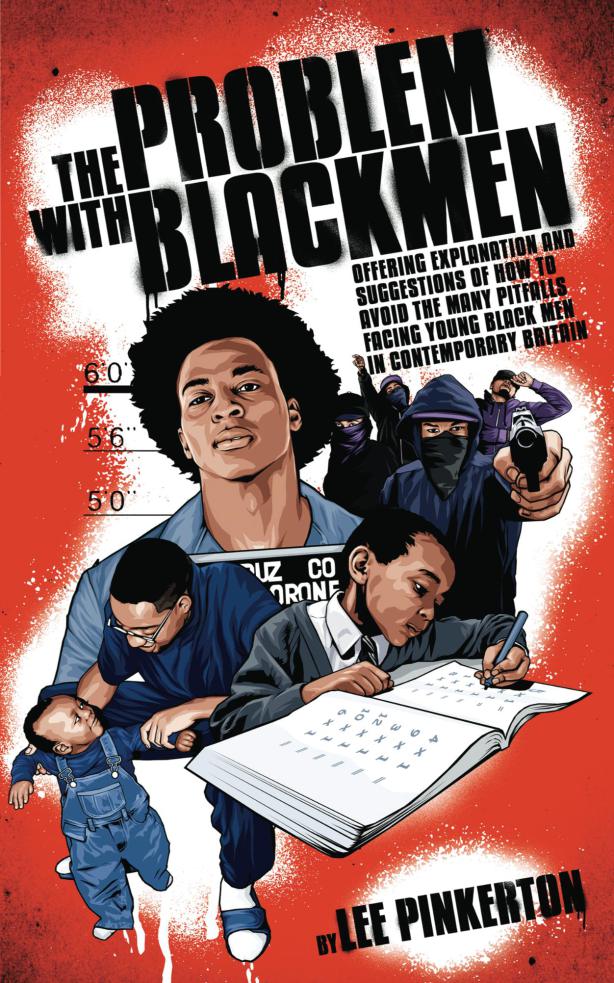
By Lee Pinkerton Follow @_Runawayslave
 The spur to write this book was a very personal one. I started it when I was 40 years old, unemployed, in debt and wondering where it had all gone wrong. From outside appearances I may have looked reasonably successful, but in my own eyes I was far from the levels of achievement that my early childhood promise had suggested. But I was not just wallowing in self pity. Ironically, although I hadn’t been in stable employment (meaning a contracted job as opposed to self employment or freelancing) for over six years I was still the most successful man in my extended family. By the virtue of the fact that I had been to university, was married, owned my own house and my own car, I was by far the most accomplished. For my nine male cousins, (six resident in Britain three in America) unemployment and familial instability was the norm. Those dreams of high flying careers in law and medicine that had been the aspirations of our grandparents and had been embraced by our fellow Asian immigrants had been long since abandoned by us. It seemed that for a Black man in Britain, just avoiding an early death, a life of crime or residency on a psychiatric ward were the only achievements we could take pride in. The lack of any real success amongst the men in my family and the other Black men I saw around me let me know that my own lack of achievement was not down to my own shortcomings alone, but something more pervasive. My nine male cousins and I weren’t some strange aberration, we were following a trend.
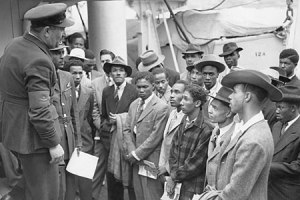
Mine was the traditional upbringing of British-born children of Caribbean immigrants. My grandfather came to Britain in the 1950’s full of hope to make a better life for his wife and nine children. His seven daughters did relatively well all finding employment in the National Health Service, which was one of the biggest employers of Caribbean immigrants at the time. His two sons fared less well though. Not being academic enough to become doctors and not wanting to take the menial job of hospital porter, the NHS offered them no openings (male nurses were yet to be invented back in the 60’s and 70’s). So throughout the years that should have been their productive working lives they drifted between petty crime, self employment and unemployment, the youngest son spending his latter years in self imposed exile, so bitter and isolated from the rest of his family that he refused even to attend his own father’s funeral. My grandfather must have wondered in his last days, as I do today, why his daughters had flourished whilst his sons had floundered. The sad fact was that as the Black men of his sons’ generation came of age and entered the job market they had become surplus to requirements. Whilst the country was crying out for foreign labour in the 1950’s to help rebuild the country and bolster the male workforce that had been decimated in the Second World War, by the 70’s and 80’s all the job vacancies had been filled. There was now a surplus of labour and the strong backs, and eager hands of the sons of Caribbean immigrants were no longer required. But somehow the Caribbean daughters still managed to make their way.
My contemplations were made all the more acute by the fact that I too had fathered two sons (but without the accompanying seven daughters). How was I to advise them how best to succeed in life when I clearly had not yet worked it out myself? Evidently education was not the simple answer that the first generation had thought, as my own relative academic success but lack of career advancement had proved. And either consciously or subconsciously the current generation seemed to have realised that too, as more and more seemed unwilling or unable to complete even basic schooling. And with each passing year the situation seems to grow worse.

Where my grandparents’ and parents’ generation had to be wary of attacks from racists, teddy boys, and the skinheads that followed them a generation later, my own sons have to be wary of youths who look just like them. This current generation of Black youth has become so alienated, so venal, and so distant from any way of achieving real success in the mainstream, that they have created their own warped value system in which they distinguish themselves in the street and gain respect through robbing, or murdering or gang raping other teenagers who look just like them. The children and grandchildren of African and Caribbean immigrants who would have regarded themselves as brothers and sisters in arms, colleagues at work, brethren and sistren in the church, united in the face of a hostile unwelcoming country, are now deadly enemies because they happen to live in a different post code or are members of a different gang.
In The Problem With Black Men I have separated what I see as the Black community’s main problems into five areas and address each problem in turn with its own chapter. The topic of my research project when I was studying my Masters degree in Psychology was investigating the over-representation of mental illness in general and schizophrenia in particular amongst the Black community in Britain. From my research I found that there was no single reason for the disproportion. Contrary to my expectations, it wasn’t due to the alienation of living in a foreign land, or to the toll of daily racism that one faced as the child of an immigrant, or even to the racist preconceptions of the medical staff. There are a myriad of contributory factors why one would have a mental breakdown and they are all interconnected. My investigation into mental illness now makes up chapter five of this book. The other reasons that I feel are the contributory factors of our sorry state in this country make up the other four chapters.
At the end of each chapter I offer solutions – things that can be done on a personal individual level to improve the situation. For each of these topics there are those that argue that the root cause is institutional racism. Black boys are excluded from schools in such numbers because of the racism of the teachers. They enter the penal system in such numbers because of the racism of law enforcement officers, and are misdiagnosed as schizophrenic because of the racism of mental health professionals. They struggle to find employment because employers are unwilling to employ Black men, and thus contribute to the break-up of the Black family because whilst Black men are denied access to the world of work, Black women are let through, and are thus leaving their Black men behind. All of these explanations maybe true, but if we just blindly accept them then we are accepting the role of mere victims. We are giving all the power to ‘the other man’, and there is nothing that we can do except to ask very politely if the white man would be so kind as to remove his foot from our necks! I for one am tired of waiting for a kindly white man to come along and save us. That is why, whilst acknowledging the role that white racism has to play, I am putting the onus firmly on Black folks, as the causes of and the solutions to our problems.
This book is an attempt to find the root of the problem and offer a way out of the wilderness, so that our boys will fare better than their fathers and grandfathers did. Read The Problem With Black Men
All work published on Media Diversified is the intellectual property of its writers. Please do not reproduce, republish or repost any content from this site without express written permission from Media Diversified. For further information, please see our reposting guidelines.
Lee Pinkerton was born in London, the child of Jamaican and Guyanese immigrants. After studying Sociology and Psychology at University he spent the 90s as a music journalist, first as a freelancer for magazines such as Mix Mag, Echoes, and Hip-Hop Connection and then as the Arts Editor for ‘Britain’s Best Black newspaper’- The Voice. In addition to this he also wrote a book the Many Faces of Michael Jackson published in 1997. His latest book The Problem With Black Men examines the causes of the social problems facing Black men in Britain and America today.
He can currently be heard as a regular on-air contributor to the ‘ACE show’ on BBC Radio Derby and his political polemics and cultural criticism can be read on the blog-site The Black Watch and his daily musings on Twitter @_Runawayslave.






 Media Diversified
Leave a reply to Juliano Cancel reply