
by Chimene Suleyman Follow @chimenesuleyman
I don’t know how I thought my parents came to England. I suppose I assumed they flew. It didn’t occur to me that they travelled by boat. One that took them first to Italy. By then the Cyprus civil war had spanned most of their lives. My father’s father was killed; at 13 he was the only provider and a soldier; at 16 he was shot. Their homes were burnt or they were forced to abandon them. Not uncommonly for refugees, they lived for periods amongst livestock.
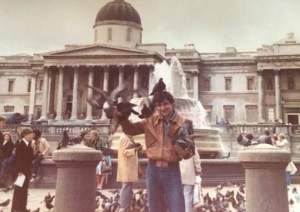 My father worked nights and slept through classes during the day. Then he took a boat with my mother, something that I had never imagined them on. Perhaps it didn’t fit with the course we’re told different ‘types’ of immigrants take. In London they studied NHS healthcare and worked in Hackney factories to fund it. Five of them slept crammed into rooms in their cousin’s Homerton estates or on occasion shared attics in people’s houses. Would dad spend his bus-fare on a nutty chocolate bar and walk from Mare Street to Finsbury Park instead of getting the bus? The latter more than likely. At the same time he was working to put his siblings back home through university. Who else would do it now their father was dead?
Cyprus had been colonised by the British. Who, remarkably, took their relationship with imperialistic economy so seriously they even passed laws on raisin-to-bread ratios. If you can’t shift the fruit, make them buy it from you anyway. Everything big was renamed; the ants with bigger backs, the larger tomatoes, the strongest wrenches – all of it had ‘English’ inserted in front. Wall sockets are British standard issue, and they drive on the left. There are laws on homosexuality that had previously not existed. Framed photos of Ataturk would, for a period, be replaced by one of King George and later the Queen. Yellow post-boxes on pavements are as visible as the bullet holes in window-frames: let those both be an emblem of what a colony brings.
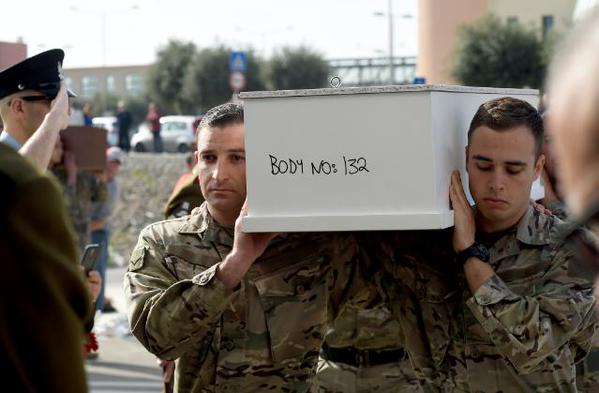
900 immigrants drowned at sea last week. Our government has a policy to withhold help and our media published hate-speech about their deaths. They were likened to insects in that way genocidal rhetoric will do. We do not like immigrants. Maybe it is because they don’t name our ants – the ones that represent our shame. ‘Immigrant Ants’, we’ll call them. We have more hospital beds in their absence, more places in schools – don’t worry, our jobs are safe: Immigrant Ants are dead. They won’t be bothering us now.
Instead, we speak of immigration like we are passing around a mix-tape; the limitless journey between hands, rewound and played again. Everyone has a thought on it. Journalists tell us from afar how badly our government have got it over these faceless, nameless immigrants: the ones we debate about but never hear. Then they wonder how it has become so easy to dehumanise amongst all the sparring.
Immigration is not bodily, it is an item: it is why Frankie Boyle can do do stand-up about n****r-bombing, then lecture us on Britain’s racism. You can pick and switch sides when it’s just another topic. Comedians, politicians, journalists, landlords, mechanics – everyone has a thought we can hear, so long as it’s not from the immigrant ants themselves. Does Paloma Faith have anyone lined up to discuss the matter? Immigration, as it turns out, has done rather well on providing jobs after all.
This is, as it stands, what they’re telling us matters: jobs – a working Britain. And if hard work is a measure by which our political structure has fixed itself to, then so be it. Show me the man who spends his average work day reposting from Lad Bible, versus the one who knows survival as instinct and risks his life for a better one. It’s clear who the hard worker really is.
But let’s move away from this idea of deserving individuals. Those who appear in the well-meaning ‘I Am An Immigrant’ poster-campaign, detailing their lives as paramedics, teachers and counsellors. It’s a good place to start, but what about everyone else? Besides, if success is anything to go by, we’d first need a system that actually bothered to support the hard work we speak of, and not just white men called John.
We speak about human rights like we are passing laws on raisin-bread: will it make us wealthier? We have things everyone needs and, frankly, we are lucky that they don’t have armies like ours to invade and take it all like we did. Simply put: people do not move country for a good way of life, only a better one. We may not want to give up what we have, yet we have no right to stop people from wanting even less than us.
They are not 900 immigrants who have died. They are named. They are not statistics and uncertainties regarding our own futures. They have stories like the ones I grew up with. My father is Recep Sehitoglu, my mother is Zerrin Esat. They are not numbers and bodies – they are all, every one of them, people who know they deserve more than we tell them they can have.
As for my parents: They made a journey back to visit their family a few years later. They flew. And two days after they arrived, the Cyprus cease-fire ended and fighting once again began. We have a word for this in Turkish: kismet. My mother, eventually – with help from Turkey and the Red Cross – left Cyprus again. Her mother would borrow money from the dress-making factory she worked at in North London, to fly her three daughters back to England. My father had been taken prisoner of war.
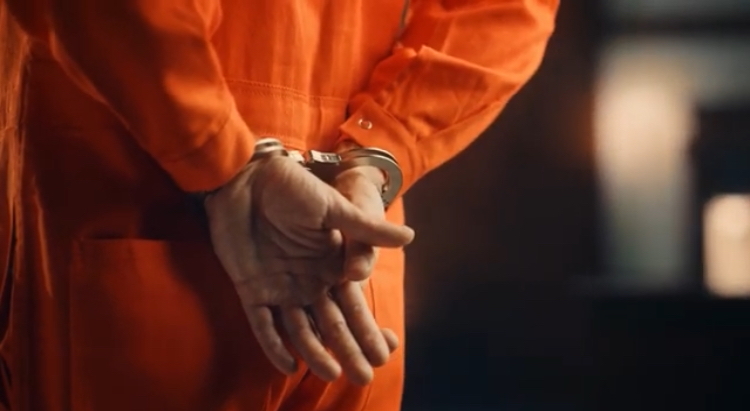
In a box in my childhood bedroom in Finchley, I found (as recently as last year) a stash of newspapers from 1974. Long lists of names covered pages. Three familiar names: my father, his brother, and my mum’s father. Between the stories of my fathers’ experience during the war – the fighting, the dead, the horrors of a prisoner of war camp, where you were humiliated at best and murdered at worst – I had forgotten my mothers’ story. That she had made it back to London and did not know if her husband and father were dead. Her only relationship with them would be the newspapers bought from Turkish neighbourhoods in London, on them the names of the detained men – a sign, at least, they were alive enough to be given an identity. 100 days after captivity my father was released.
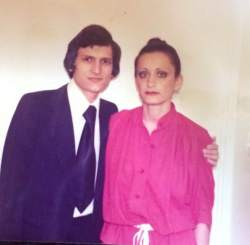
Surrounded by a country that had spent decades destroyed by civil-war (ever familiar: prompted and funded by the British and US), his wife was back in London. Where even was home? Through the UN, his mother had managed to get to him a jacket and his passport. He would then give the jacket to another young man suffering the cold. An old man would wake my dad with the tip of a knife, an apple pierced by the end of it: “You’re down and out, son. Eat this.” With little else, human-kindness still prevailed. Those with nothing themselves helped others the most.
Of course they didn’t have phones. With no way of knowing when, if at all he would be released, my mother waited, until my father finally showed up to their London home, with nothing but the clothes he was wearing. Before that, he left the blood-soaked land for a safer home, one he deserved, on a boat.
All work published on Media Diversified is the intellectual property of its writers. Please do not reproduce, republish or repost any content from this site without express written permission from Media Diversified. For further information, please see our reposting guidelines.
More by Chimene Suleyman
- It’s Time To Talk About Why Our Young People Turn Against Their Country
- ‘Defining’ Terror, and Why ISIS Suits the West
- This Week In Whitesplaining: ‘My Brother the Islamist’ (mediadiversified.org)
- Cultural Appropriation: The Fashionable Face of Racism (mediadiversified.org)
Did you enjoy reading this article? Help us continue to provide more! Media Diversified is 100% reader-funded – you can subscribe for as little as £5 per month here


 Media Diversified
Leave a reply to Sheharyar Hussain Cancel reply