
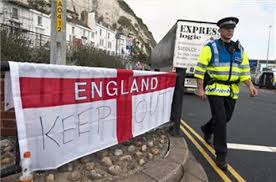
by Maya Goodfellow Follow @Mayagoodfellow
How much do you think you’re worth? It’s a hard question to answer but if you’re a migrant in the UK, originally from a country outside the EU, the government has done it for you. You’re worth nothing, unless you’re earning £35,000 or more.
The government’s new immigration policy says it all: migrants born in a country beyond the fortress walls of Europe and who don’t make £35,000+ will be deported after six years of living here. Cooked up three years ago by Theresa May, this new rules will kick in next year, much to the detriment of this country.
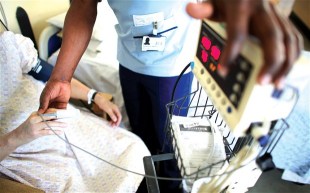 The Royal College of Nursing has pointed out that this will cost the NHS millions as large numbers of non-EU-born nurses – whose median income is well below the salary they need to stay here – will be deported. The union’s research speaks to the fact that this policy is economically unsound, particularly as the government are refusing to train the nurses the NHS needs.
The counter-argument to this is that focussing on the positives of immigration is misguided because it has had a negative impact on certain people, usually living in working class communities (though the implication that all working class people are anti-immigration is wrong). The reason there’s not enough jobs or homes isn’t because of people from abroad; it’s because of government under-investment. The idea that immigration poses a threat to UK culture, whatever that should mean, springs from imagined fears of people from abroad.
But we can’t continue to fight on this turf laid down by the right, where everything boils down to your economic worth (especially when the economy doesn’t seem to work all that well for most of us). So I could tell you that by the end of the decade the government’s latest policy could cost the NHS £40 million; that between 2001 and 2011, migrants made a net contribution to public finances of £25 billion in taxes; or that, despite what Nigel Farage, David Cameron and some Labour leadership candidates would have you believe, the vast majority of migrants don’t come here to live off the state. But I don’t want to.
We need to recapture the humanity that goes out the window when we talk about ‘immigrants’, lumping together very different groups of people under one toxic label. You can’t do that by just talking about the cold, hard economics of it all.
Instead I would rather tell you that there is inherent value in these individuals from abroad as people. It might sound clichéd, but ‘migrants’ are people who make this country better through introducing different languages and ideas. Xenophobia may run deep in this land, but we don’t live in a country made by any one person. Currents of migration have historically shaped what the UK is and will continue to do so because nationalism is a fluid concept. Even DNA analysis shows that UK-born citizens are an amalgamation of migrants who have come here at different times.
While supposed patriots make the case against immigration, they fail to remember that moving to a new country is an attempt to build a better life. A great deal of people who come to this country are products of and affected by an unfair global society which privileges many in the UK. Yet politicians continue to pit UK-born individuals against their so-called foreign counterparts. This is divide and rule, plain and simple: a tactic in which the UK has hundreds of years of experience.
Far too many people have accepted these tactics, while defenders of immigration too easily focus on the economics of it all. That’s because it’s so much harder to do the opposite: send a positive, more truthful message about people from abroad. A little more humanity is what’s needed; otherwise we end up living in a country where people are deported just because they don’t earn enough.
All work published on Media Diversified is the intellectual property of its writers. Please do not reproduce, republish or repost any content from this site without express written permission from Media Diversified. For further information, please see our reposting guidelines.
____________________________________________________
Maya Goodfellow is a journalist and political commentator. She primarily writes about British politics and has worked as a researcher for a think tank. She also writes about international affairs, with a particular focus on conflict studies. Find her on Twitter: @Mayagoodfellow
If you enjoyed reading this article, help us continue to provide more! Media Diversified is 100% reader-funded – you can subscribe for as little as £5 per month here






 Media Diversified
Leave a comment